In an analysis, the Washington Institute for Near East Policy argues that Morocco has a “proven exportability” in deradicalization that could contribute to efforts to stabilize Gaza after the war.
The Board of Peace, convened by Washington, is meeting this week in Cyprus to discuss governance and postwar stabilization in Gaza. As discussions shift from military operations to implementing the Trump administration’s 20-point plan, one question remains central: which regional partners can realistically help rebuild Gaza’s institutions and rehabilitate its population after years of conflict?
The think tank says Morocco has spent the past two decades building a religious governance system that “combines closely regulated clerical training and community outreach.” Both pillars operate under a unified administrative structure and, according to the institute, offer a dual advantage for Gaza by helping rehabilitate violent religious extremists while supporting key administrative functions needed for institutional reconstruction.
“Given Rabat’s strategic relationships with Washington and Jerusalem and its demonstrated experience dealing with extremism, it may have a useful role to play in implementing a critical plank of the U.S. plan,” the report states.
Why Morocco built this system
Following the 2003 Casablanca terrorist attacks, Morocco undertook a sweeping overhaul of its religious governance.
All mosques were placed under the authority of the Ministry of Endowments and Islamic Affairs, which now appoints and certifies all imams, oversees mosque financing, and administers religious endowments (habous).
Every imam is required to complete a state-approved training program and pass an official exam. Sermon guidelines were comprehensively rewritten to emphasize the Maliki school of Islamic jurisprudence, focusing on tolerance and national unity “rather than scriptural passages that could be twisted toward violence.”
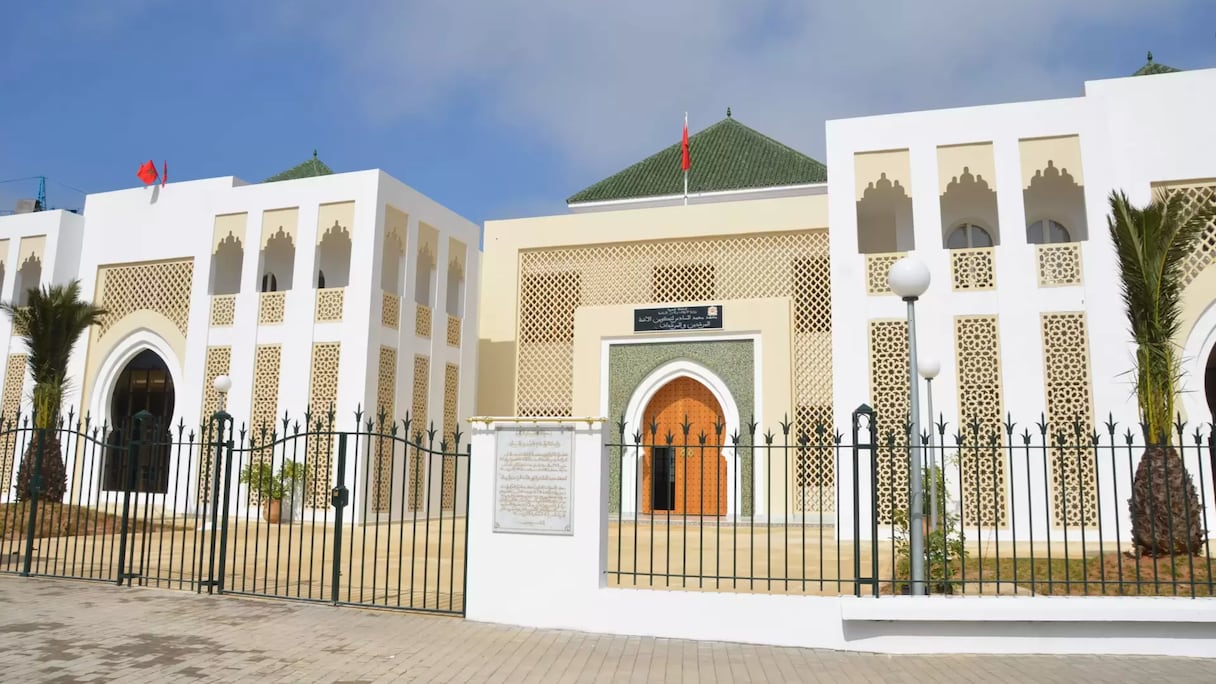
In 2015, King Mohammed VI inaugurated the Mohammed VI Institute for the Training of Imams, Morchidines and Morchidates in Rabat. According to the Washington Institute, the institution has become “an important implementation arm of Morocco’s counter-radicalization work in West Africa and the Sahel.”
A model already exported to West Africa and the Sahel
As jihadist violence spread across West Africa and the Sahel, several governments turned to Morocco to train their religious leaders.
“Morocco’s newly centralized religious system, standardized curriculum, and large pool of state-trained instructors made it well-suited to meet that demand,” the institute writes.
Foreign imams trained at the Mohammed VI Institute receive instruction in Islamic theology, Maliki jurisprudence, community outreach, and communication skills, “thereby expanding the number of moderate religious voices abroad and reducing the risk that any single extremist movement dominating local messaging.”
According to the latest available figures, covering the end of 2022, the institute had trained more than 2,798 imams from Africa and Europe. Bilateral agreements have continued to expand, including a memorandum signed in July 2025 providing for the training of an additional 400 Malian imams.
Morocco has also deployed a nationwide network of morchidines and morchidates—state-certified male and female religious guides serving in mosques, schools, and prisons. According to the institute, they “meet with families, counsel young people, answer religious questions, and promote interpretations of Islam that reject violence and other extremist ideas.”
Alongside these efforts, Morocco has operated through the Bayt Mal Al-Qods Acharif Agency since 1998. Chaired by King Mohammed VI and primarily funded by Morocco, the agency works with Palestinian universities, municipalities, hospitals, and charitable organizations.
It finances “humanitarian and civic projects such as schools, clinics, orphan support, and cultural initiatives—efforts that cannot be pursued via military or counterterrorism organs," the report notes.
Why the model could be relevant for Gaza
The Washington Institute argues that postwar governance in Gaza cannot remove religion from public life but can ensure that it is no longer used as a political weapon.
Morocco’s system addresses that challenge through “a clerical licensing system, a standardized curriculum that emphasizes tolerance and moderation, a sermon-vetting process, and a training pipeline.”
Under the proposed approach, Morocco would train Palestinians to operate the system themselves, following “the same train-the-trainer approach that Rabat already uses in Tunisia and Mali.” Palestinians, not Moroccans, would ultimately be responsible for issuing licenses, designing curriculum, and delivering sermons.
A May 2025 survey cited by the institute found growing frustration among Gaza residents with the political situation, increasing support for demonstrations and widespread public demand for reconstruction and stability—evidence, it says, of “an appetite for change rather than a population locked into the status quo.”
The National Committee for the Administration of Gaza (NCAG), a Palestinian technocratic body approved by Israel and overseen by the Board of Peace under United Nations Security Council Resolution 2803, includes a Religious Affairs Commission responsible for regulating mosques and managing Islamic endowments.
The institute sees “both a vacuum and an opportunity.”
“Whichever partner helps build out the commission will necessarily play a role in shaping how religious authority in Gaza works going forward, rather than having to reform it later,” it says. Morocco is therefore “well positioned to do just that by training the body’s future clerics and administrators.”
Rabat also possesses an advantage that few Arab countries can match, according to the report. Its working relationship with Israel under the trilateral agreement “could greatly ease coordination with authorities on all sides.”
“Rabat’s programs will have the greatest impact when treated as part of a larger stabilization framework, not as a standalone fix,” the institute concludes.
