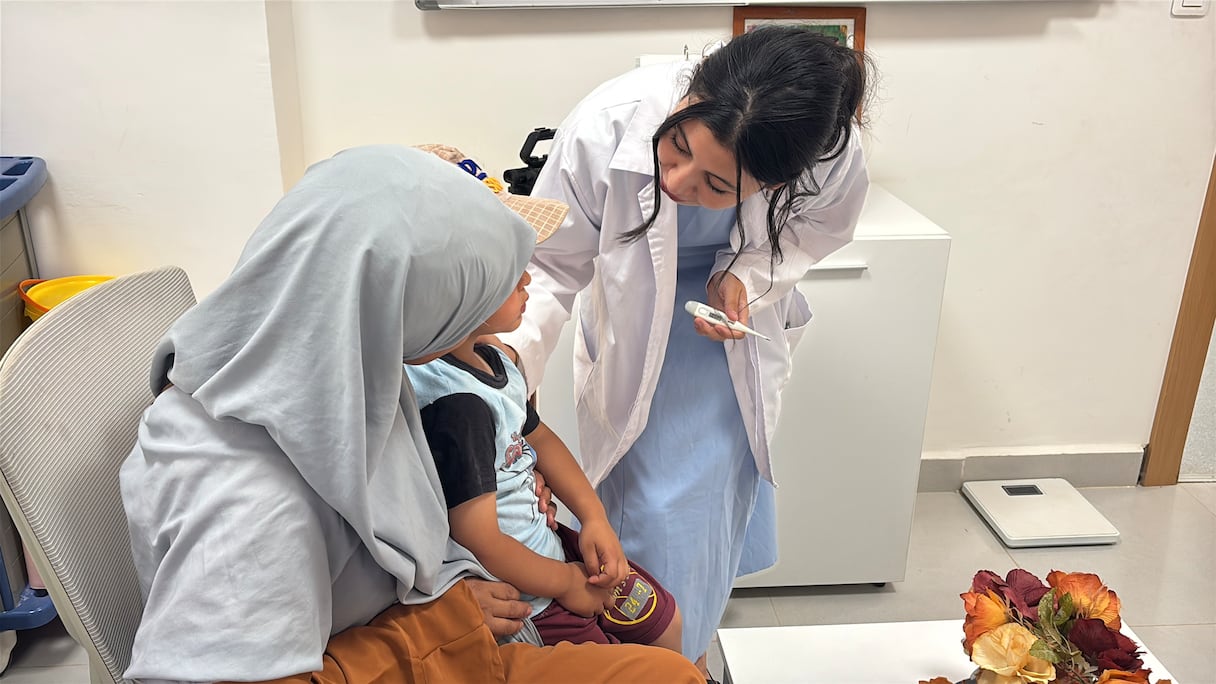
Temperatures have exceeded 40°C in Guenfouda, in Jerada province, as the area continues to experience an intense heatwave. Against this backdrop, local health services have stepped up outreach efforts to educate residents on preventive measures and help reduce the risk of heat-related illnesses.
In this context, the Ministry of Health and Social Protection has renewed its call for citizens to follow recommended safety measures to protect themselves from the health impacts of the ongoing heatwave.
At the Guenfouda rural health center, medical teams have been meeting directly with residents to reinforce key prevention messages.
“The town has been experiencing very high temperatures for several days. This situation requires us to organize awareness sessions to explain the importance of drinking plenty of water and avoiding outdoor activities during the hottest part of the day, especially around noon,” said Dounia Yaâkoubi, head nurse at the health center.
The advice is particularly aimed at those most vulnerable to heat-related complications.
“Children, older adults, and people living with chronic illnesses should avoid staying in very hot places and instead seek cool, well-ventilated environments,” she added.
Healthcare workers at the clinic are already treating patients showing symptoms of heat exhaustion.
“We are receiving people suffering from fever, dizziness, headaches, and nausea. We respond quickly by applying cooling measures to lower their body temperature before referring them to the provincial hospital when their clinical condition requires it,” Yaâkoubi explained.
In response to the situation, the provincial delegation of the Ministry of Health and Social Protection has strengthened its emergency response measures.
“Our strategy is based on preventive, anticipatory, and curative measures to address the effects of heatwaves and reduce associated risks, particularly among the most vulnerable groups,” said Mohamed Jbilo, the provincial health delegate in Jerada.
The response also takes into account the province’s particular health profile, which includes a significant number of patients living with silicosis.
“This group may be especially vulnerable to complications caused by extreme heat. For that reason, we have made a dedicated ambulance available 24 hours a day to ensure rapid intervention whenever necessary,” he said.
As the heatwave continues, health authorities are urging residents to remain vigilant and follow recommended safety guidelines to reduce the risks posed by high temperatures.
“People should not wait until they feel thirsty before drinking water, should avoid exposure to the sun between 11 a.m. and 5 p.m., and should limit physical activity during the hottest hours of the day,” Jbilo reminded.
