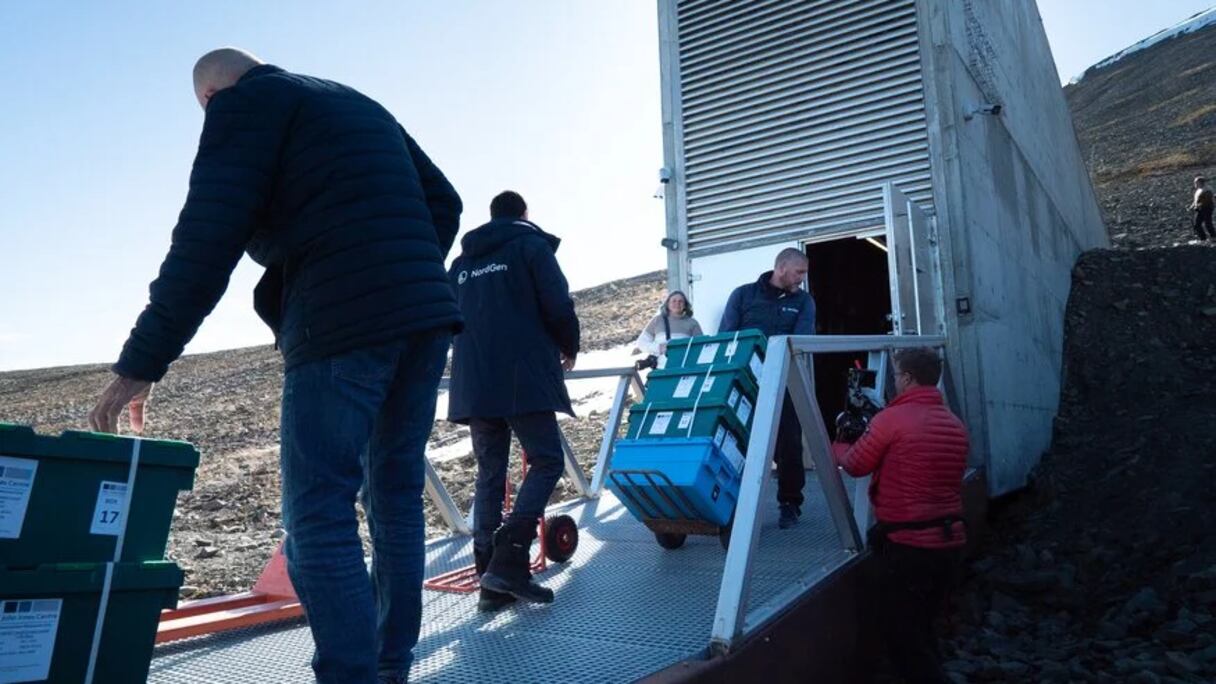
Morocco has contributed a shipment of crop seeds to the Svalbard Global Seed Vault, reinforcing international efforts to preserve the world’s agricultural biodiversity against future threats ranging from climate change to conflict and natural disasters.
The deposit was made by the International Center for Agricultural Research in the Dry Areas (ICARDA), which is headquartered in Morocco. The organization sent 1,172 seed samples representing 30 species, including chickpeas, lentils and cereals, to the secure facility on Norway’s Arctic archipelago of Svalbard.
The shipment formed part of the Seed Vault’s second opening of 2026, during which 11 gene banks from across Africa, Europe, Asia and the Americas deposited more than 15,000 new seed samples.
With the latest additions, the facility now safeguards more than 1.4 million seed samples, making it the world’s largest backup repository for crop diversity.
Built deep inside a mountain on the Norwegian island of Spitsbergen and protected by Arctic permafrost, the Svalbard Global Seed Vault serves as the world’s ultimate backup for national and international gene banks. Seeds stored there can be used to restore collections lost because of war, natural disasters, climate change or equipment failures, helping protect global food security for future generations.
Morocco’s contribution reflects a long-standing role in conserving crop varieties adapted to dryland agriculture, an area of growing importance as rising temperatures and water scarcity place increasing pressure on food production across North Africa and other arid regions.
The June deposit also welcomed two first-time contributors—Burkina Faso and Niger—while Sudan managed to secure nearly 1,000 seed samples despite the disruption caused by its ongoing civil war.
The largest consignments came from South Korea’s Rural Development Administration and the United Kingdom’s John Innes Centre, whose deposits included thousands of cereal varieties, vegetables and legumes.
