The goal is to make sport a stronger driver of development and raise Morocco’s profile internationally.
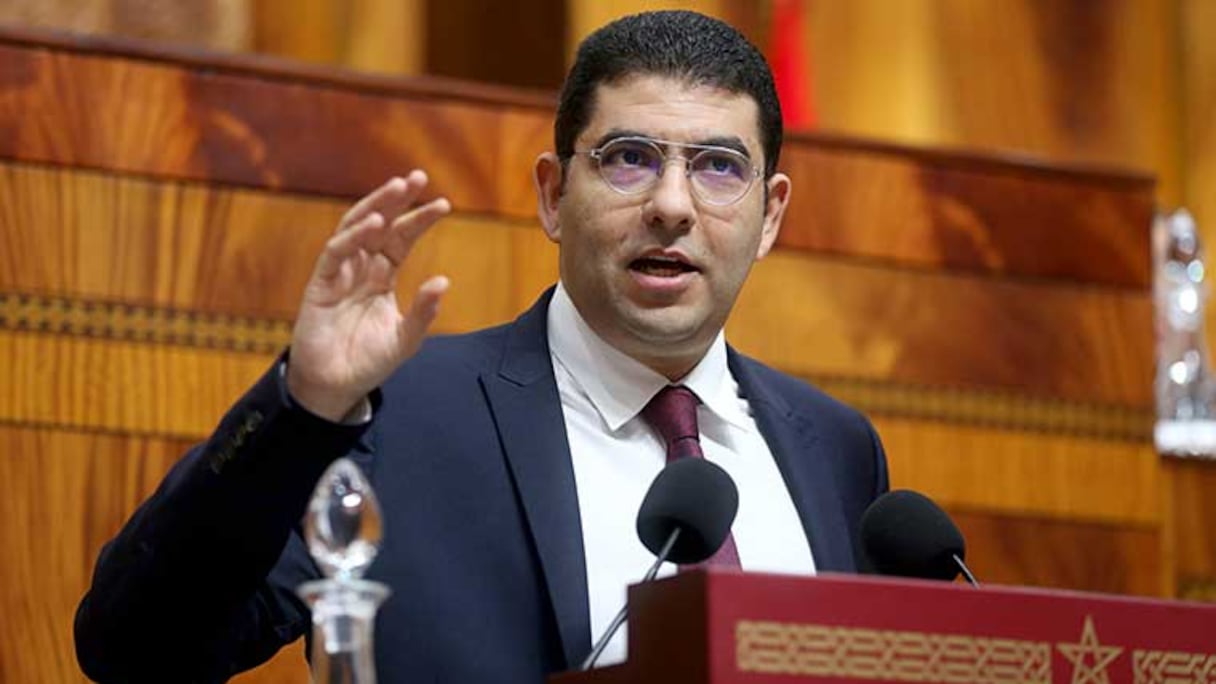
King Mohammed VI appointed the members of the new government at a ceremony in Rabat on Friday, October 16. Mohamed Mehdi Bensaïd remains in the cabinet, but with a new brief: he will head the Ministry of Youth, Culture and Sports, taking over the Sports portfolio while relinquishing responsibility for Communications.
He assumes responsibility for national sport at a time when Morocco has major international ambitions. Progress in football and golf has given the country two models that other disciplines could draw on to accelerate their own development.
Several major issues await the new minister, including reform of Law 30.09 on physical education and sports, the development of school sports, support for federations, the training of future champions and efforts to attract private investment.
Another challenge is to establish Morocco as a leading destination for major international sporting events beyond football, capitalizing in particular on the momentum surrounding the 2030 FIFA World Cup.
Read also : Who is Salah-Eddine Abkari, the 32-year-old named youth minister?
Learning from football and golf
This is arguably one of the most important challenges facing Bensaïd. Guided by King Mohammed VI’s vision, Moroccan football has made major strides in recent years, supported by investment in infrastructure, training, technical supervision and professionalization.
The Mohammed VI Football Academy, federal training centers and other development structures have become reference points. Other sports could draw lessons from this model.
Moroccan golf offers another example. Under the leadership of the Royal Moroccan Golf Federation (FRMG), the sport has pursued a development strategy focused on youth training, talent development and the organization of international competitions. The Hassan II Trophy and Lalla Meryem Cup have helped raise Morocco’s profile on the international golf circuit.
Although the two sports differ in their resources and organization, both demonstrate the importance of long-term planning and structured development.
Athletics, basketball, handball, volleyball, swimming and motorsports are among the disciplines with considerable human potential, but they need development policies tailored to their specific circumstances.
The aim is not to replicate football or golf wholesale, but to draw on the factors behind their progress: a clear strategy, suitable infrastructure, quality coaching, early talent identification and regular participation in major international competitions.
The ministry could play a decisive role by helping federations develop ambitious programs with clear targets and appropriate resources.
Reforming Law 30.09 to match Morocco’s sporting ambitions
Another major task is the reform of Law 30.09 on physical education and sports. Enacted in 2010, the law provides the legal foundation for the organization of sport in Morocco. More than 16 years later, however, the country’s sporting landscape has changed considerably, as have its ambitions.
The professionalization of clubs, the development of sports companies, governance within federations, private investment and the emergence of new sports-related professions have all raised questions about whether the current legal framework remains fit for purpose.
The challenge will be more than simply amending a few provisions. Morocco needs legislation that can support the development of its sports sector. Reform should clarify the responsibilities of different stakeholders, facilitate investment, strengthen transparency in the management of sports organizations and give clubs and federations greater flexibility.
Football, which has been undergoing a transformation for several years, illustrates both the progress made and the difficulties associated with applying the existing framework, particularly the transition from associations to sports companies.
Read also : Who is Kouloub Faitah, the new minister delegate in charge of relations with parliament and civil society?
Revising Law 30.09 could therefore become one of the defining projects of Bensaïd’s term. Morocco’s sporting ambitions for 2030 and beyond will require rules that reflect today’s realities.
Making Morocco a destination for major sporting events
Morocco has built a strong track record in hosting football competitions. The 2030 World Cup, which it will co-host with Spain and Portugal, is the next major milestone.
But why limit that ambition to football? Morocco has the potential to host more international events in other disciplines. Major basketball, tennis, athletics, cycling and motorsports competitions could further strengthen the country’s appeal.
Rwanda offers an example worth watching. Formula 1 is expected to return to the African continent in the early 2030s, with a Grand Prix planned in Rwanda. A 10-year agreement has been reached to host the competition, which has been absent from Africa since 1993, when the last Grand Prix on the continent took place in South Africa.
The project illustrates Rwanda’s ambition to use sport to drive economic development, tourism and international visibility.
Why not Morocco? The country has its own history with Formula 1, having hosted a World Championship Grand Prix in 1958 at the Ain Diab circuit in Casablanca.
Hosting an event of that scale would, of course, require substantial investment and a serious assessment of its financial viability. But the prospect illustrates how an African country can seek to position itself to host some of the world’s biggest sporting events.
Morocco has assets that could support such ambitions, provided it sets clear priorities, brings in the necessary partners and pursues a long-term strategy.
Read also : Who is Kouloub Faitah, the new minister delegate in charge of relations with parliament and civil society?
Restoring school sports and training to their rightful place
Tomorrow’s champions can also be found in schools, neighborhoods and small towns across Morocco. Developing school sports is therefore another essential priority. Identifying young talent cannot depend solely on clubs and federations.
Closer cooperation between the Sports Ministry, the Education Ministry and local authorities could expand school competitions, improve access to sports facilities and identify promising young athletes earlier.
Women’s sport and para-sport also deserve particular attention, as do disciplines that still struggle to attract private funding.
The objective is straightforward: to give every young Moroccan, regardless of region or social background, the opportunity to take part in sport in good conditions.
Supporting federations and preparing the next generation of champions
A country’s sporting ambitions are also measured by its results at major international competitions, particularly the Olympic Games. To improve its performance, Morocco will need to provide stronger support for elite athletes and give federations greater clarity on their resources and objectives.
Preparing an Olympic champion takes years of work. It requires qualified coaches, medical support, appropriate equipment and regular opportunities to compete internationally.
The ministry will have an important role in coordinating efforts among federations, the Moroccan National Olympic Committee and other partners.
Training coaches, fitness trainers, referees and sports administrators will also need greater attention. Every champion depends on a wider support system that must be built and maintained.
Turning sport into an economic sector
Sport is no longer measured solely by results on the field or medals won. It is an industry capable of creating jobs, attracting investment and contributing to regional development.
Morocco can build on its infrastructure, geographical position and experience hosting events to develop a stronger sports economy. Sports tourism, equipment manufacturing, training centers, sports medicine, competition management and the operation of sports facilities all offer opportunities.
Encouraging private investment and establishing lasting partnerships will be essential to ensure that sports projects do not depend exclusively on public funding.
The government will also need to ensure that facilities built or upgraded for major competitions continue to serve clubs, athletes and the public after the events are over.
Read also : Abdeljabbar Errachidi appointed minister delegate for crafts and social economy
Turning ambition into results
Bensaïd takes charge of a ministry that can play a central role in the development of Moroccan sport. Football and golf have shown that a clear vision, investment and sustained work can help the country build strong sporting models and gain international recognition. The challenge now is to extend that progress to other disciplines.
Reforming Law 30.09, developing school sports, supporting federations and attracting new international competitions must all serve a common ambition.
The 2030 World Cup will offer Morocco a major international showcase, but the country’s sporting future must extend well beyond that tournament.
Bensaïd’s real challenge will be to help build a model that develops more champions, attracts major competitions and makes sport a driver of economic and social development. Morocco has already demonstrated its ability to succeed in football and build an internationally recognized golf tradition. The next step is to aim higher across all sports.
