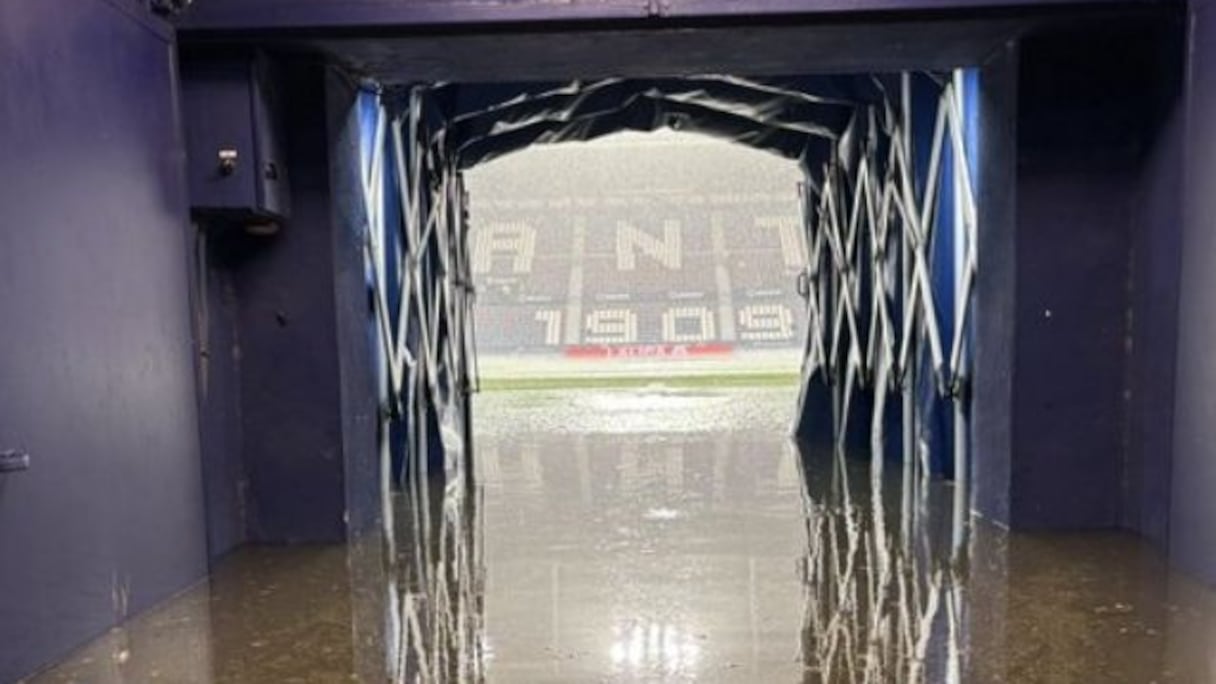
Levante’s match against Athletic Bilbao, part of matchday 6 of La Liga, was postponed on Wednesday, September 16, after heavy rainfall flooded the Estadio Ciudad de Valencia.
The water reached the corridors leading to the dressing rooms, leaving several areas of the stadium completely submerged. Athletic Bilbao later captured the situation in a video published that evening.
In a statement, Bilbao attributed the postponement to “adverse weather conditions” as Valencia was hit by a storm and torrential rain.
This is not the first flooding incident to affect a Spanish stadium since the end of the summer.
Barcelona’s Camp Nou experienced a similar problem during the Champions League match between the Catalan club and Feyenoord. Water flooded several parts of the stadium, including areas reserved for the media, leaving journalists’ equipment exposed to potential damage.
The incident attracted widespread attention at a time when Spain has repeatedly promoted its modern stadiums through an extensive media campaign and comparisons, presenting them as central to its joint bid to host the 2030 World Cup. Yet within just a few days, two of these stadiums have literally been left underwater.
Valencia is not among the 11 Spanish cities initially included in the bid book for the 2030 World Cup, but the Valencia region is expected to host team base camps, according to a statement from the Spanish Football Federation (RFEF).
Several similar incidents are also worth recalling. In October 2023, while Madrid’s Santiago Bernabéu was undergoing construction work, Storm Aline caused significant water infiltration. Images at the time showed water pouring down the stairways used by spectators.
Then, in June 2024, another storm flooded the Bernabéu. On that occasion, the water reached the Real Madrid museum, located in the upper sections of the stadium.
In Spain, it would seem that greater attention is being paid to the media campaign surrounding the 2030 World Cup final than to the actual condition of the infrastructure.
LaLiga president Javier Tebas, Spanish Football Federation president Rafael Louzán and even Spain coach Luis de la Fuente rarely miss an opportunity to campaign for the tournament’s most important match, displaying unusual confidence while putting forward arguments that remain open to question.
They have been less eager to comment on these images, which should nevertheless not escape FIFA’s attention as the sole authority responsible for the hosting decision.
There will be inspections and assessments, there will be consultations and, above all, there will be a final decision in which no outside party will be consulted.
