The 2030 World Cup final is becoming an obsession in Spain. Barely a day goes by without another statement, claim or warning. And Rafael Louzán appears determined to keep the issue firmly in the spotlight. On Wednesday, September 16, the president of the Spanish Football Federation (RFEF) doubled down once again: the final “must be played in Spain and not Morocco.”
Speaking at the World Football Summit (WFS) in Madrid, Louzán once again laid out Spain’s case. “The figures are on our side and so are the arguments (...) It is obvious that the final must be played in Spain (...) Spain is a guarantee of success, there should be no doubt about that,” he said, according to EFE.
For the RFEF president, Spain has everything going for it: its weight in the organization of the tournament, the number of host venues, its financial contribution, its expertise and, of course, the strength of Spanish football.
“Spain are two-time world champions, we have the best clubs, the best league, and there should be no doubt that, after the 1982 World Cup and with Spain accounting for 55% of the 2030 tournament in terms of the number of venues and financial contribution, it is obvious that the final must be played in Spain. It should also be recognized that we are very good at organizing major events,” he insisted.
Louzán went so far as to describe Spain as the future “epicenter of world football,” citing the Champions League finals scheduled for the Metropolitano in 2027 and Camp Nou in 2028—and already adding the 2030 World Cup final to the list.
Infantino Expected in Madrid
The Spanish football chief also announced that Gianni Infantino would travel to Madrid in the fall. The FIFA president is expected to meet Spanish Prime Minister Pedro Sánchez, among others.
Louzán intends to use the visit to have “a long conversation” with Infantino about preparations for the World Cup. It is difficult to imagine the final not featuring prominently in those discussions, given how much it now appears to occupy minds within Spanish football.
This latest intervention is merely the latest in a long series. In early September, Rafael Louzán chose Ceuta, where he was visiting alongside national team coach Luis de la Fuente, to once again press Spain’s claim to the final. He said at the time that “people would not understand” if it were not held in Spain, even joking about the possibility of staging it in Ceuta if the city had a sufficiently large stadium.
A few days later, he was at it again. Louzán said Spain would host the final “because it cannot be otherwise.” On Wednesday, the message remained unchanged.
Tebas Raises the Prospect of Withdrawal
More curiously, Louzán is now urging everyone “not to get into a dispute” and calling for “calm.” It is an appeal for restraint that sits awkwardly with this succession of public statements.
Rafael Louzán is not alone. The 2030 World Cup final has become a recurring subject among Spanish football officials, to the point that Javier Tebas went considerably further on Tuesday, also at the World Football Summit.
The LaLiga president said Spain should “rethink” its participation in the World Cup if Gianni Infantino were re-elected as FIFA president and the governing body awarded the final to Morocco. “I don’t know whether we should withdraw or not, but we need to rethink everything we are doing around the World Cup,” he said.
What began as a campaign to host the final has thus moved on to the threat, however hypothetical, of withdrawal. Above all, Tebas has grafted the 2030 World Cup issue onto his own confrontation with Infantino, whose leadership he openly contests. Four years before the tournament, the battle for the final is already being fought through public statements.
Politics Enters the Fray
The issue is no longer confined to football officials. Pedro Sánchez himself has pressed Spain’s claim to the final, while several Spanish politicians have taken positions in recent weeks on the 2030 World Cup and Morocco’s place in the organization of the tournament.
Louzán, too, strayed beyond strictly sporting territory on Wednesday. According to EFE, he attributed Fouzi Lekjaa’s remarks to his “election campaign,” referring to his political ambitions in Morocco as well as the situation in Ceuta.
At the same time, the RFEF chief described Morocco as “an ally for many reasons,” before adding that Spain’s “best allies” remained Portugal and the South American countries involved in the World Cup. A curious way of underscoring the unity of a joint bid.
Amid this torrent of statements, the contrast with Morocco is striking. Morocco has remained virtually silent in the face of the campaign waged for several weeks by Spanish football officials, politicians and media outlets over the final.
It ultimately took just one statement from Fouzi Lekjaa for the Spanish football establishment to erupt once again. The FRMF president recently said the final would be played at the Grand Stade Hassan II.
FIFA, for its part, has yet to award the final. In Spain, that is apparently no obstacle to playing it out ahead of time.
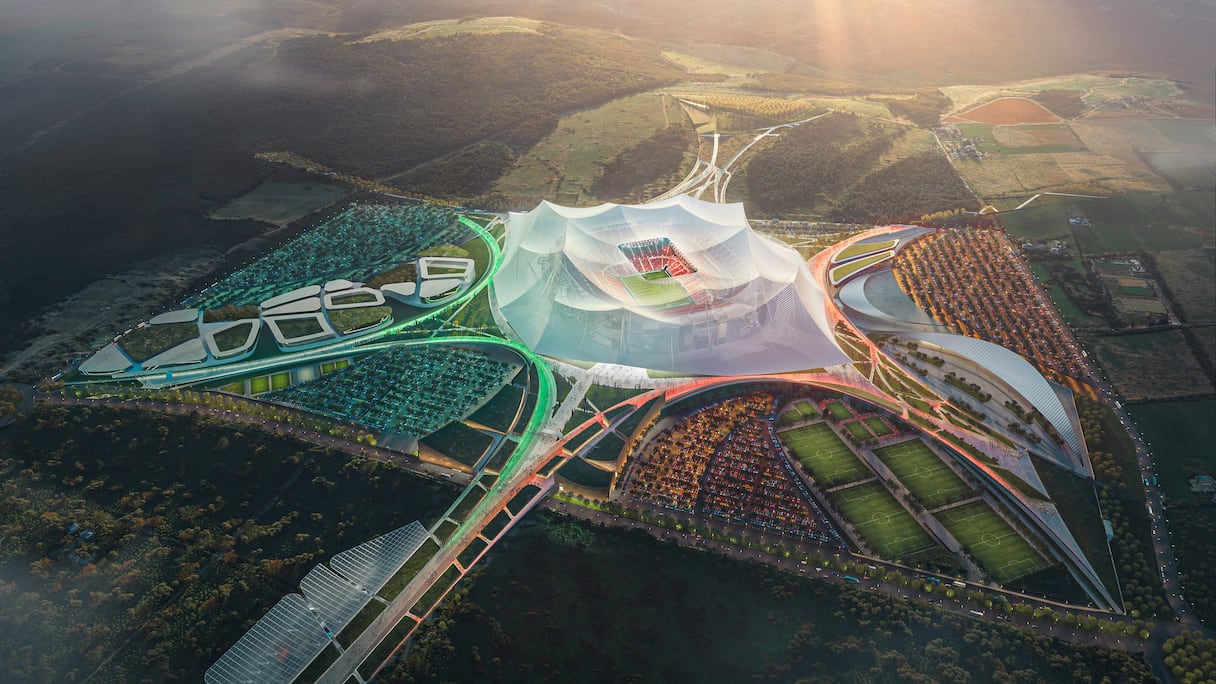
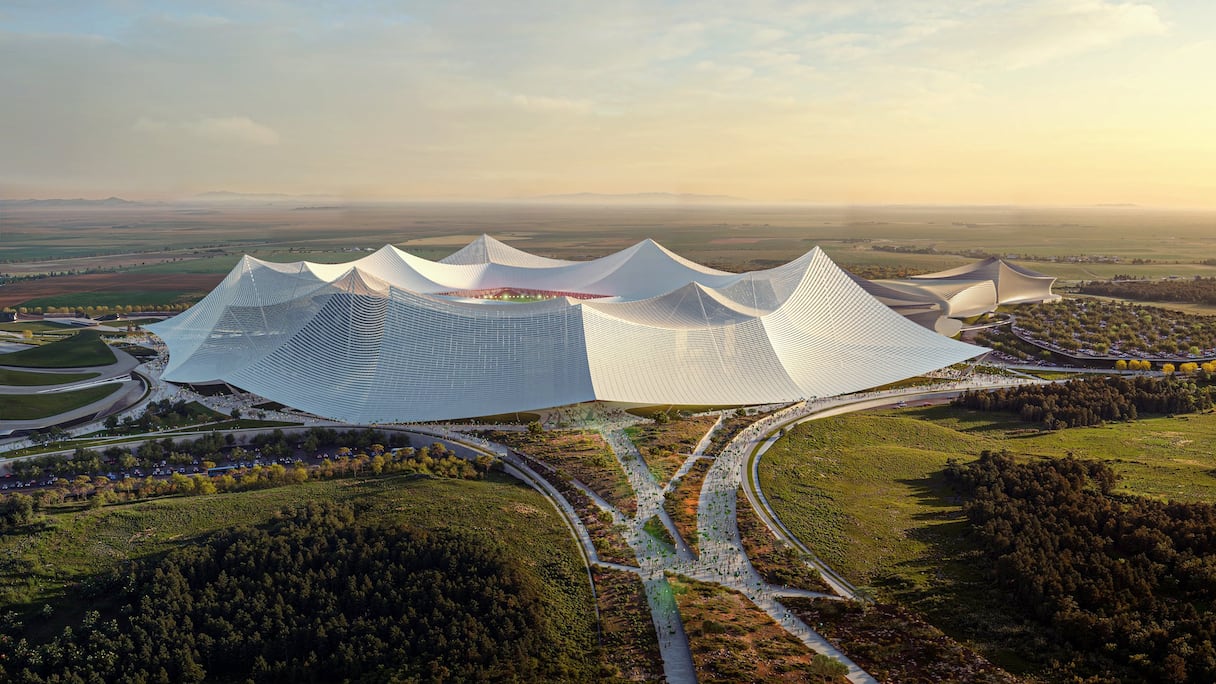
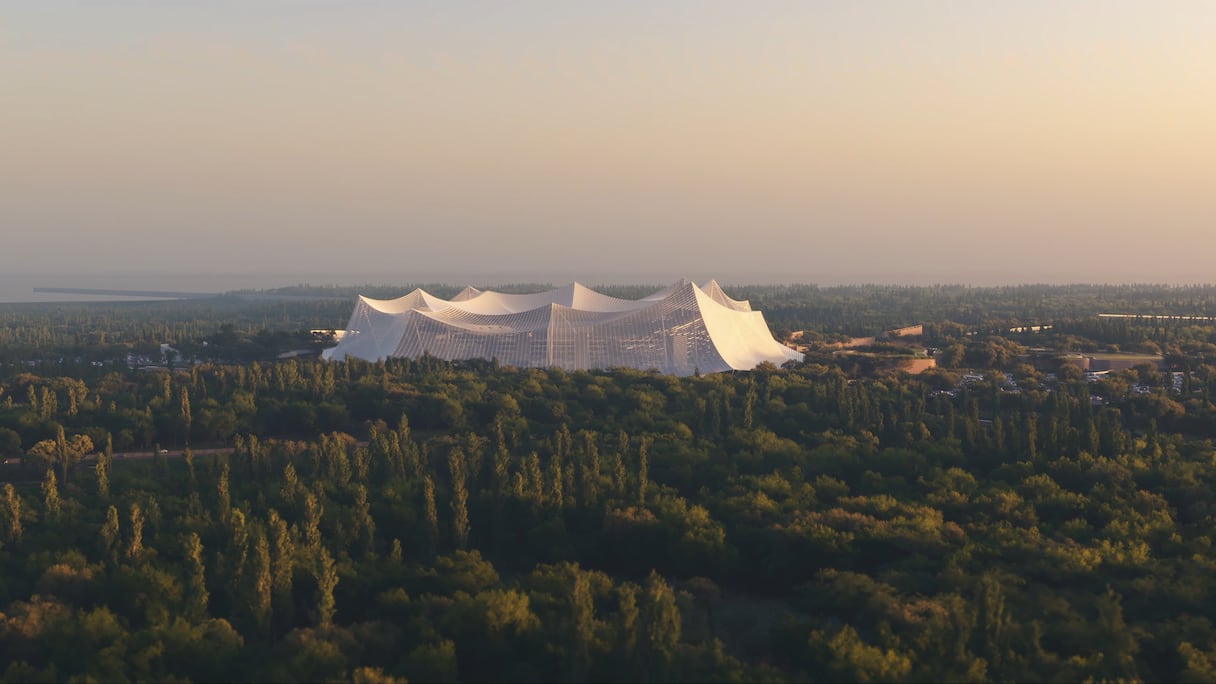
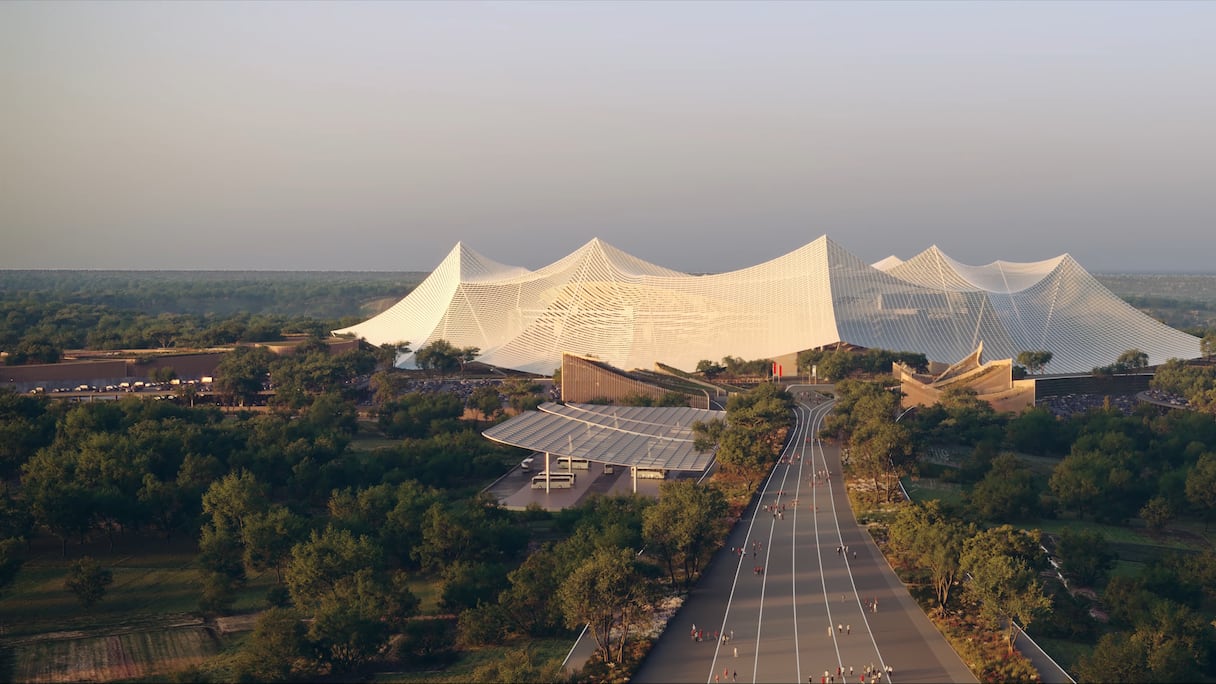
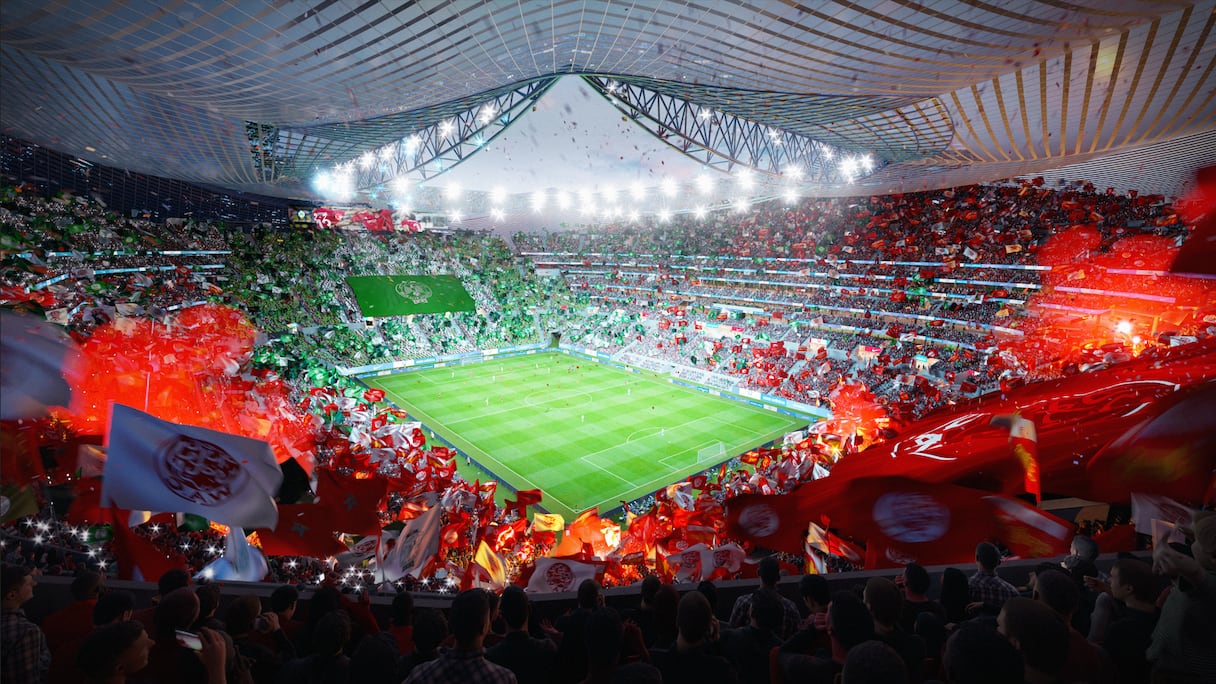
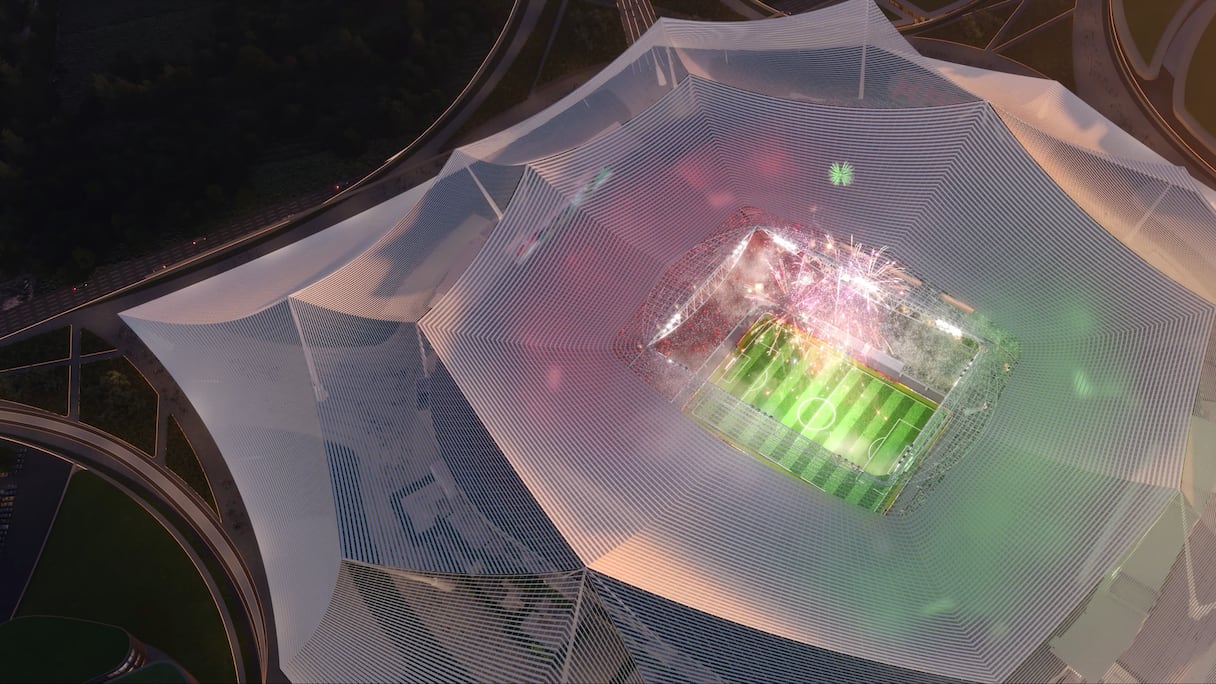



Model of the Grand Hassan II Stadium in Benslimane.