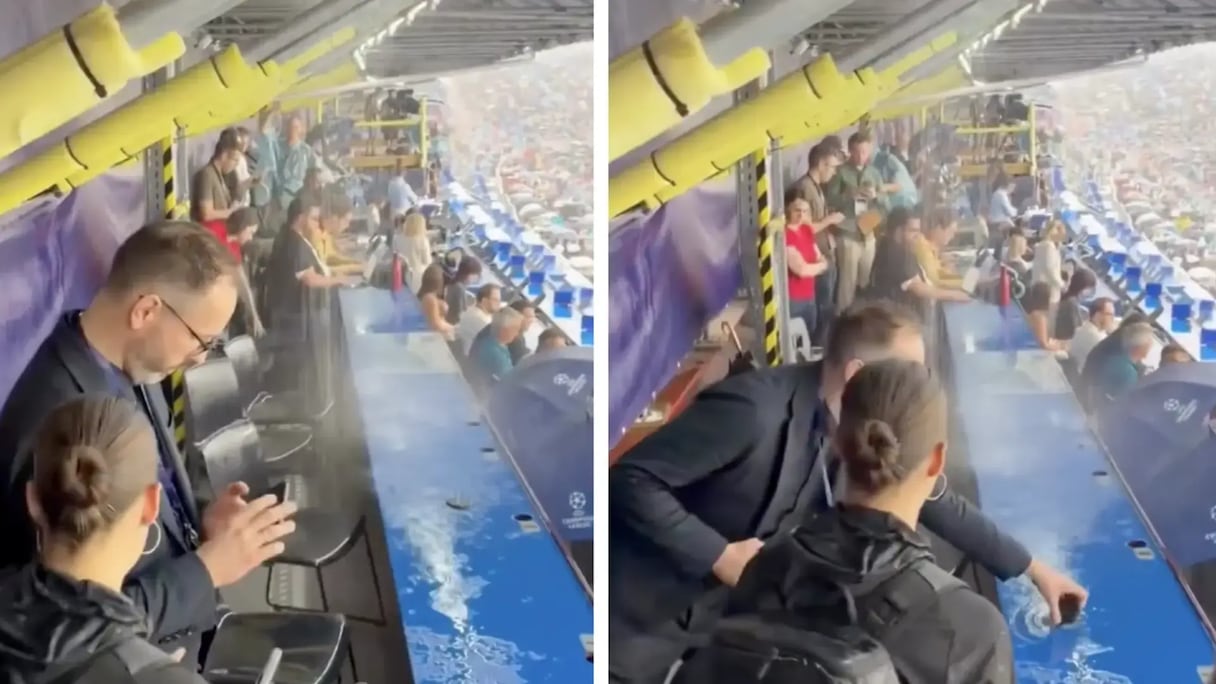
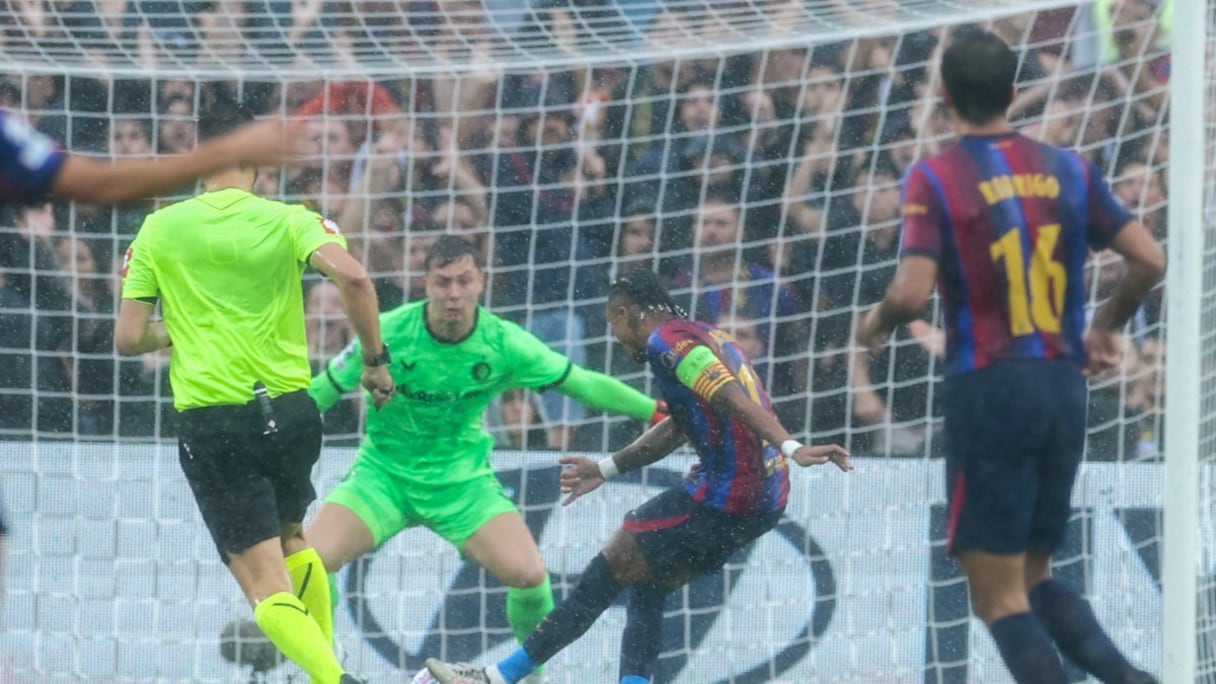
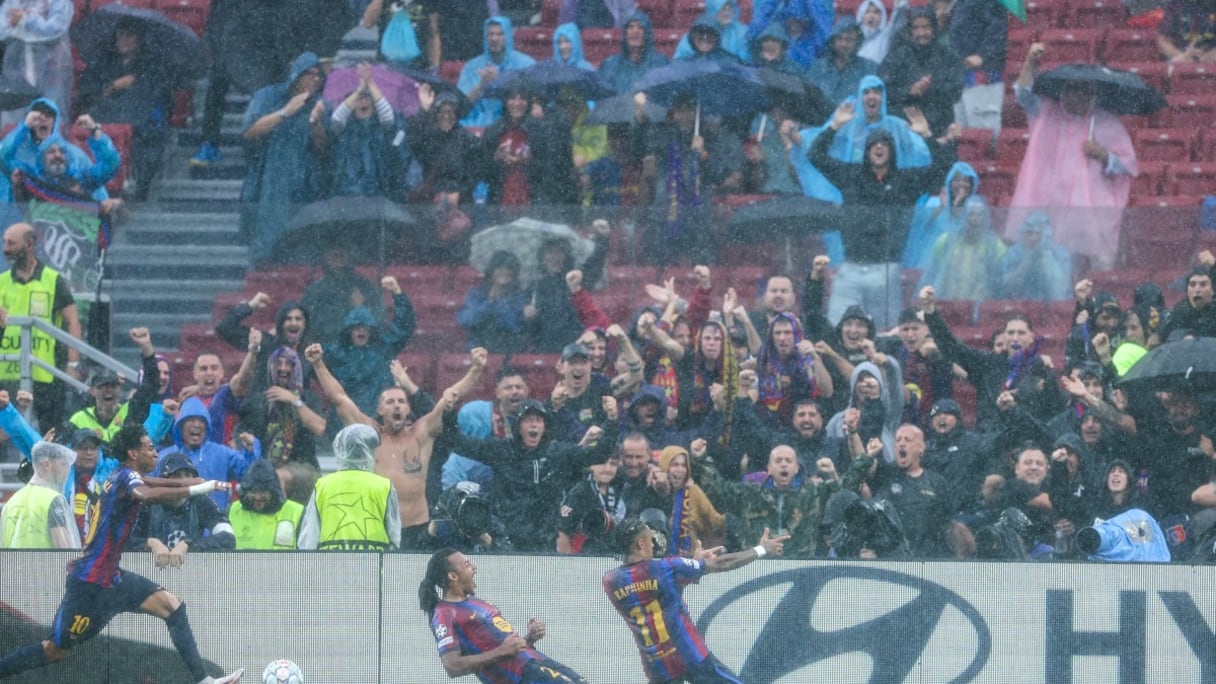
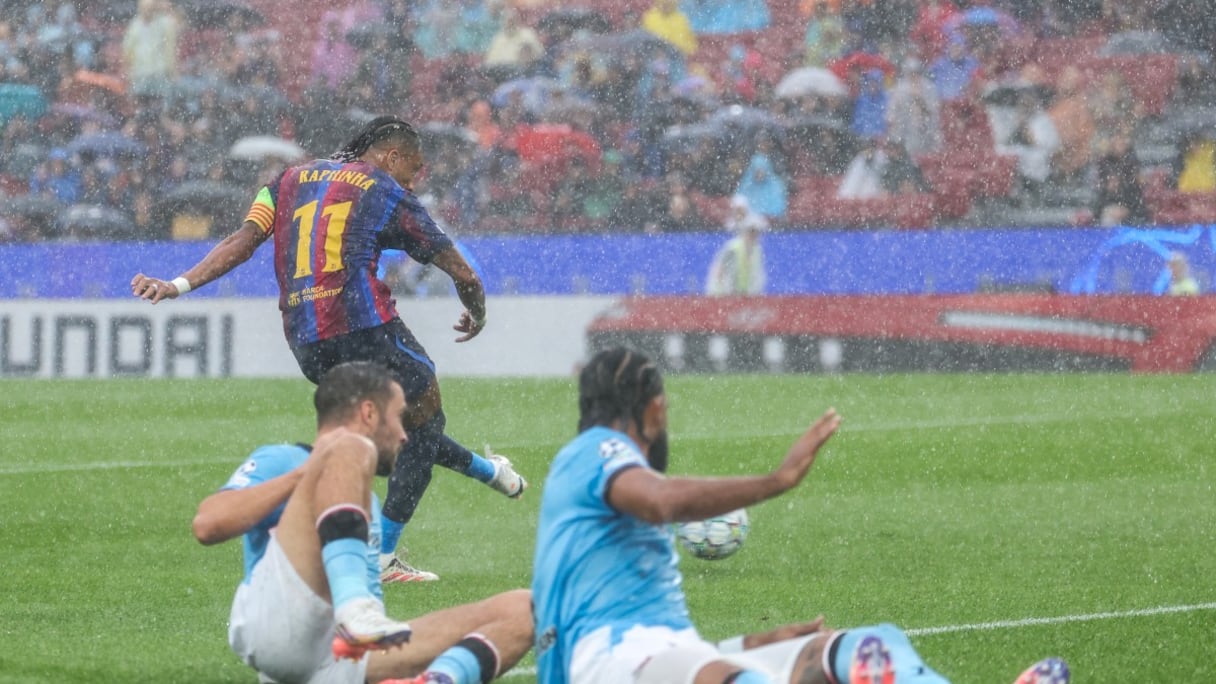
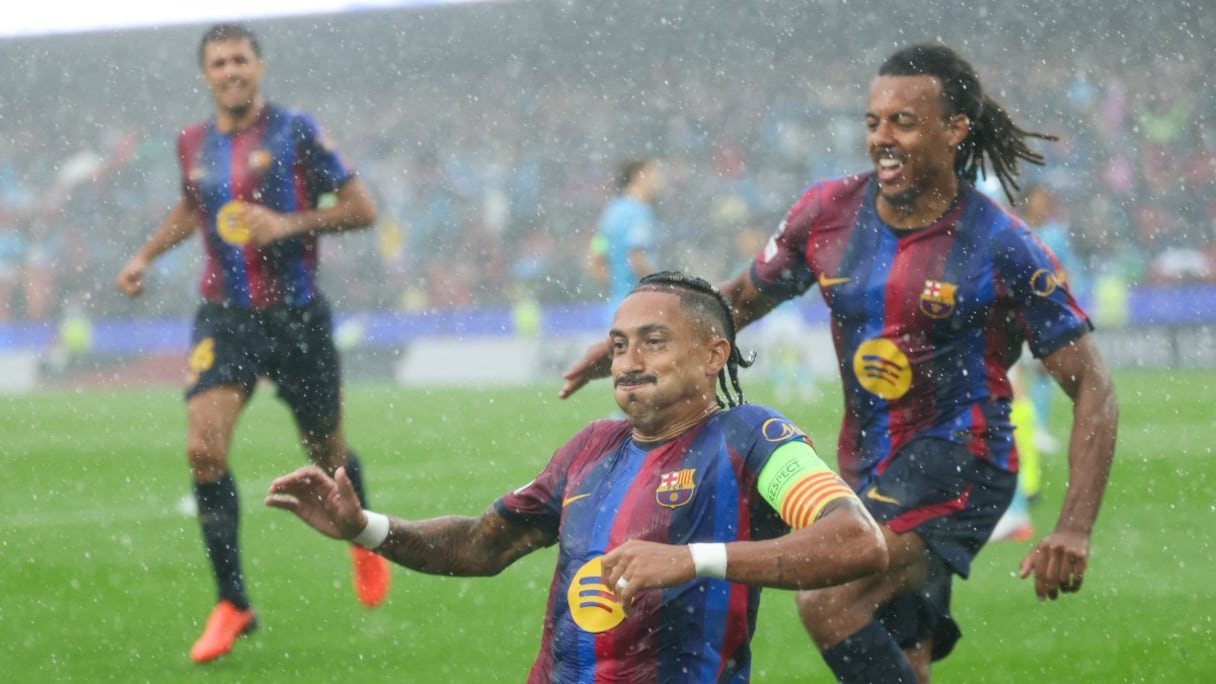
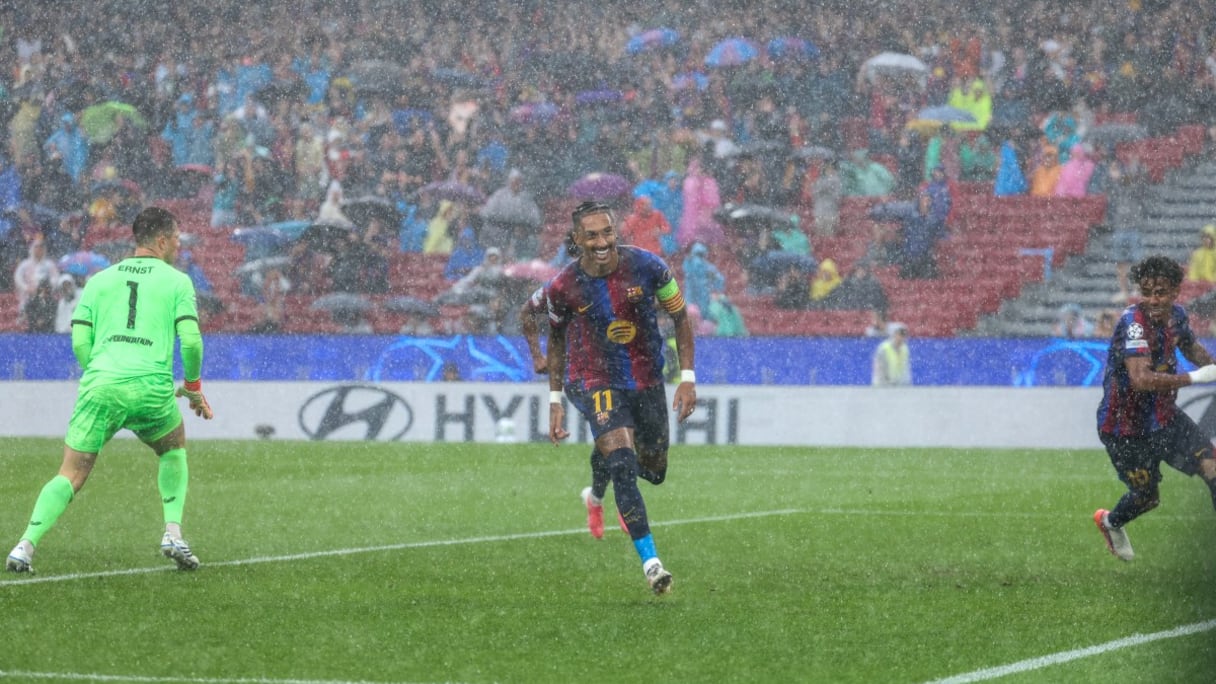
Heavy rain once again caused water leaks at the Camp Nou on Wednesday, September 9, during Barcelona’s Champions League match against Feyenoord. Torrential rain swept across Catalonia, with water entering several parts of the stadium, including areas reserved for the media. Journalists had to protect their equipment and work around the leaks.
This episode is particularly notable because the Camp Nou has experienced similar problems before. In January, during Barcelona’s match against Oviedo, heavy rain caused serious leaks inside the stadium, with some sections effectively turning into flooded areas. The stands were still partly under construction and lacked their permanent roof, allowing large amounts of water to enter. Even the presidential stand was affected, with Joan Laporta ending the evening soaked.
Barcelona is not alone. Madrid’s Santiago Bernabéu has also had its own problems with water, despite a major renovation designed to turn it into one of the world’s most modern stadiums.
In October 2023, while work on the Madrid stadium was still not fully complete, Storm Aline caused significant water infiltration. Images showed water running down the stairways leading to public access areas.
A few months later, in June 2024, another storm put the Bernabéu to the test. This time, water reached the Real Madrid museum, located in the upper sections of the stadium.
Taken individually, such incidents can be attributed to particularly severe weather, and no stadium is completely immune to this type of problem. Their recurrence, however, offers an awkward counterpoint to the confident campaign being waged in Spain for the 2030 World Cup final.
Spanish football officials have repeatedly argued that the final should be played in Spain, pointing to the strength of Spanish football, its record, and its infrastructure. Spanish Football Federation president Rafael Louzán recently made the case again, while the Santiago Bernabéu and Camp Nou are presented as two of Spain’s strongest arguments in the race to host the tournament’s most coveted match.
But Spain is not competing alone. In Benslimane, Morocco is building the Grand Stade Hassan II, a 115,000-seat venue set to become one of the largest football stadiums in the world. The Moroccan project is advancing with a clear ambition: to provide a stadium capable of meeting the requirements for a World Cup final and competing directly with Spain’s two giants.
That is what gives the latest images from Barcelona their particular significance. They do not disqualify the Camp Nou, just as the previous leaks at the Bernabéu do not diminish its status as a major stadium. They do, however, serve as a reminder that the final decision does not belong to Spain.

FIFA will compare the bids, inspect the facilities, and assess the conditions actually offered by each candidate. Until that process is complete, the race for the 2030 final remains open — and when a country is claiming the best infrastructure, it is perhaps better not to let the rain make the counterargument.
