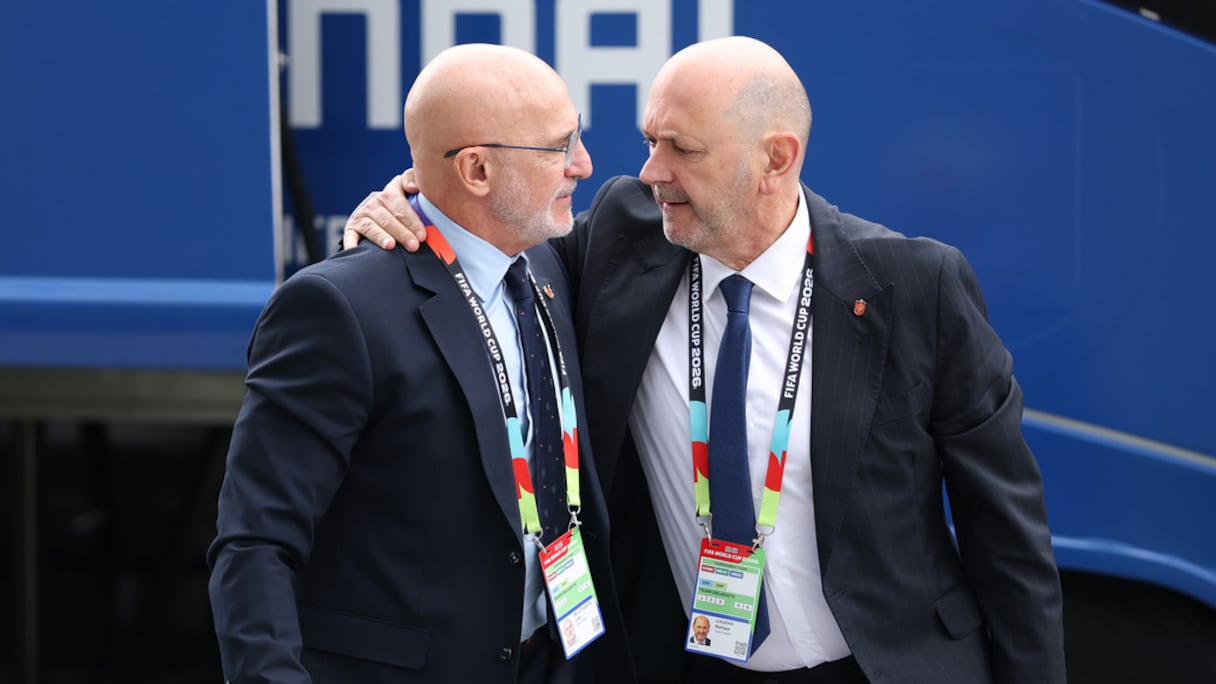
Spain may be Morocco’s partner in organizing the 2030 World Cup, but it appears increasingly reluctant to treat its neighbor as one. After political statements, media pressure and an almost obsessive campaign over the venue for the final, Spanish football is now moving into much more sensitive territory. On Friday, RFEF president Rafael Louzán and Spain coach Luis de la Fuente are due to visit Ceuta. The visit could be seen as an ordinary federation initiative if it were not taking place in such a politically charged context.
According to El Confidencial, Louzán and De la Fuente are due to meet officials from the Ceuta Football Federation (RFFCE), several representatives of local clubs and the city’s president, Juan Jesús Vivas.
The official explanation is carefully worded. The RFEF says the visit is intended to show “the solidarity of Spanish football with the population in this very complex context”. The federation also says it is “aware of the responsibility it assumes at a social level”.
However, when the head of Spanish football and the national team coach travel together to Ceuta, the move goes beyond sport. The timing only reinforces that message.
When the battle for the World Cup final goes beyond football
For several months, Spain has been pushing to secure the 2030 World Cup final. Santiago Bernabéu, Camp Nou, statements from political figures, comments from football officials and television debates have all become part of the campaign.
The main rival to the Spanish bids is the Hassan II Grand Stadium in Benslimane. With a capacity of around 115,000, the Moroccan venue is set to become the tournament’s main stadium and a natural candidate to host the final. This is precisely where the Spanish rhetoric has started to become tougher.
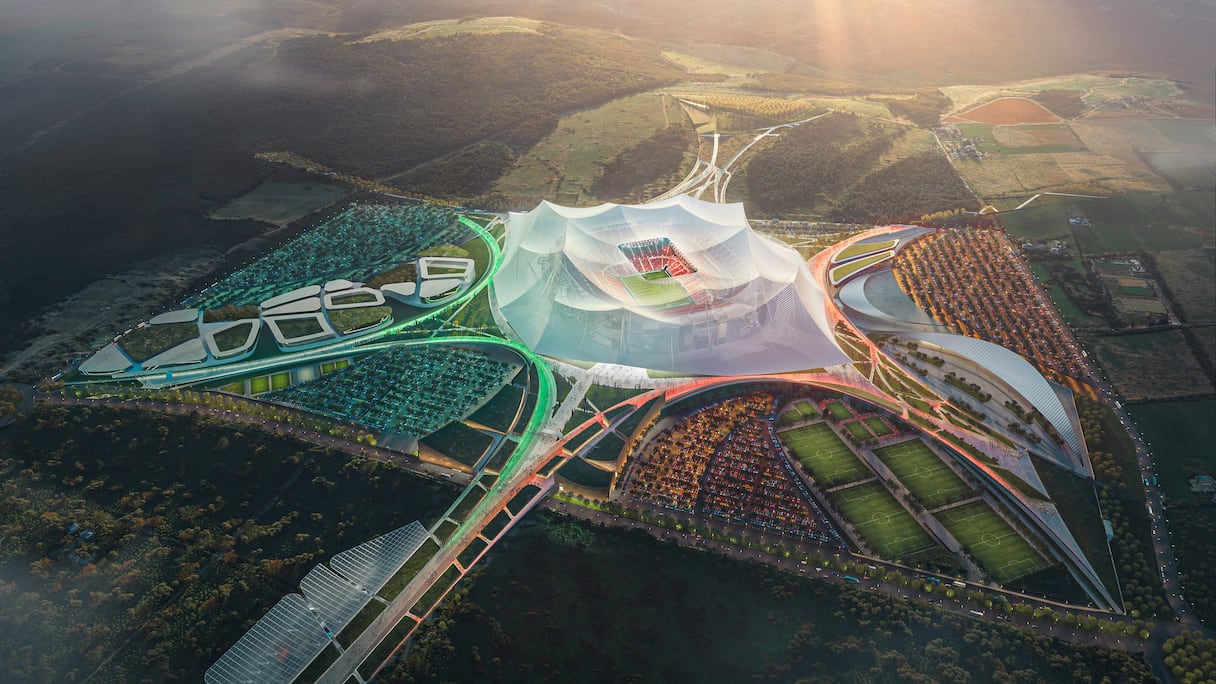
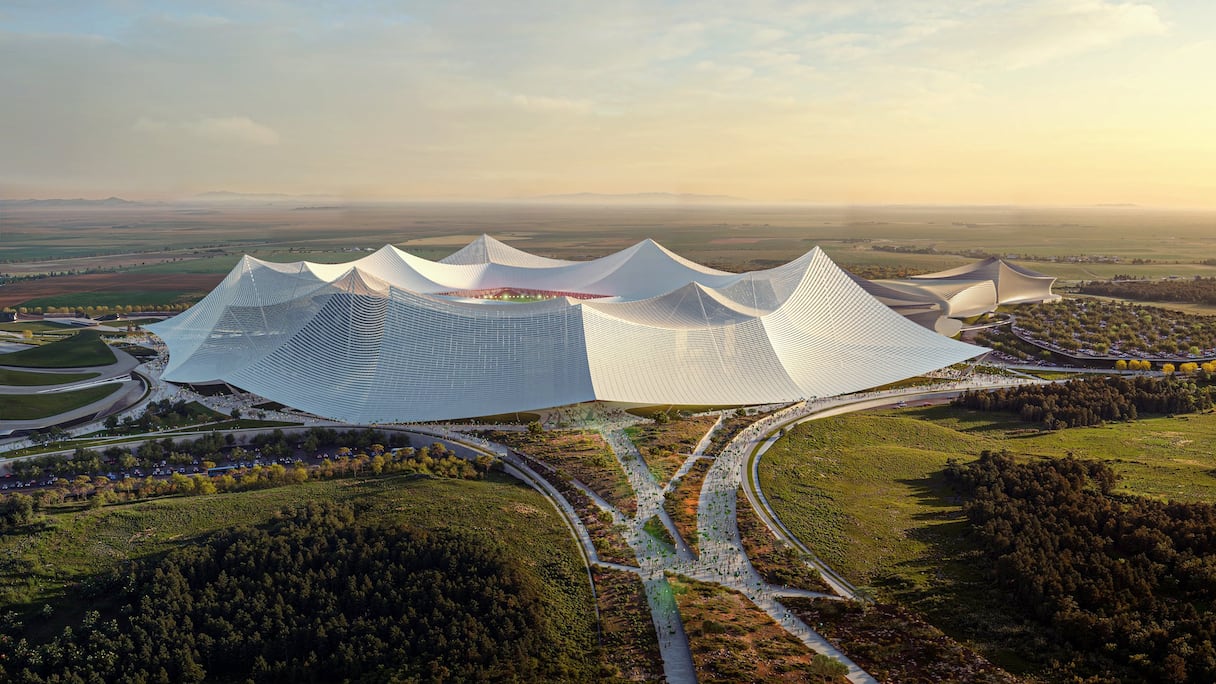
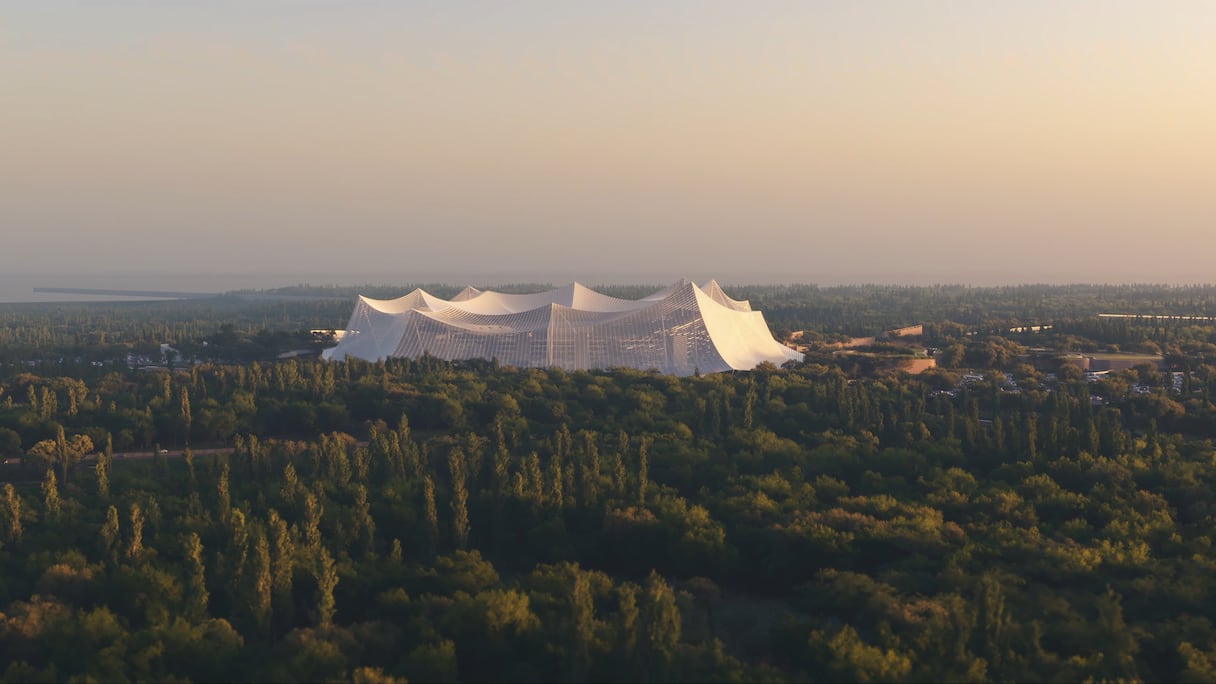
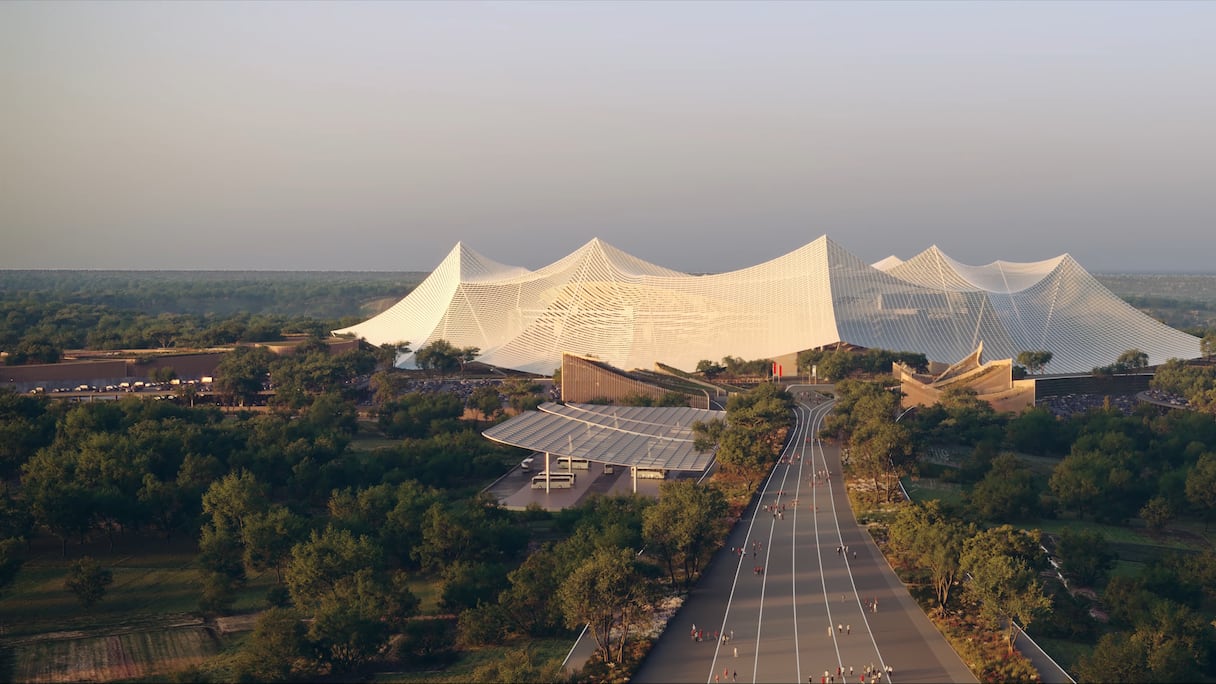





Model of the Grand Hassan II Stadium in Benslimane.
Pedro Sánchez has publicly backed the idea of holding the final in Spain. In the media, the campaign has gone as far as raising the possibility of Spain reconsidering its participation in the joint bid if FIFA were to choose Morocco. This is now far more than a simple competition between stadiums.
Since the prospect of a final in Casablanca has gained momentum, Morocco has increasingly been treated in part of the Spanish public debate not as the partner with which Spain will organize the World Cup, but as the rival that must be stopped.
And then there is Ceuta
It is against this backdrop that Rafael Louzán is choosing to visit Ceuta with Luis de la Fuente. The symbolism is difficult to ignore. The RFEF is expected to work directly with the FRMF over the next four years. Its president’s involvement in an issue with such strong political sensitivity therefore cannot be seen as an ordinary move.
El Confidencial has also made little effort to hide the political background to the visit. The newspaper says developments in Ceuta and relations between the Spanish government and Rabat are causing concern within the RFEF.
The next step is even more revealing. Louzán is also considering sending one of Spain’s national teams to play a match in Ceuta. For the senior team, the limited capacity of local facilities makes such a move difficult. But the possibility of holding a match involving Spain’s under-21 side is still being considered.
And there is an interesting detail. El Confidencial says such a decision would have to be made while taking care not to “upset the Moroccan partner”. In other words, those presenting the initiative as purely sporting are fully aware that it is not.
Partner or rival?
If the RFEF has to consider the consequences of a match for its relations with Morocco, it is precisely because the decision has a diplomatic dimension.
This is the ambiguity surrounding Spain’s position ahead of the 2030 World Cup. When it comes to promoting the joint bid, Morocco is a strategic partner. When the final comes into question, it suddenly becomes a competitor whose ambitions should be contained. And when Ceuta enters the equation, Spanish football itself is no longer staying out of political territory.
Four years before the tournament, the question is therefore worth asking: does Spain really see Morocco as its partner for 2030, or only as long as Morocco does not threaten its ambitions?
The World Cup has not started yet. The battle for its final, however, already appears to have gone well beyond the pitch.
