
Spain’s push to host the 2030 World Cup final has intensified. During a discussion on the popular football program El Chiringuito, journalists raised the possibility that Spain would pull out as a host if the final were awarded to Morocco.
This idea has gained momentum following Spanish Prime Minister Pedro Sánchez’s recent pledges to increase efforts to bring the final to Spain. Spanish officials, politicians, and football leaders increasingly argue that the tournament’s biggest match should be played at either the Santiago Bernabéu or the Camp Nou stadium.
These two stadiums are competing with Casablanca’s Hassan II Grand Stadium for the right to host the final.
While the debate continues in Spain, construction of the Hassan II Grand Stadium is progressing in Benslimane. Designed to be the world’s largest soccer stadium, the venue will have large stands and VIP and VVIP areas that meet FIFA requirements. It will also have surrounding facilities and infrastructure for major international events.
The project is increasingly being seen as a serious rival to the Spanish venues in Madrid and Barcelona.
A journalist from El Chiringuito said there was “an atmosphere of tension” surrounding the issue.
“The federation has established a roadmap for the final to be played in Madrid, Spain. If that does not happen, I think there could be major consequences during the World Cup. I think the Federation is preparing for every scenario,” said one of the journalists.
Another journalist went further, openly raising a scenario that has so far appeared unlikely: Spain withdrawing from organizing the tournament.
“If the final is in Morocco, Spain will withdraw from organizing the World Cup. It’s something the Federation is considering,” he said.
The Spanish Football Federation (RFEF) has never hidden its ambition to host the final. Its president, Rafael Louzán, recently urged the Spanish government to take a more active role in the matter.
Beyond the battle over the final, however, another aspect of the El Chiringuito discussion stood out: how some participants viewed Spain’s role in the joint bid with Morocco and Portugal.
During the debate, the other two host countries sometimes seemed to be pushed into the background, even though the tournament is being organized jointly.
“Spain is carrying the weight of organizing this World Cup. FIFA will depend on Spain to organize the World Cup,” said one participant.
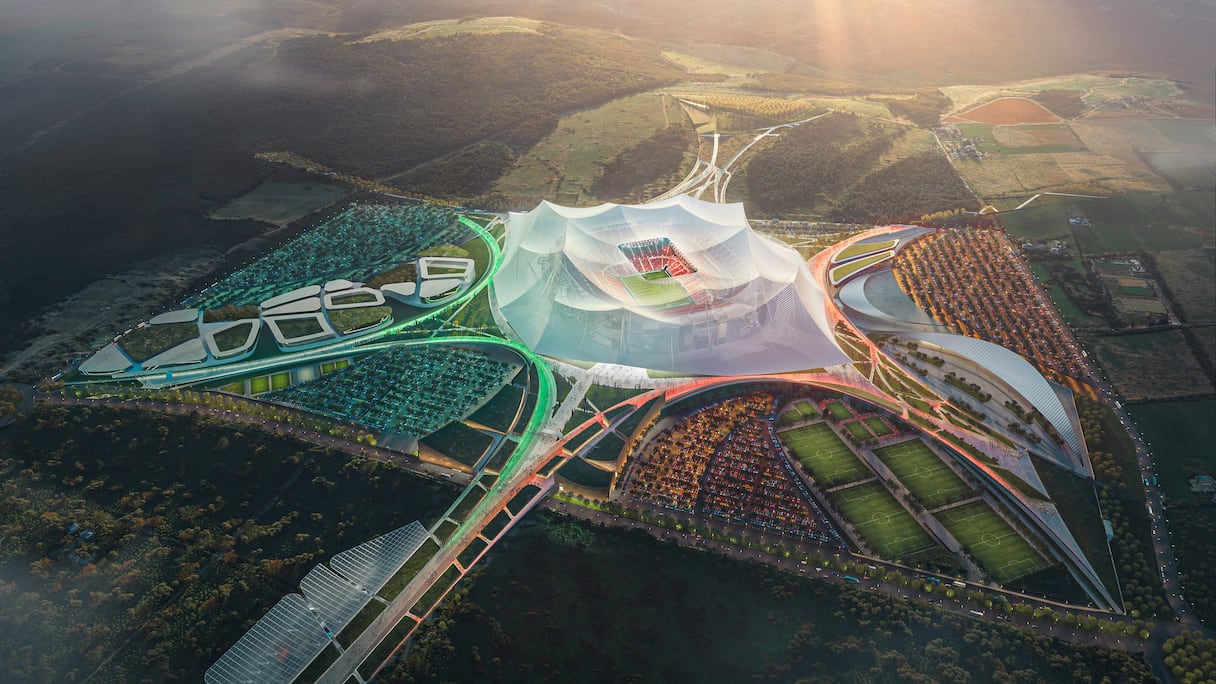
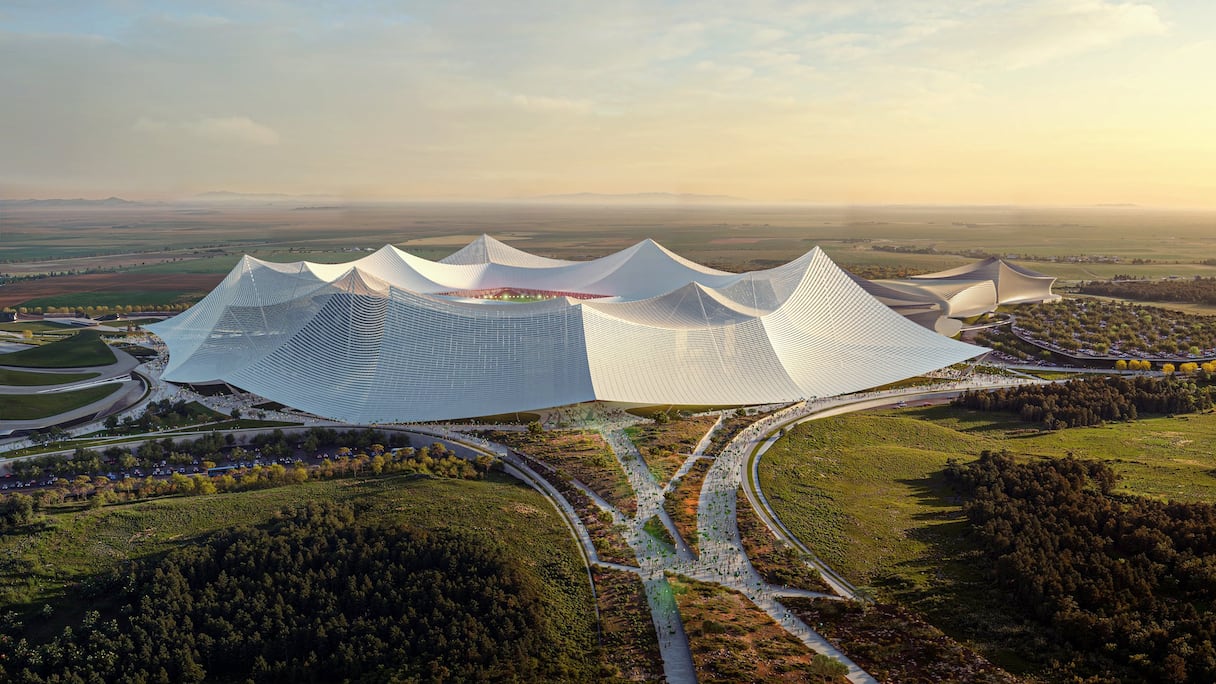
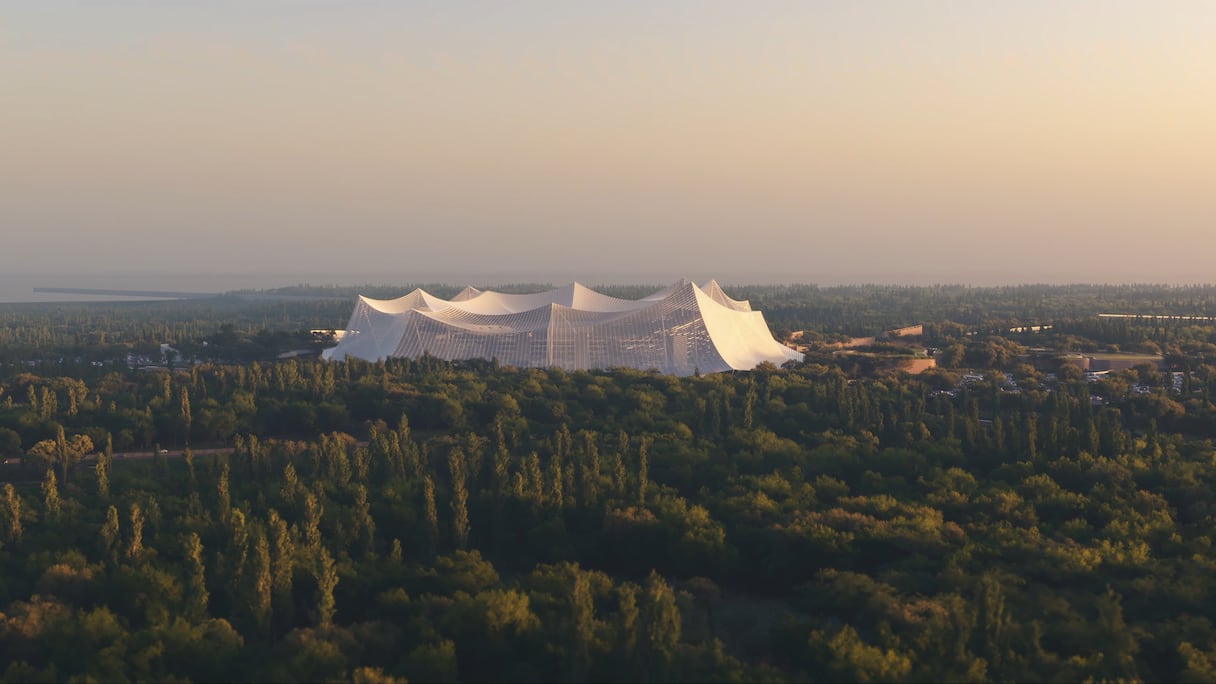
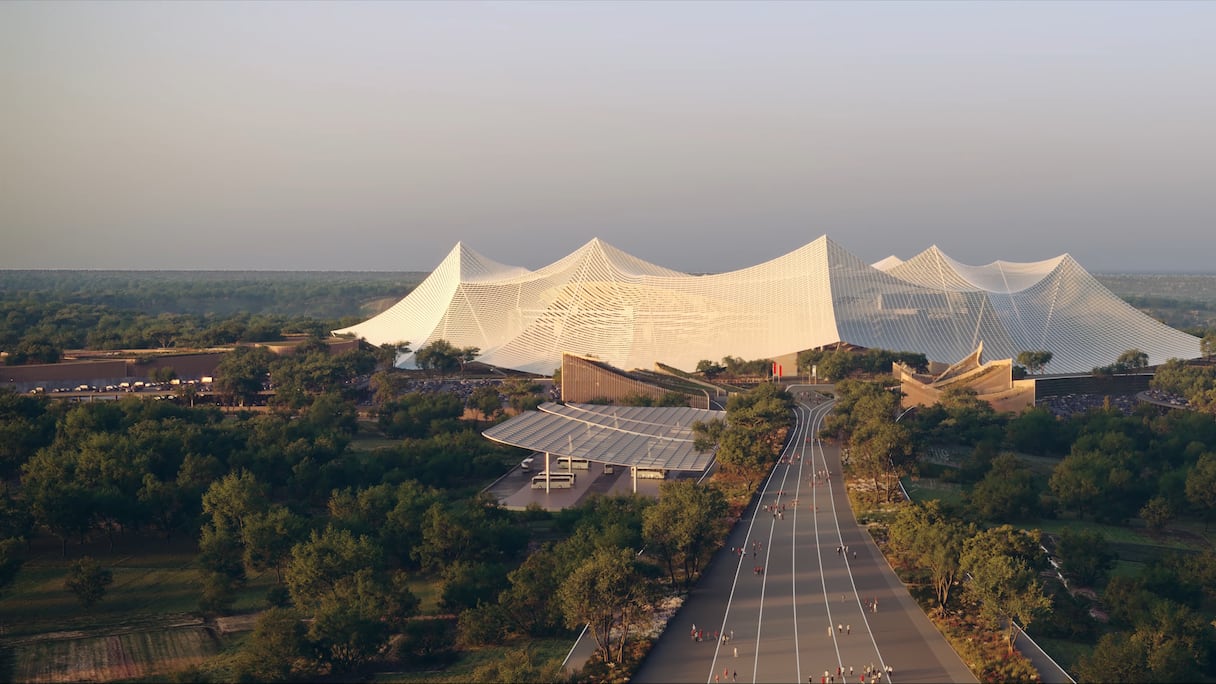
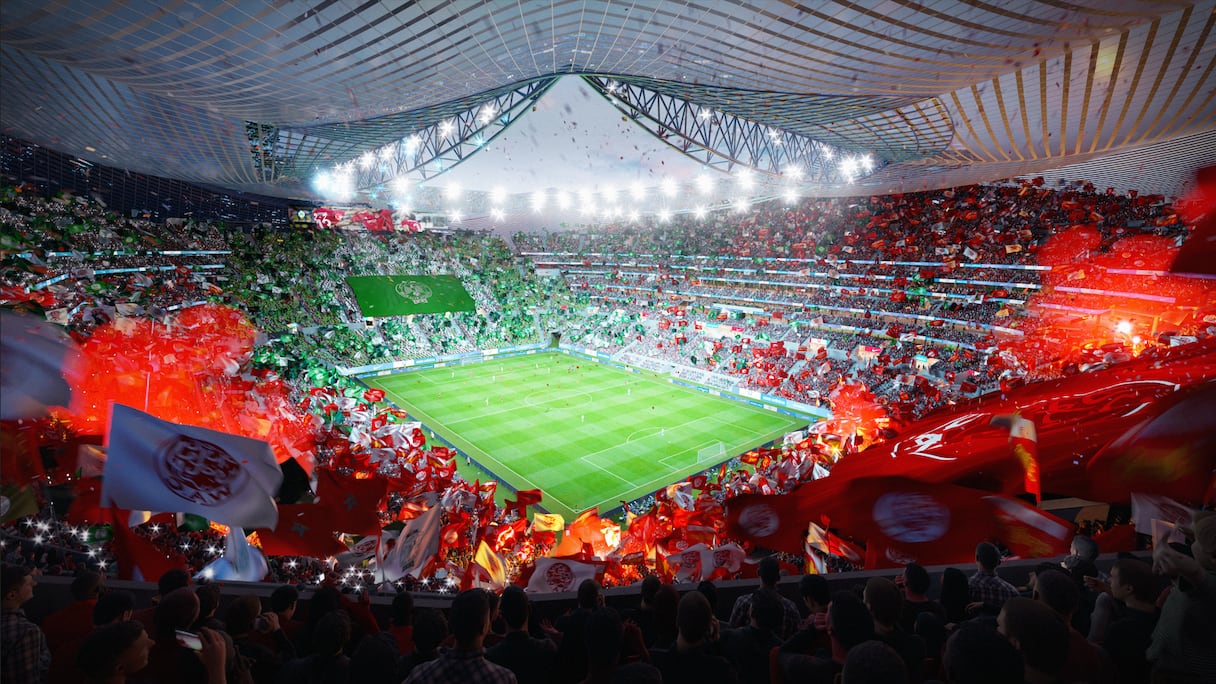
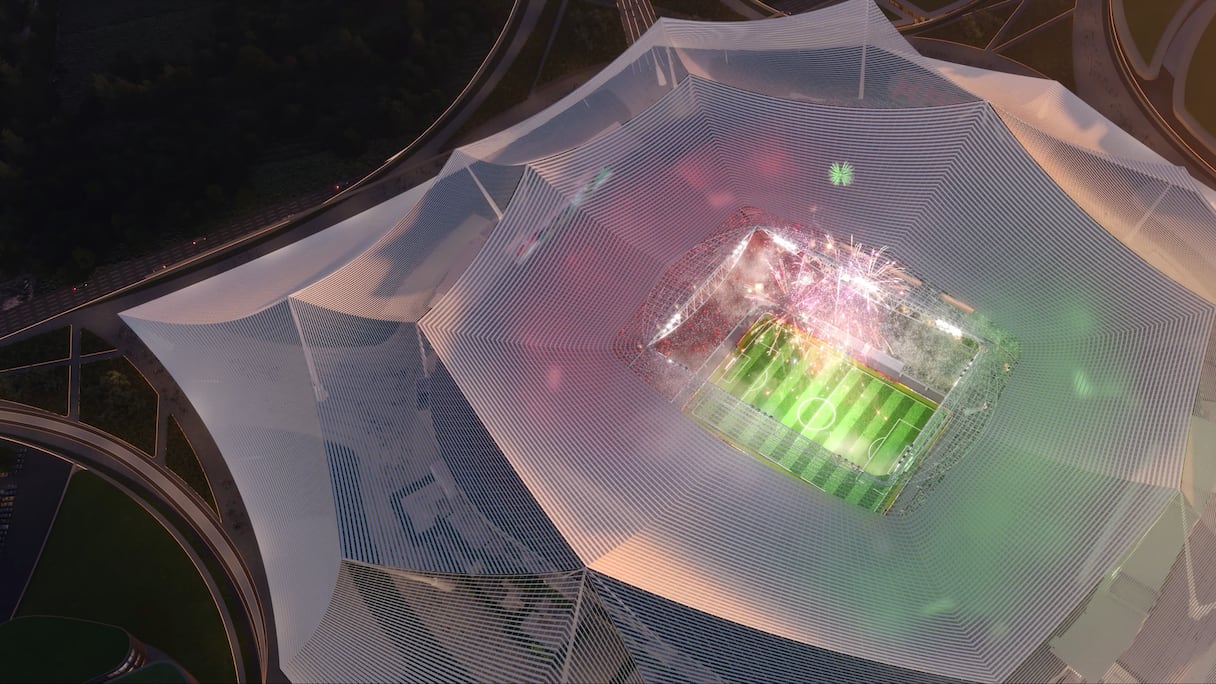



Model of the Grand Hassan II Stadium in Benslimane.
This statement contrasts with the nature of a three-country World Cup. Morocco, Spain, and Portugal are the tournament’s three hosts, each with its own host cities, stadiums, and infrastructure for the competition.
The decision regarding the final will not be made on a television set or through political statements. FIFA will make the choice following an assessment of the different bids and the requirements for hosting an event of this scale.
This leaves open the prospect of a Spanish withdrawal. If this scenario moves beyond television debate and becomes an official option, Spain cannot simply withdraw from the 2030 World Cup without facing consequences. After years of a joint bid, commitments to FIFA, and preparations already underway, withdrawal would have significant sporting, financial, and administrative repercussions.
