As construction continues in Benslimane, the future Grand Stade Hassan II is gradually taking shape. Following the main construction, two new contracts are focusing on two key elements of the venue: the playing area and the spectator stands.
The first, launched by the National Agency for Public Facilities (ANEP) on behalf of Sonarges, concerns Lot 08 and covers the development of the playing area with a hybrid of natural grass and synthetic turf.
The contract’s estimated value is MAD 92.47 million, including tax. Bids are scheduled to be opened on September 23, 2026, at 10:00 a.m. in Rabat.
Despite its straightforward title, “Development of the Playing Area” encompasses a wide range of work. The contract includes earthworks, drainage, substrate preparation, grass installation, sanitation, irrigation, and systems designed to maintain the pitch’s quality.
The main hybrid natural grass area will cover 8,150 square meters. This system combines natural grass that is reinforced with synthetic fibers that are injected directly into the soil. This technology is now widely used at venues that are expected to host international competitions.
The project will also include 2,650 square meters of synthetic turf and an additional 5,500 square meters of decorative grass.
Particular attention will be given to pitch maintenance. The specifications call for a drainage system, forced-pumping equipment, an automated irrigation network, and systems designed to address constraints related to the stadium’s architecture and the pitch’s exposure.
Nine mobile LED horticultural lighting units, each of which can cover 440 square meters, are planned, along with two additional units, each of which can cover 120 square meters. Six specialized sports turf fans will be installed to provide forced ventilation across the pitch.
The contract also includes equipment directly related to the game, including fixed and mobile goals, nets, corner posts, touchline flags and pitch-marking equipment.
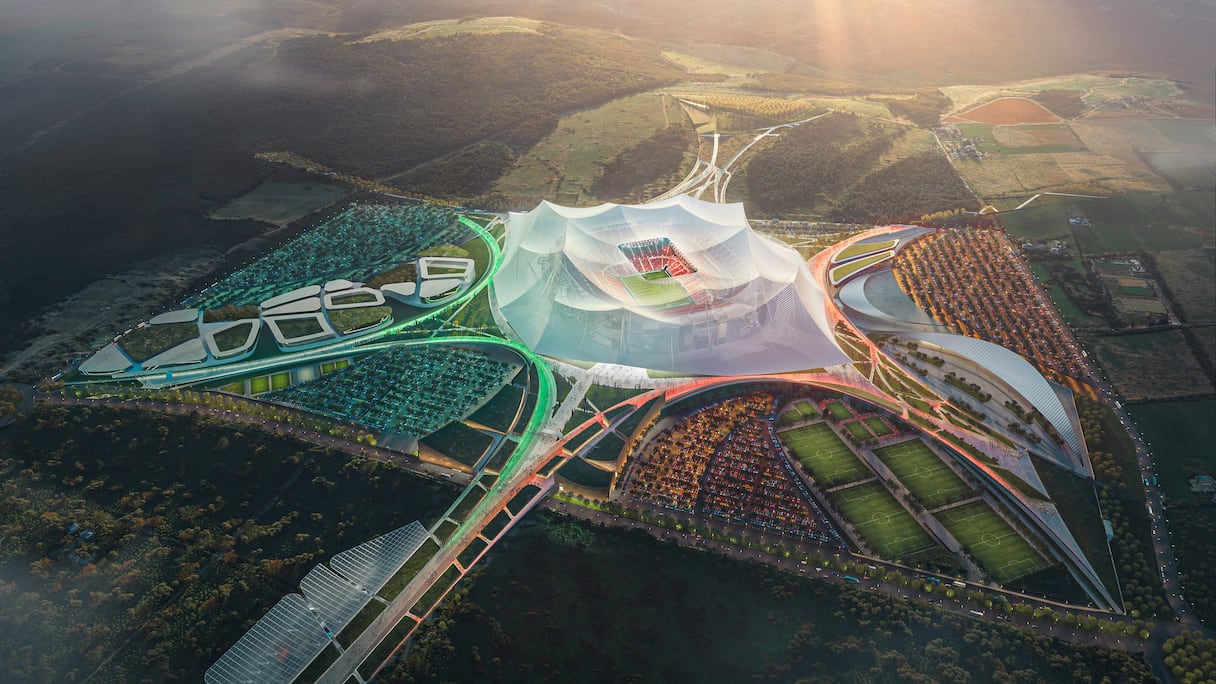
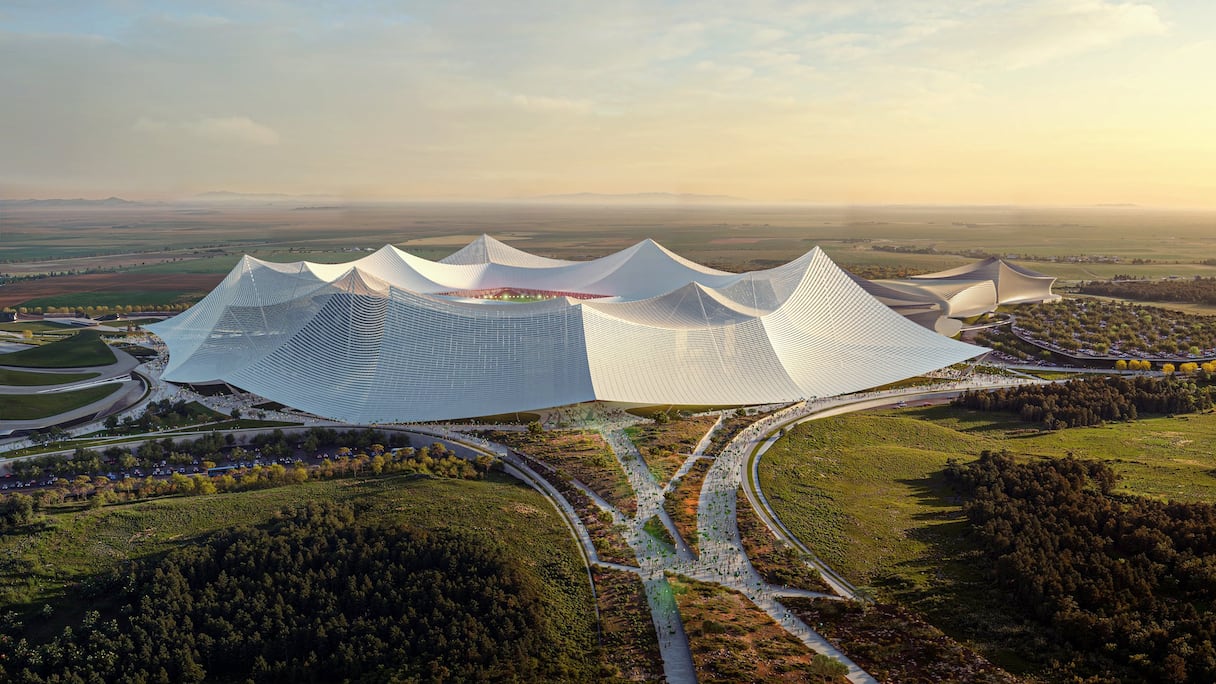
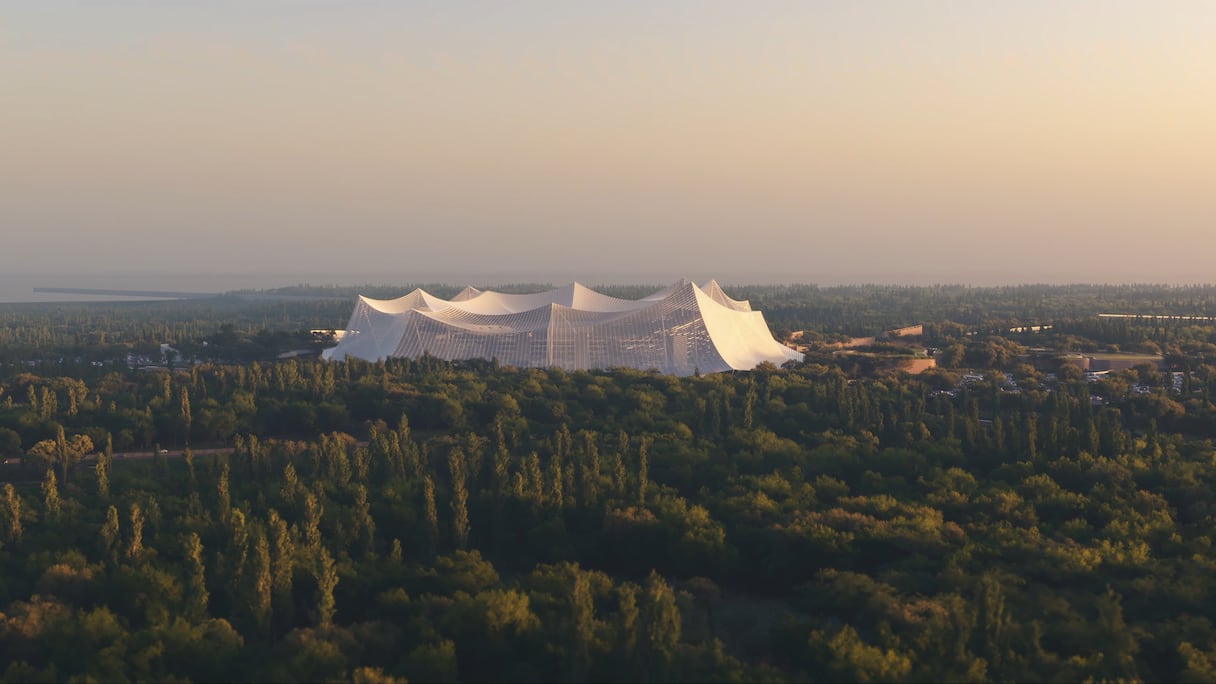
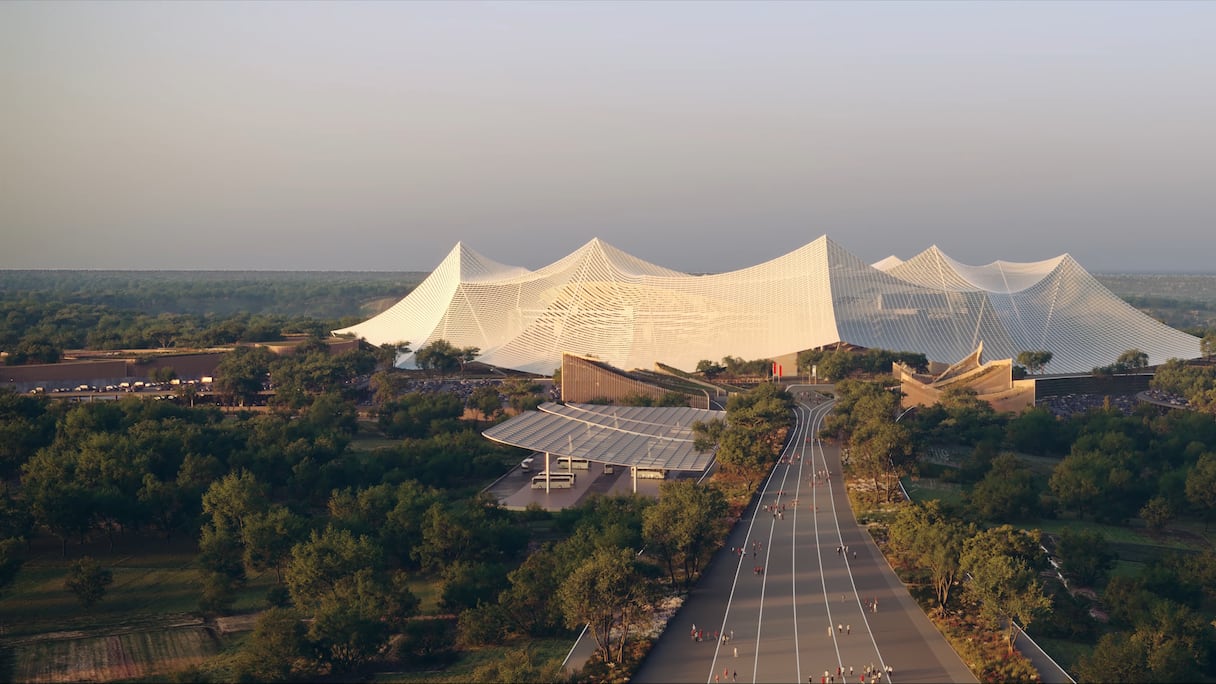
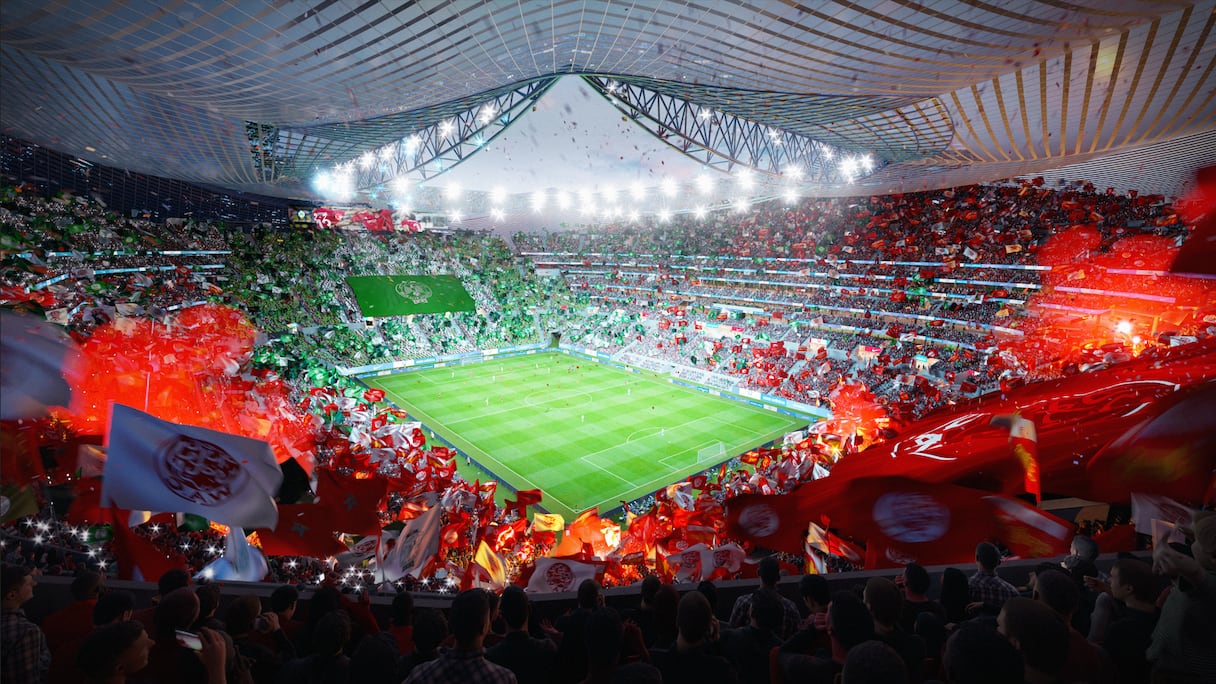
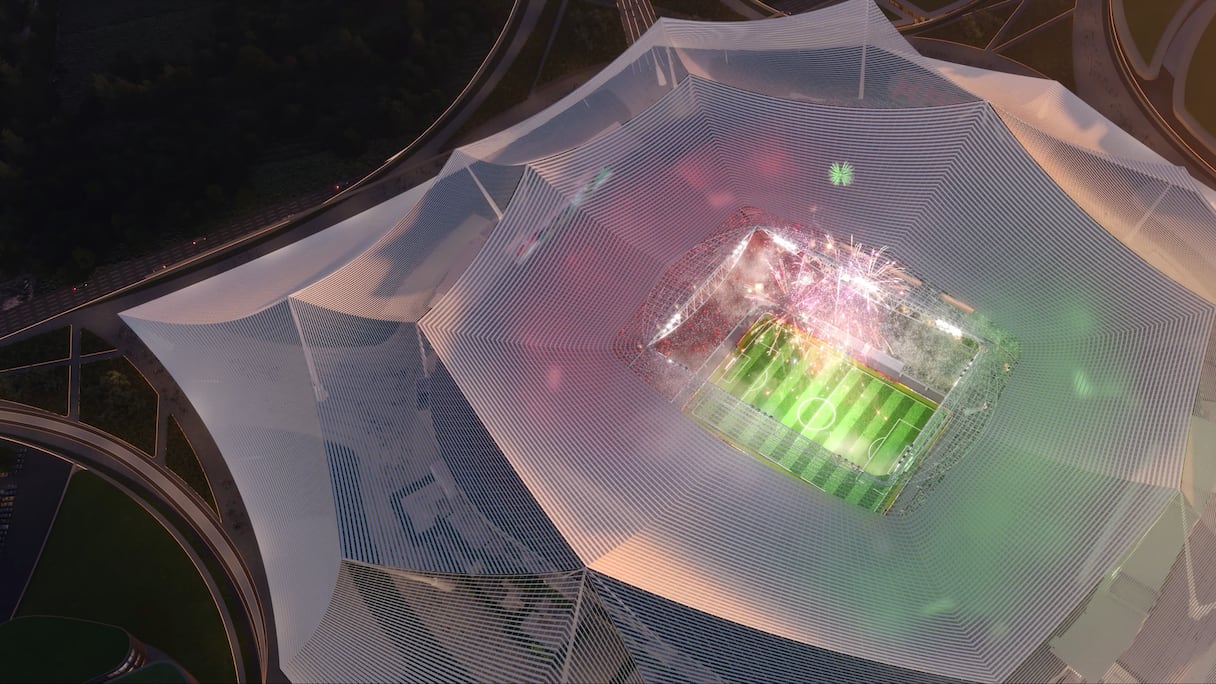
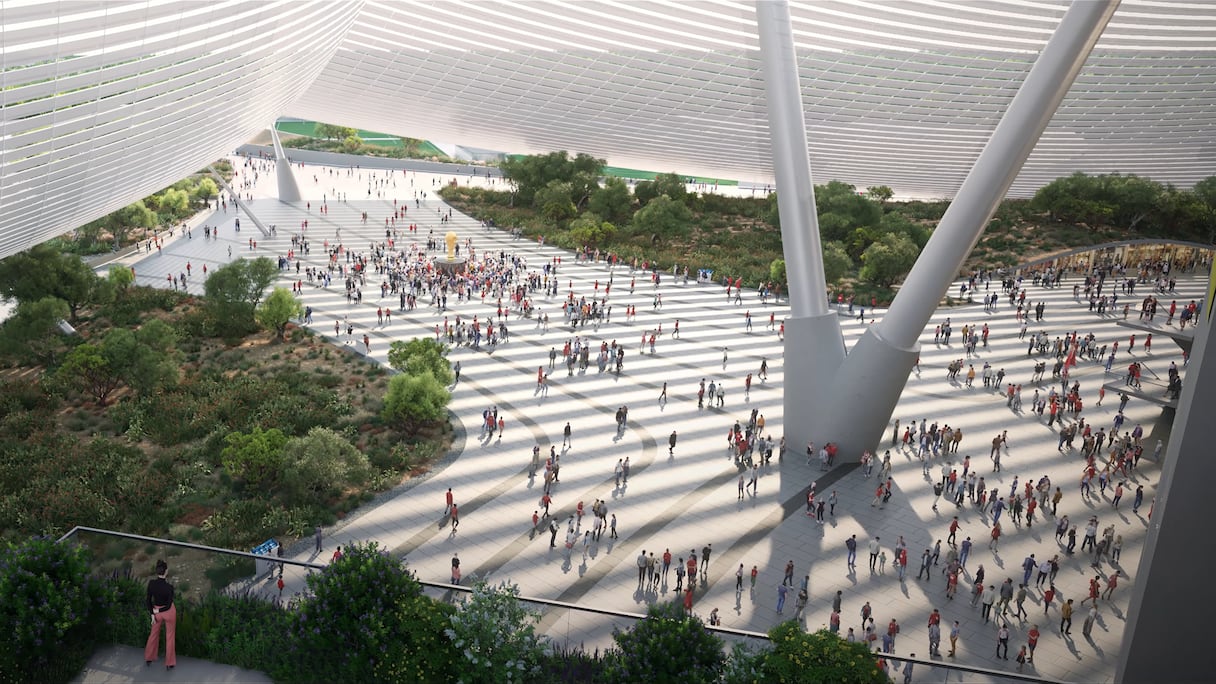
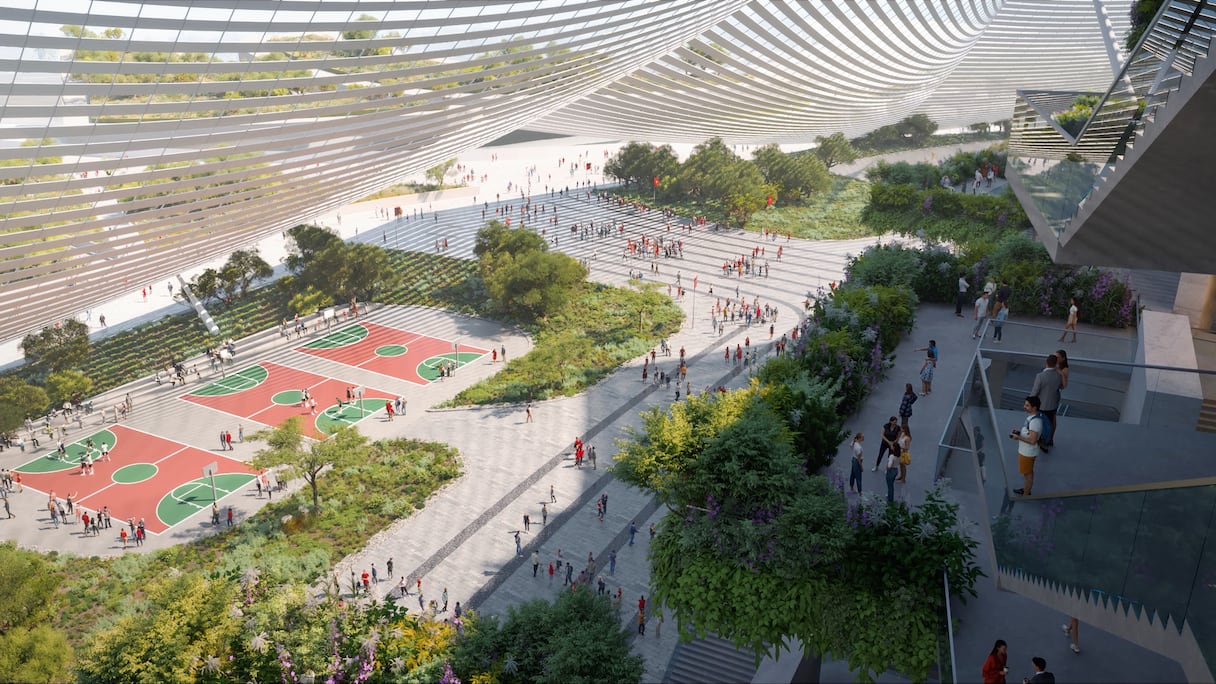
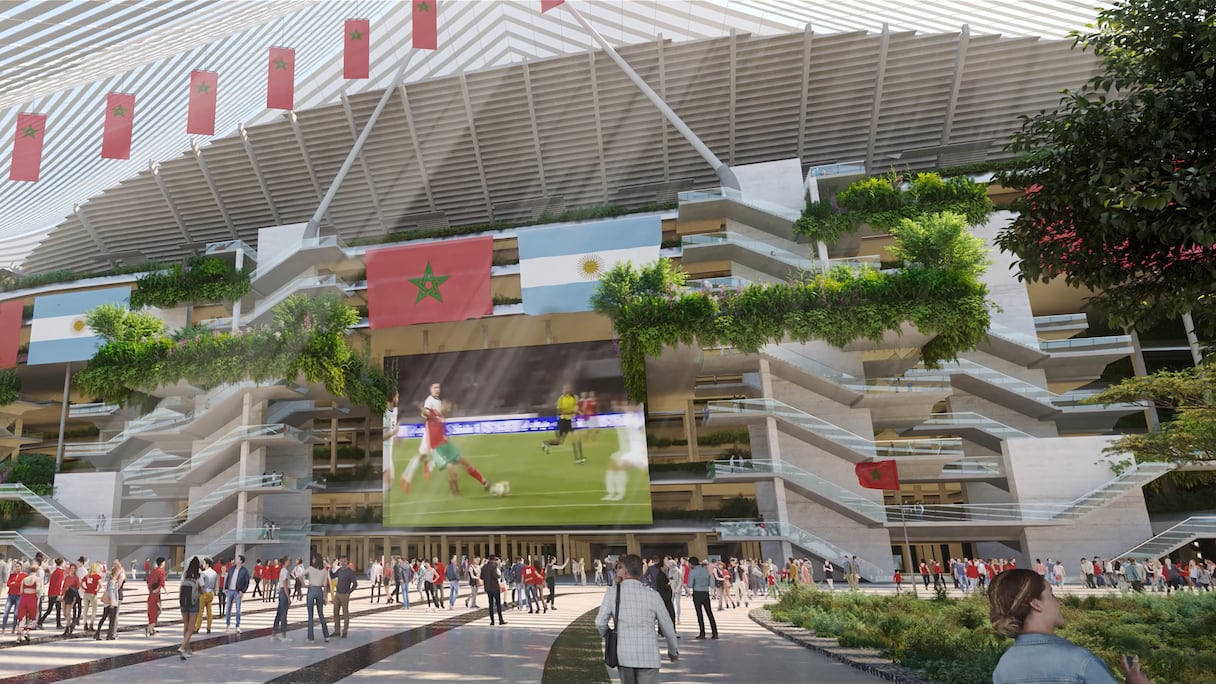
Model of the Grand Hassan II Stadium in Benslimane.
More than 114,000 seats to be installed
The second tender, Lot 09, involves installing the stadium seating. It is considerably higher in value, at MAD 277.50 million including tax. Bids are scheduled to be opened on September 23 at 10:30 a.m.
The tender documents provide a detailed overview of the future stadium’s internal configuration.
The contract provides for the supply and installation of 114,414 seats across the stands, which are divided into several categories.
Most will be allocated to the general public, with 98,579 folding seats. The stadium will also include 6,396 hospitality seats, 2,754 skybox seats, 1,992 VIP seats, and 359 VVIP seats.
The requirements for hosting major international competitions have been incorporated. The contract includes 1,746 seats for media observers and 1,574 rotating seats for print journalists and commentators.
The project includes facilities for people with reduced mobility and spectators requiring easier access: There will be 500 companion seats for people with reduced mobility, 400 seats with removable armrests, and around 100 extra-wide seats for spectators. Several dedicated seats will be available in the media, hospitality, VIP, and VVIP areas.
Several thousand spare seats will be kept in reserve to replace damaged seats during the stadium’s operation.
Media facilities, cameras and dugouts
The contract extends beyond the spectator stands. It includes 504 three-seat press tables, 62 individual tables, and their metal platforms.
The specifications also cover facilities required for television production. Several camera platforms will be installed, including one main platform measuring around 80 square meters, one second platform measuring around 20 square meters, and one 25-square-meter presentation platform. An additional 20 positions of various sizes are planned throughout the stadium.
Along the pitch, two dugouts with 26 seats each will be installed for substitute players. Separate areas will be provided for referees, the match delegate, and medical staff.
Read also : 2030 World Cup: A campaign driven by fear
All seats must comply with European standards applicable to public venues, as well as FIFA requirements. Their strength, fire performance, resistance to UV exposure, fixing systems, and numbering are all subject to detailed technical specifications.
The color and arrangement of the seats in the stands will also require approval. Any patterns, mosaics, or logos formed by the seating layout must be approved by the project owner and project management team.
Nearly MAD 370 million for both contracts
The two contracts have an estimated combined value of MAD 369.98 million, including tax. The completion period is 14 months from the service order authorizing the start of work, in both cases.
These tenders mark a shift from the main construction phase of the stadium towards installing its sporting and operational infrastructure.
With an announced capacity of around 115,000 spectators, the Grand Stade Hassan II is set to become the world’s largest football stadium. Designed for the 2030 World Cup, which will be jointly hosted by Morocco, Spain, and Portugal, the Benslimane venue is a key part of Morocco’s plans for the tournament.