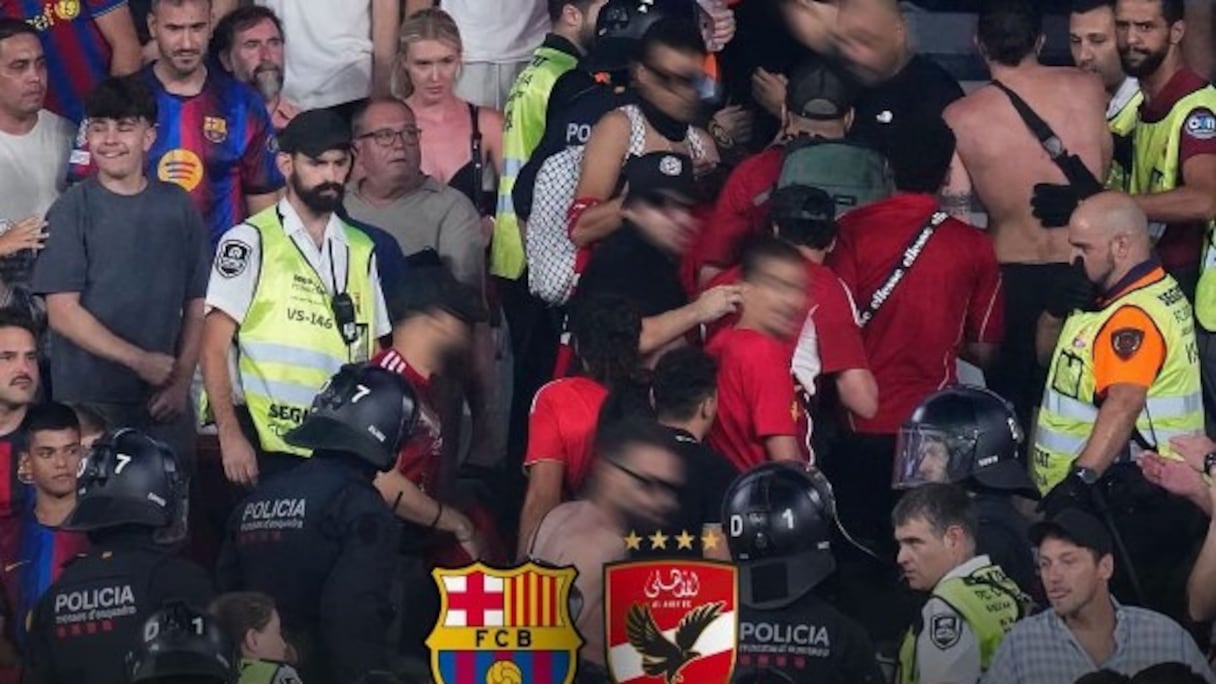
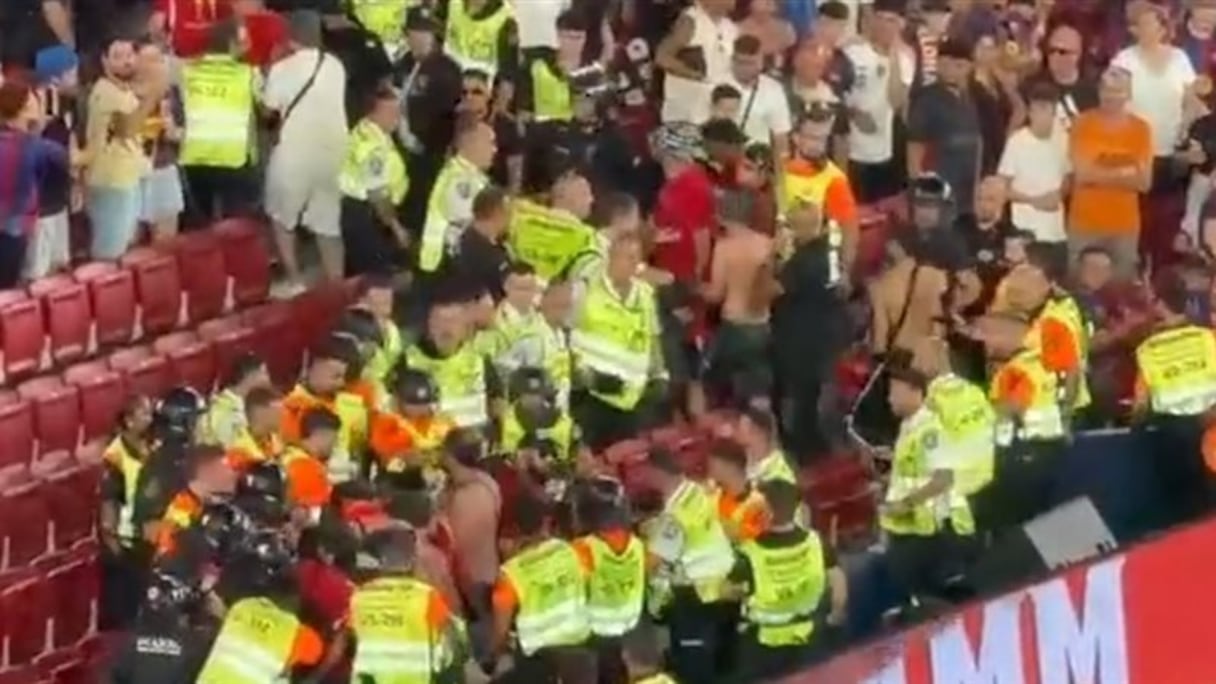
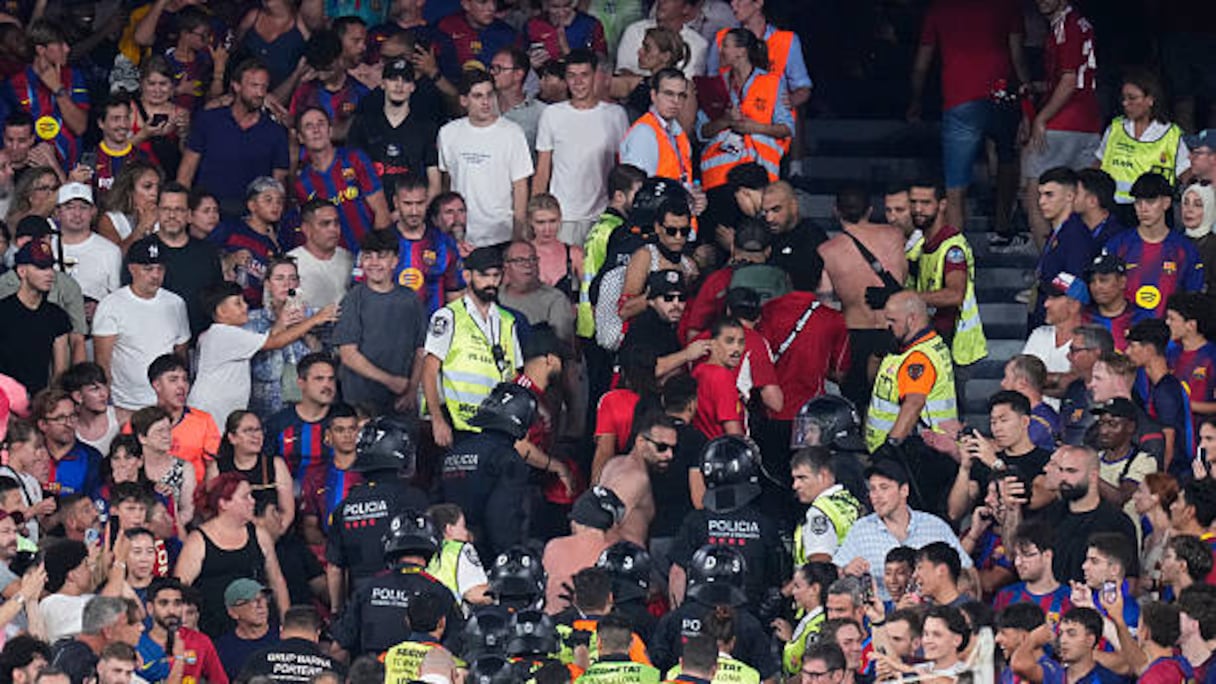
The FC Barcelona-Al Ahly match at Camp Nou on Wednesday could have been a landmark encounter, marking the Egyptian club’s first appearance against Barcelona in the history of the Joan Gamper Trophy. Instead, Barcelona’s 2-1 victory was overshadowed by incidents in the stands.
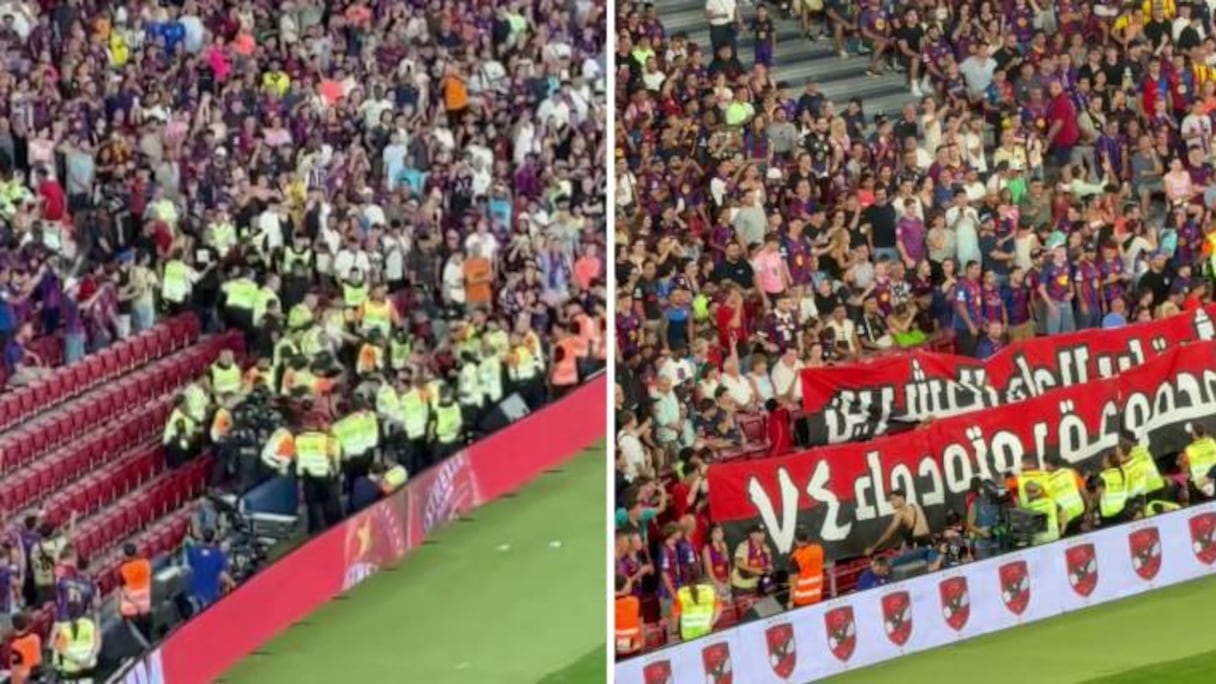
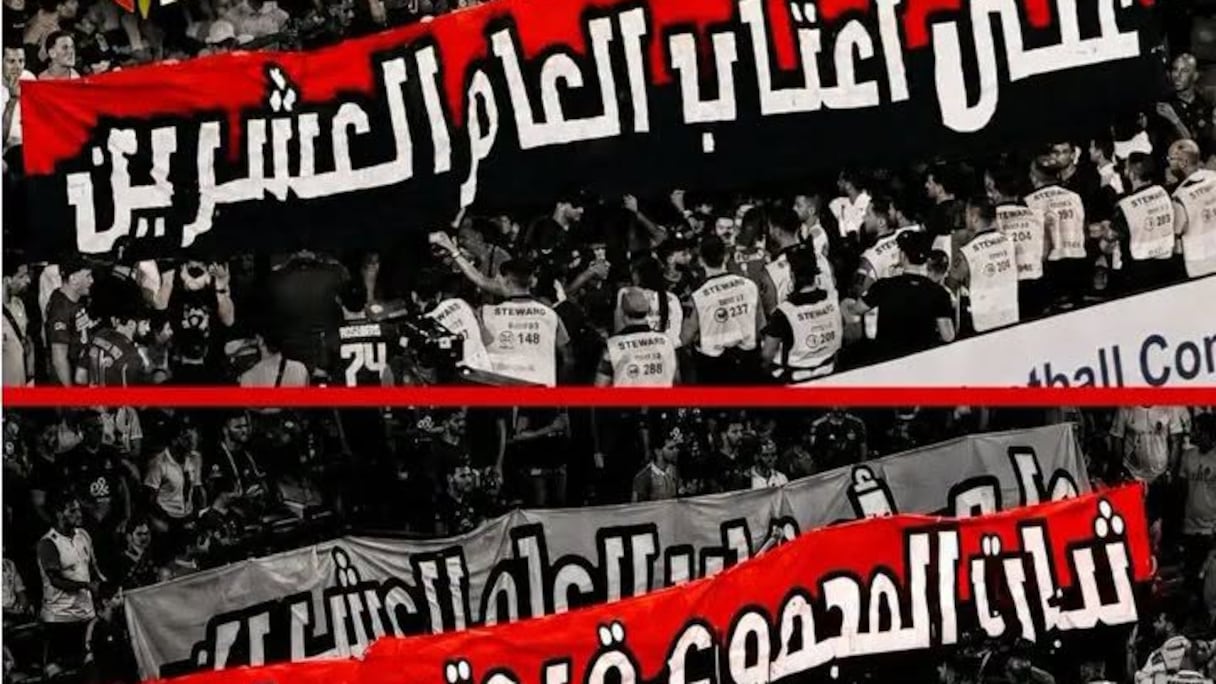
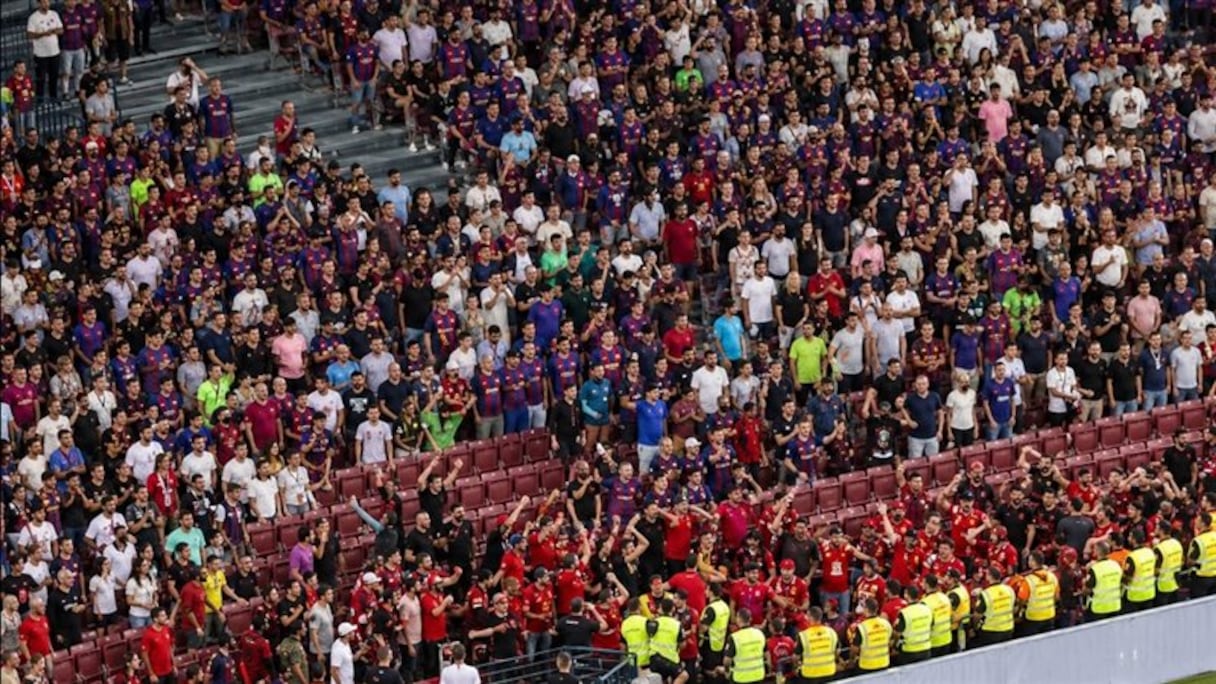
Videos widely shared on social media show Catalan police, known as the Mossos, and stadium security officers striking supporters with batons and forcibly removing groups of Al Ahly fans from the South Stand, behind one of the goals, as the match concluded. The supporters were then directed toward the exit.
The Catalan newspaper Sport had already reported on the circumstances surrounding the intervention, stating that the dispute began between Barcelona supporters seated behind the Egyptian groups. These home fans were reportedly unhappy with a banner displayed by the visiting fans, claiming it obstructed their view of the match.
The newspaper also reported that the Egyptian banners contained no discriminatory or violent messages.
This context makes the force used during the intervention all the more troubling, particularly given a recent incident involving Spain and Egypt during a friendly in March 2026.
“Whoever doesn’t jump is a Muslim”
As part of their preparations for the 2026 World Cup, the two teams faced each other at the RCDE Stadium in Cornellà de Llobregat. Even before kick-off, a section of the home crowd loudly booed the Egyptian national anthem.
A few minutes later, some of these supporters began chanting “Musulmán el que no salte,” meaning “whoever doesn’t jump is a Muslim.” The chant sparked widespread criticism regarding racism in football and, more broadly, the presence of such behavior in Spanish stadiums.
The Spain-Egypt match served as another reminder that controversy is never far from Spanish football stands, whether it involves discriminatory or racist chants, thrown bananas, or other objects aimed at non-Spanish players. The Barcelona-Al Ahly match has now provided yet another example.
This latest incident also raises a question: could similar events occur during the 2030 World Cup, which will be jointly hosted by Morocco, Spain, and Portugal?
The 2030 World Cup faces fresh questions
The question is legitimate, given the continuing incidents in Spanish football stadiums. Campaigns against hate are in place, as are strong reactions from the media and political figures, particularly when anti-Muslim chants have been heard in the stands of Espanyol. But the underlying problem remains: disorder in Spanish stadiums has not disappeared.
The issue takes on greater significance as the race to host the 2030 World Cup final continues between candidate stadiums in Morocco and Spain. Barcelona’s Camp Nou is in the running to host the tournament’s most important match, alongside the Grand Stade Hassan II in Casablanca and Madrid’s Santiago Bernabéu.
The latest incident therefore goes well beyond the Joan Gamper Trophy. The sight of Egyptian supporters being confronted and pushed back with batons at Camp Nou raises a broader question: is Spain truly ready to host a World Cup, and potentially its final, with supporters from around the world filling its stadiums?