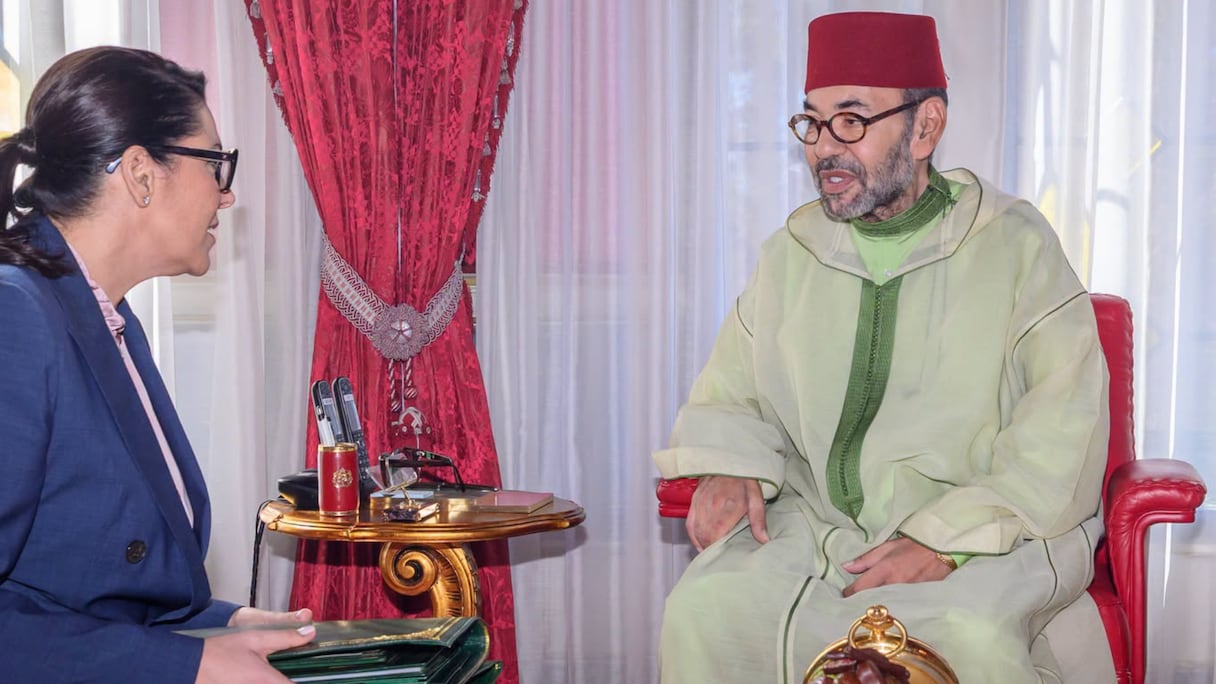
The government, sworn in at the Royal Palace in Rabat, comprises 20 ministers, 11 ministers delegate and the Head of Government. Seven of its 32 members are women, including El Mansouri.
The appointments come 17 days after the King named El Mansouri Head of Government on September 29, following her Authenticity and Modernity Party’s (PAM) victory in the legislative elections.
El Mansouri, who previously held the housing portfolio, will head a four-party coalition bringing together the PAM, Istiqlal, the Socialist Union of Popular Forces (USFP) and the Party of Progress and Socialism (PPS).
The alliance, announced on Monday after two rounds of consultations, commands 207 seats in the 395-member House of Representatives, just nine above the 198 required for an absolute majority.
The PAM emerged from the polls with 97 seats, followed within the coalition by Istiqlal with 65, the USFP with 26 and the PPS with 19. The National Rally of Independents (RNI), which headed the outgoing government and won 66 seats, has been left out of the new ruling alliance.
The cabinet retains several familiar faces in major portfolios while bringing new names into education, health and other departments.
Read also : King Mohammed VI appoints new government
Abdelouafi Laftit remains at the Interior Ministry, Nasser Bourita continues as Minister of Foreign Affairs, African Cooperation and Moroccan Expatriates, and Abdellatif Ouahbi retains Justice.
Fouzi Lekjaa takes charge of the Ministry of Economy, Finance and Public Performance, while Nizar Baraka has been appointed Minister of Equipment, Water and Forests.
Ahmed Toufiq continues at Endowments and Islamic Affairs, with Abdeltif Loudyi serving as Minister Delegate in charge of the National Defense Administration.
The education and health portfolios go to Nabil Benabdallah and Youns Bjijou respectively. Benabdallah will oversee national education, preschool education, vocational training and qualification, while Bjijou takes charge of Health and Social Protection.
Ryad Mezzour has been appointed Minister of Industry, Trade, Investment and Economic Inclusion, Khalid Hatimy takes Agriculture, Maritime Fisheries and Food Sovereignty, and Mohamed Mehdi Bensaid heads the Ministry of Youth, Culture and Sports.
The cabinet also includes Ahmed Rahhou as Minister of Artificial Intelligence, Digital Transformation and Administrative Reform, with Aïcha Guellaa appointed Minister Delegate for Administrative Reform.
Of the seven women in the government, three hold full ministerial portfolios, including El Mansouri. Charafat Afailal has been appointed Minister of Energy, Mines and Sustainable Development, while Najwa Koukouss takes charge of Family, Social Development and Equality.
Four others serve as ministers delegate: Kouloub Faitah for Relations with Parliament and Civil Society, Madiha Khayr for Vocational Training and Qualification, Fatima Saadi for Housing and City Policy, and Aïcha Guellaa for Administrative Reform.
The 11 ministers delegate account for more than a third of the cabinet. Their responsibilities range from foreign trade and maritime fisheries to preschool education, youth, social inclusion and the social and solidarity economy.
Samir Belfkih has been appointed Minister of National Territorial Planning, Urban Planning, Housing and City Policy and will also serve as Government Spokesperson.
Other appointments include Azzeddine El Midaoui at Higher Education, Scientific Research and Innovation, Abdessamad Kayouh at Transport and Logistics, Abderrahim Chahid at Employment and Social Dialogue, and Jalal Charaf at Tourism, Handicrafts and the Social and Solidarity Economy.
Hassan Tariq takes office as Secretary-General of the Government.
The appointment ceremony settles the question of who will serve in the new executive, but the government has yet to secure Parliament’s confidence.
Under Article 88 of the Constitution, El Mansouri must present her government’s program before both houses of Parliament meeting jointly. The program will then be debated in each chamber before the House of Representatives votes on whether to grant confidence.
The government requires the backing of an absolute majority of the House’s 395 members—at least 198 votes—to be formally invested. With 207 seats, the four-party alliance has a nine-seat margin above that threshold, provided its members vote together.
