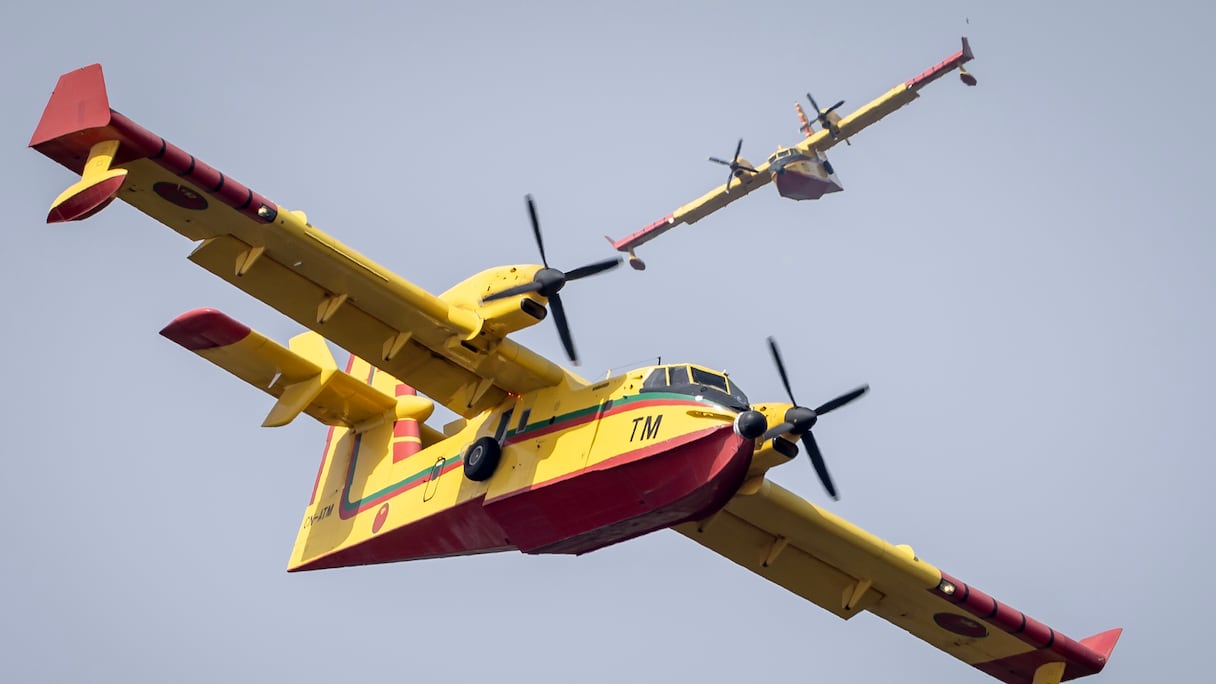
Every summer, as forest fires spread across Morocco and other Mediterranean countries, one aircraft is almost always the region’s first line of defense: the Canadair.
Whether battling fires in Morocco’s northern forests, southern Europe or North America, the amphibious aircraft has become one of the world’s most recognizable aerial firefighting tools. Built for a single purpose, extinguishing wildfires, it can land on lakes, reservoirs or the sea, scoop up thousands of liters of water in seconds and return almost immediately to attack advancing flames.
As climate change contributes to longer and more destructive fire seasons, demand for the aircraft has grown rapidly. Yet despite its reputation, relatively few Canadair aircraft are in service worldwide, making them one of the most sought-after firefighting resources.
An aircraft designed to fight fires
Unlike many aerial firefighting aircraft that began their lives as cargo or military planes before being converted for emergency use, the Canadair was designed specifically for wildfire suppression.
The story began in the late 1960s when Canadian manufacturer Canadair developed the CL-215, the world’s first aircraft purpose-built to fight forest fires. It entered service in the early 1970s and quickly attracted interest from countries regularly threatened by wildfires.
The aircraft’s successor, the CL-415, introduced in the 1990s, replaced piston engines with more powerful turboprop engines, improved avionics and better performance in difficult flying conditions. Today, the CL-415 remains one of the best-known firefighting aircraft in operation, while manufacturer De Havilland Canada is preparing its successor, the Canadair 515, with deliveries expected later this decade.
According to De Havilland Canada, the aircraft’s design allows crews to operate repeatedly over active fires while minimizing the time spent away from the fire line.
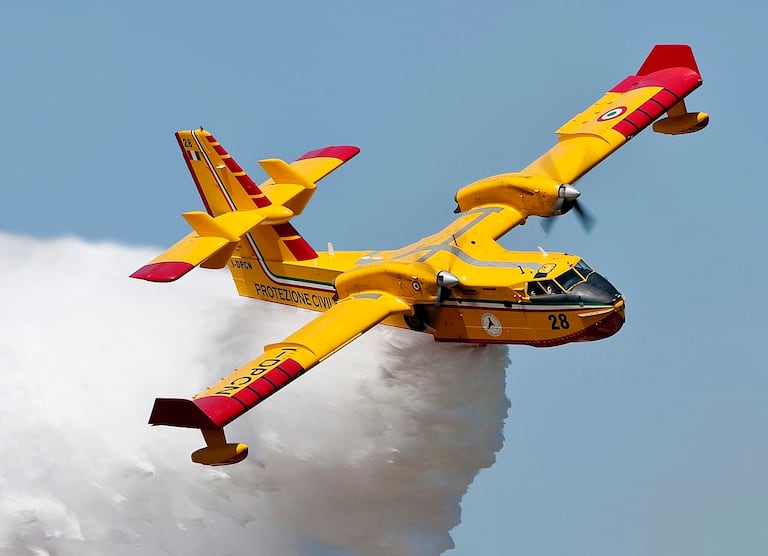
How the Canadair scoops water in seconds
The Canadair’s defining feature is its ability to refill without returning to an airport.
Flying at low altitude, the aircraft skims across the surface of a sufficiently large lake, reservoir or coastal waters. As it moves across the water, two retractable probes collect approximately 6,140 liters of water in about 12 seconds, according to De Havilland Canada.
Once the tanks are full, pilots climb back toward the fire and release the water in a controlled drop over the targeted area. Depending on the terrain and the distance to the nearest water source, the aircraft can repeat this cycle several times in an hour.
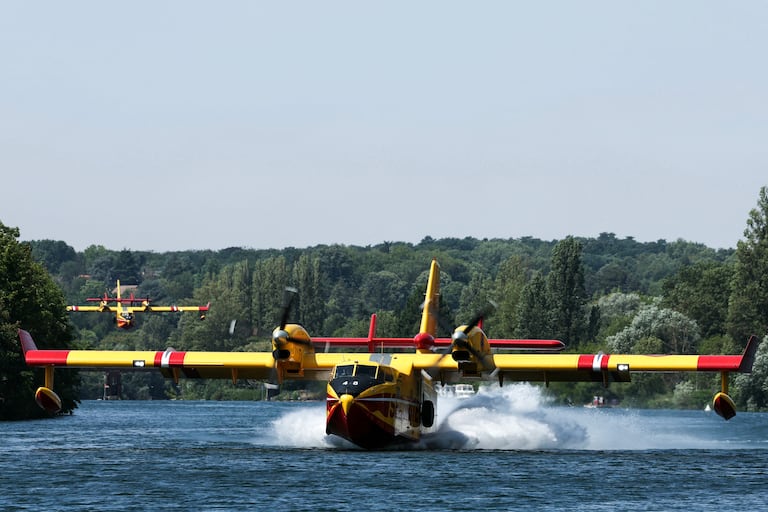
This rapid turnaround is one of the Canadair’s greatest advantages. Conventional firefighting aircraft often have to return to an airport or ground base to reload, increasing the time between water drops. The Canadair’s amphibious capability allows firefighters to maintain a near-continuous aerial attack when suitable water sources are nearby.
The aircraft can also carry firefighting foam, which helps water adhere to vegetation and improves its effectiveness against rapidly spreading flames.
Why countries still rely on a decades-old aircraft
Although the CL-415 first entered service more than 30 years ago, few aircraft have matched its combination of versatility and efficiency.
According to The Financial Times, Canadairs are the only aircraft capable of scooping water directly from lakes or the seam allowing for faster and more frequent drops than conventional planes that must land to refill. This makes them uniquely suited to southern Europe and the Mediterranean basin, where open water enables continuous aerial sorties.
The aircraft’s flexibility has made it a key asset for countries across the Mediterranean, including France, Spain, Italy, Greece, Croatia and Morocco, where wildfire seasons have become increasingly demanding.
Yet the Canadair is also relatively rare.
Production of the CL-415 ended years ago before being revived by De Havilland Canada through the new Canadair 515 program. As a result, many countries continue operating aging fleets while waiting for replacement aircraft, creating growing international demand during severe wildfire seasons.
Morocco’s Canadair fleet
Morocco is among the limited number of countries operating Canadair aircraft and remains the only African country with a dedicated fleet of the amphibious firefighting planes.
The Royal Moroccan Air Force operates eight Canadair CL-415 aircraft. The fleet is deployed each summer to support wildfire suppression efforts, particularly in northern provinces where high temperatures, strong winds and dense vegetation increase the risk of forest fires.
Read also : Dar Chaoui forest fire 90% contained after burning 38 hectares
The aircraft work alongside helicopters, ground firefighters, civil protection teams and the National Agency for Water and Forests (ANEF), which issues predictive wildfire risk maps to help authorities position resources before fires break out.
Morocco has also used its fleet beyond its borders. In 2024, up to four Moroccan Canadair aircraft were sent to Portugal to help combat large wildfires under international cooperation agreements, highlighting the growing importance of cross-border support as wildfire seasons become more severe.
More than just water bombers
Although the Canadair is often described simply as a “water bomber,” its missions extend beyond dropping water.
Pilots must navigate difficult terrain, smoke, strong winds and rapidly changing fire conditions while coordinating closely with firefighters on the ground. Water drops are carefully planned to slow or redirect the fire rather than extinguish it outright, creating opportunities for ground crews to contain the flames.
Because every wildfire behaves differently, aerial operations require constant communication between pilots, emergency coordinators and firefighters to determine where each drop will have the greatest impact.
A growing role in a warming world
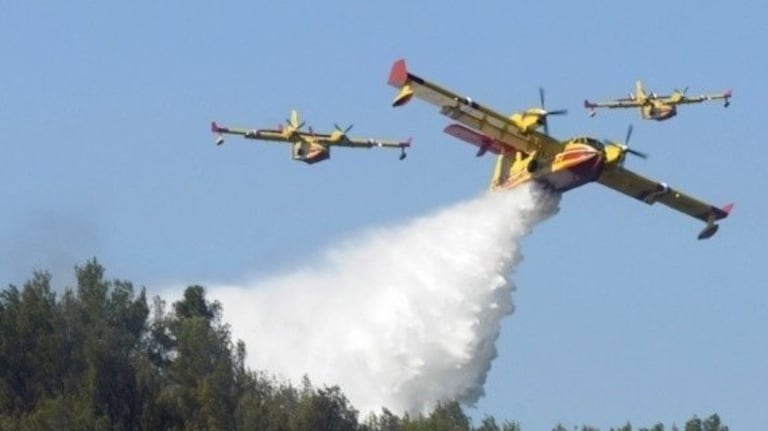
Wildfires have become more frequent and more destructive across many parts of the world, increasing pressure on countries to strengthen their aerial firefighting capabilities.
As governments invest in new technologies, helicopters, drones and satellite monitoring, the Canadair continues to occupy a central role because of its unique ability to combine mobility, speed and repeated water drops from nearby lakes and coastlines.
Despite being based on a design first developed decades ago, the aircraft remains one of the most effective tools available for attacking fast-moving wildfires. With new Canadair 515 aircraft expected to enter service in the coming years, its role in protecting forests and communities is likely to continue for decades to come.
