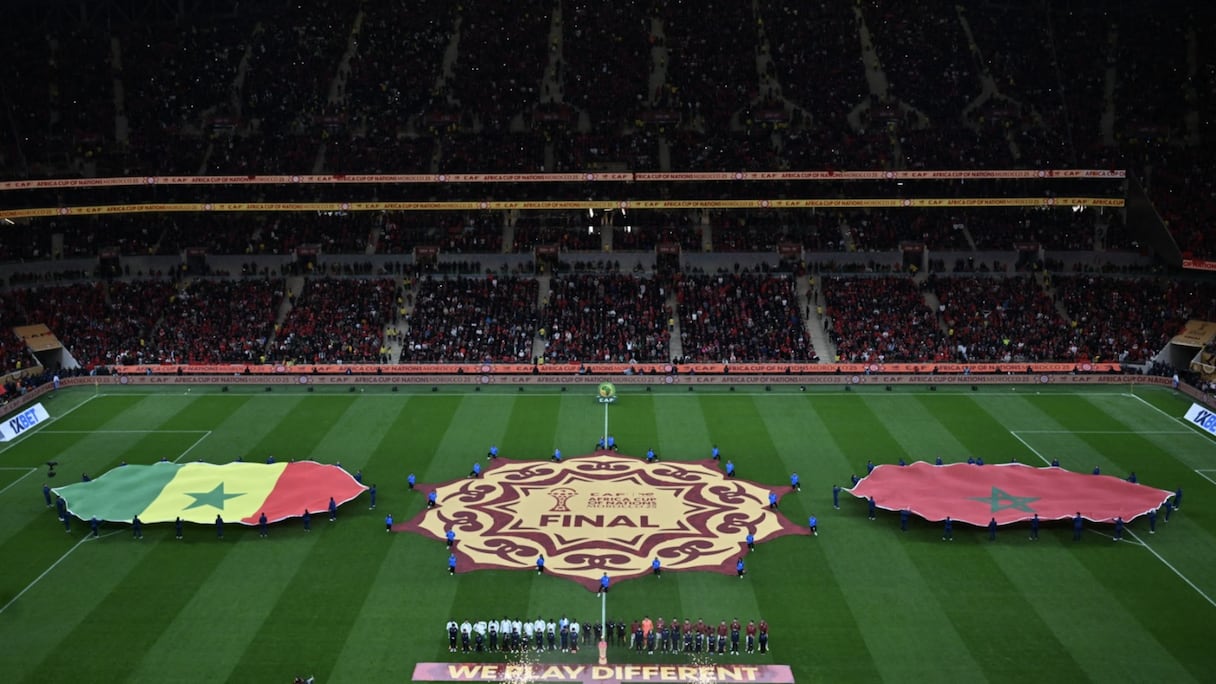
The statement runs to two pages. It is dated Lausanne, Tuesday, November 24. In it, three arbitrators, a Frenchman, a German and an Italian, overturn the decision of the CAF Appeal Board, which in March had awarded Morocco the final by default, and uphold the result on the pitch: 1–0 to Senegal. The Court of Arbitration for Sport ruled unanimously. Algeria was neither a party to the proceedings nor a witness, nor had it even qualified for the final.
It takes more than that to spoil a party. Within hours of the verdict, the news website TSA ran a headline declaring that CAS had “put Morocco in its place and repudiated CAF.” The ruling, it went on, “lends credence to the claims of those who accuse CAF of being heavily influenced by Morocco.” The same article recalled that the Senegalese had walked off the pitch in January in protest at “the referee’s blatant bias in favor of the Moroccans.”
Algérie54 was more economical with its headline and more lavish with its invective. “Glory for Senegal, humiliation for CAF and moral bankruptcy for Morocco,” proclaimed the website, which attributed the March ruling to the “dirty dealings” of the Moroccan federation’s president, rechristened “Fewzi Lakdjaa” for the occasion and adorned with the epithet “corrupt.” The article soon strays beyond the touchline. There is talk of “genocidal Zionists,” a “neo-feudal regime,” and the “probable collapse of the Moroccan economy.” Everything gets an airing except football. The CAS statement, meanwhile, deals exclusively with regulations and arbitration.
Ennahar opted for a slap in the face. “CAS slaps the Makhzen and declares Senegal African champions,” ran the daily’s headline. The verdict, it said, had “scuppered the Makhzen’s plans and its efforts to exert pressure on CAF officials.” Yet a few lines further down, the March ruling becomes a “staged affair” scripted by Fouzi Lekjaa “on the instructions” of CAF. Morocco, then, exerts pressure on CAF, which in turn issues instructions to Morocco. All in the same article. Morocco’s title, Ennahar added, was “fictitious,” awarded by “email”. Senegal’s has just arrived as a PDF.
The news portal Algate, restrained in the body of its article, made up for it in the headline: “Senegal beat Morocco for the second time!” The exclamation mark is in the original. For a country that played in neither leg, the enthusiasm is remarkable.
One small problem: the ruling says nothing of the sort and, on one point, says quite the opposite. CAS acknowledges that the referee had to make decisions “in an atmosphere of extreme tension” but considers that his judgement “does not appear to have been affected by factors extraneous to the game.” The Lausanne judges have thus exonerated the referee whom the Algerian press had portrayed as being in Morocco’s pocket. Their ruling is applauded all the same. Reading it to the end would have spoilt the fun.
Better still. In March, when the CAF Appeal Board awarded Morocco the title, El Moudjahid, as reported by Le360, had sneered at this novel way of “losing a final on the pitch… and winning it in the boardroom." Eight months later, the same camp is applauding a verdict handed down… in an office in Lausanne. In Algiers, then, offices are objectionable only when they find in Morocco’s favor.
Car horns in Algiers, Béjaïa, Oran and Jijel
Nothing new here. On January 18, the final is played in Rabat. Senegal win 1–0 after extra time. A thousand kilometers away, “a chorus of car horns rang out across Algiers and other Algerian cities.” TSA reported the following day, under an unequivocal headline: “An explosion of joy in Algeria”. The website named Algiers, Béjaïa, Oran and Jijel, describing “an enormous procession of cars late into the evening.”
Algerian state television, broadcasting the footage, supplied the commentary: “Algerians take to the streets to celebrate the defeat of the Makhzen.” The daily El Khabar reached for a higher authority still, leading its front page with “divine justice” that “triumphs in football.” Ennahar, rather more down-to-earth, hailed a Senegal side that had beaten “Morocco and the referee.”
Fans revelling in a rival’s defeat is a familiar sight in stadiums the world over. State television dispatching its camera crews to film processions celebrating a match in which their own team did not even play is an Algerian speciality. One searches in vain for another country that has turned its neighbor’s defeat into an evening’s television programming.
A final lost to the referees
Algeria’s own team, meanwhile, had exited the tournament in the quarter-finals, beaten 2–0 by Nigeria. On January 22, CAF imposed fines totalling $100,000 on the Algerian federation, notably over its supporters’ protests against the officiating, and suspended two players, Luca Zidane and Rafik Belghali, for having “protested to the match officials.” The only final Algeria contested at AFCON 2025 was against the referees. It lost that one too.
Joy by proxy has one advantage: it costs nothing. It requires neither a stadium, nor a project, nor a result. For a regime struggling to keep the market stalls stocked with cooking oil and potatoes, its neighbor’s defeat remains the only achievement it can boast of without having to produce any figures. You sound your horns, run headlines about divine justice, and go home to bed without having won a thing.
Senegal has its trophy back. In the Lausanne proceedings, Algeria was neither a party nor a witness. Yet it was the first to celebrate the verdict.