There was still culture. The borders are closed, diplomatic relations severed, airspace shut, the gas pipeline switched off. Yet one narrow space remained where artists from both countries could still meet, work together and, in doing so, leave the door open to a better future. Now even that last bastion has come under attack.
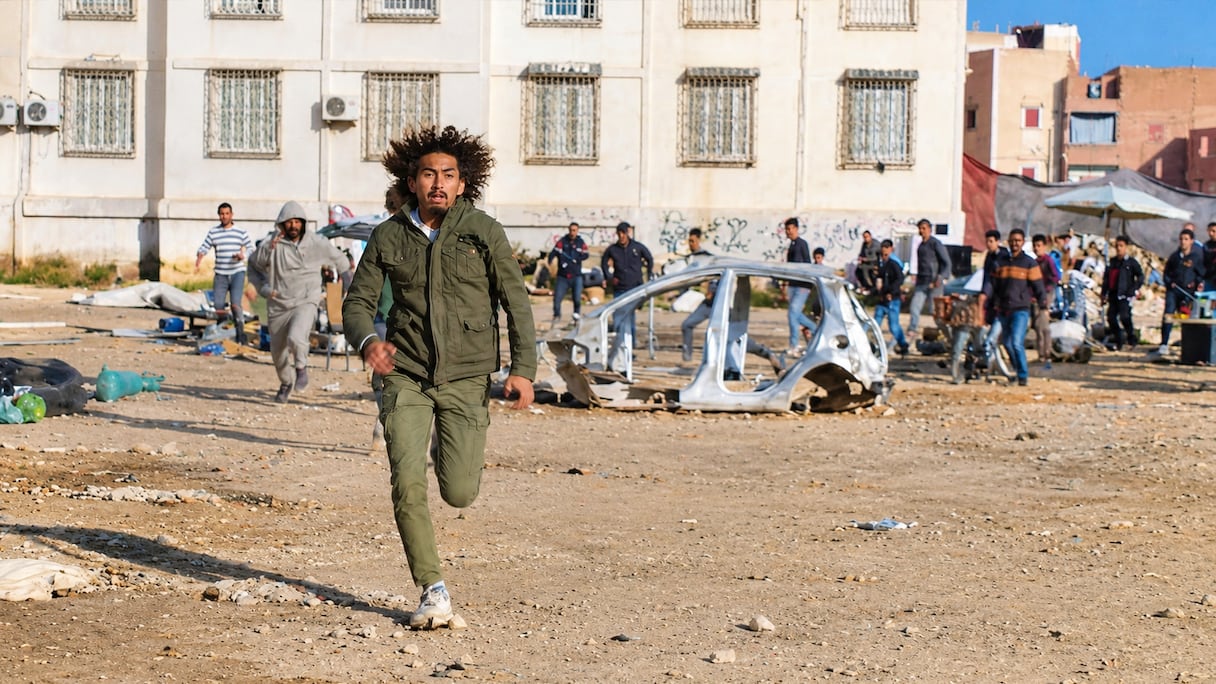
The Marrakech International Film Festival has been informed that Algerian production company Issaad Film Productions, which holds the rights to the Palestinian film Chronicles From the Siege, has decided to withdraw it from the official competition of the festival’s 23rd edition. The film had been on the program for months: its participation was confirmed as far back as June 1, when the producers agreed to its selection. Five and a half months of silence, followed by a sudden U-turn at precisely the moment it would make the biggest splash.
A withdrawal imposed against the director’s wishes
Here is the detail that says it all: the decision was not the filmmaker’s. It was taken by his producer, Salah Issaad, who, as it happens, is Algerian. The director himself wants no part of it. And the festival has made that abundantly clear: “Abdallah Al-Khatib has expressed his complete disagreement with the decision to withdraw the film, both to his producers and to the Festival, and has made clear his wish for his film to be screened in Marrakech.”
Read also : Tebboune, the warmonger looking for a war
So here we have a Palestinian filmmaker, a man who knows in his very bones what it means to live under siege, denied a Moroccan audience in the name of Palestine by a rights holder taking his orders from Algiers. The irony is cruel. For that is precisely what the film is about: people trapped in a besieged city, cut off from the world by war, shortages and danger, grappling with moral dilemmas and the daily struggle to preserve human bonds. Five interwoven stories explore five different strategies for survival. A film about siege has itself been laid siege to.
The festival, meanwhile, has no choice but to bow to the law. “Despite the director’s expressed wish to present his film in Marrakech, the Marrakech International Film Festival is obliged to respect the decision of the company holding the rights and will therefore be unable to keep the film in its program,” the organizers said regretfully.
A film Marrakech helped bring to life
The affair is all the more unseemly because the film owes part of its very existence to Marrakech. Chronicles From the Siege received support in 2024 from the Atlas Workshops, the festival’s talent development program for filmmakers and producers from Morocco, the Arab world and Africa. It won the Atlas Post-Production Award before going on to be selected for the Berlinale last February, where it received the award for best debut feature.
In other words, Moroccan support was perfectly welcome when the film needed finishing. It became unacceptable when the time came to screen it. And it bears pointing out that the ties between Rabat and Tel Aviv now being invoked were hardly a secret in 2024, any more than they were on June 1 this year.
A glance at the festival’s programs is enough to demolish that excuse. Marrakech has always given Palestinian cinema a prominent place. Last year’s closing film was Palestine 36, by Palestinian director Annemarie Jacir. The selection also featured films by Cherien Dabis and the Nasser brothers, The Voice of Hind Rajab by Tunisian filmmaker Kaouther Ben Hania, featuring a Palestinian cast, and Kamal Aljafari’s With Hasan in Gaza.
Read also : Algeria: What the scenes of jubilation over harragas reaching Spain reveal
This year is no exception. Two films by Palestinian directors are being screened: Citizen Osama by Ahmed Hassouna and Yesterday the Eye Didn’t Sleep by Rakan Mayasi. Two Palestinian projects are also taking part in the Atlas Workshops: America Is Behind the Door by Laïla Abbas and Occupational Hazards by Bassel Ghandour. Palestinian cinema, then, is a regular presence in Marrakech, both on screen and in the workshops.
These Palestinian filmmakers come to Marrakech, show their films and take part in discussions. Not one has found the festival objectionable. Leave it to an Algerian producer to spoil the party. The real reason lies elsewhere: in the determination of an Algerian regime that never misses an opportunity to disrupt events taking place in Morocco. We saw it during AFCON. Now we are seeing it in cinema. The playbook is well rehearsed: turn up at a Moroccan event with a global profile, not to make a name for oneself, but to manufacture an incident.
In this scheme, the Palestinian cause is not a matter of conviction. It is a political instrument to be wielded against the neighbor, even if that means silencing a Palestinian in the process.
One film is gone. Seventy-five remain. But the real losers are elsewhere. There is Abdallah Al-Khatib, stripped of any say over the fate of his own work. There are Algeria’s film professionals now being sent the message that working with Morocco may mean having to go back on their word. Above all, there is the already fragile belief that the peoples of the two countries could still talk to one another. By attacking that space, Algiers is not hurting Morocco. It is slamming shut, with its own hands, one of the last doors through which a different future might still have emerged.
