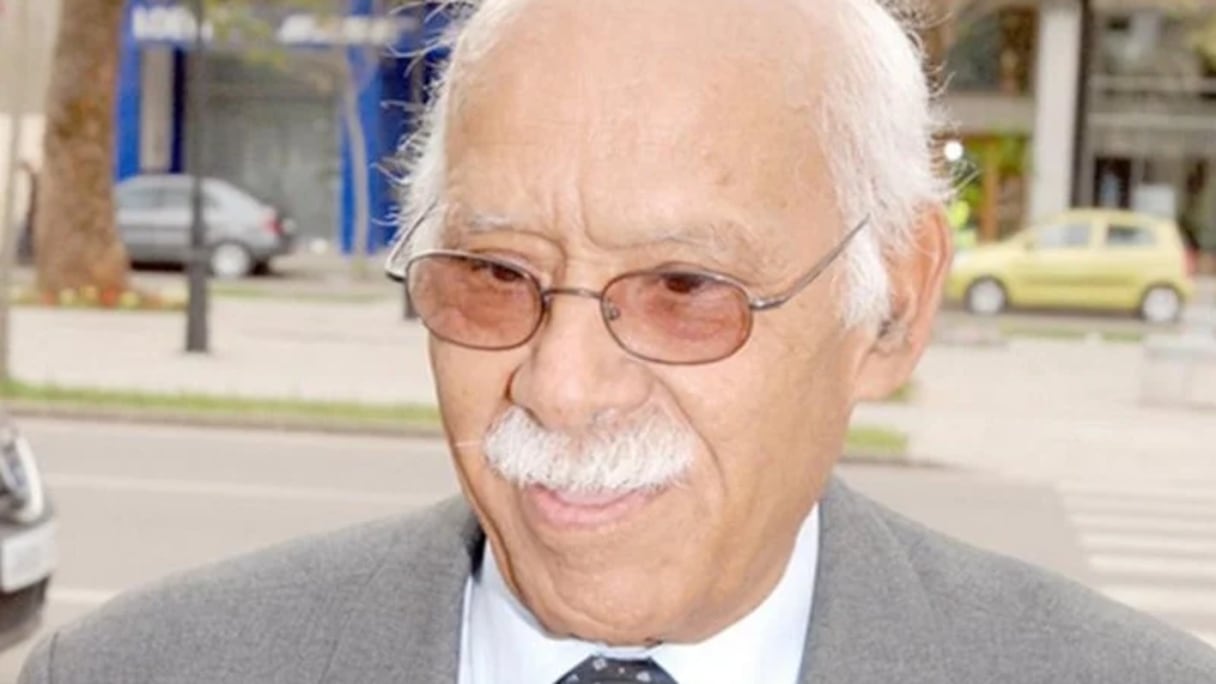
Born in Fez in 1930, Serghini was one of the prominent intellectual and literary figures in Morocco and the Arab world. Over several decades, he contributed to the development of modern poetry and literary criticism, leaving behind a wide-ranging body of work spanning poetry, criticism, translation, semiotic and philosophical studies, as well as fiction and theatre.
Serghini’s literary work includes several poetry collections, notably “Tahta Al-Anqadh, Faouqa Al-Anqadh” (Under the Ruins, Above the Ruins), which earned him the Morocco Book Prize in the poetry category.
He also made significant contributions to Moroccan and Arab literary criticism and thought, including “Lectures on Semiology” (1987), as well as a study and translation devoted to the poetics of Salah Stétié. He also wrote the novel “I Found You in This Archipelago” (1992) and the play “The Ghost Train Song” (1986).
Serghini’s poetry was distinguished by its originality and his determination to move beyond established conventions and forms. His work brought together Sufi sensibility and modern perspectives, reflecting a continuous search for new forms and approaches to poetic expression. This approach earned his work a prominent place in Moroccan and Arab poetry and drew the attention of critics and researchers in Morocco and abroad.
His career was recognized in 2004 when he received the international Argana Poetry Prize, becoming one of the first recipients of the award presented by the House of Poetry in Morocco.
Serghini was more than a poet. He was a distinctive cultural and intellectual figure whose work combined a strong academic background, a deep interest in criticism and philosophy, Sufi sensibility and a distinctly modern poetic imagination. These qualities made him an influential figure in contemporary Moroccan poetry and in the education of generations of researchers and academics.
Serghini began his studies in Fez, where he was shaped by the city’s rich cultural and intellectual environment, before continuing his academic studies at Al Quaraouiyine University. He later travelled to the Mashreq, earning a degree in literature from the University of Baghdad in 1959.
After returning to Morocco, he continued his university studies and obtained a degree in comparative literature from Mohammed V University in Rabat in 1963. He went on to earn a third-cycle doctorate in 1970 and a state doctorate from the Sorbonne in Paris in 1985.
Alongside his literary and intellectual work, Serghini played an important role in university education and in training generations of students. In the early 1960s, he joined the Faculty of Letters and Humanities in Fez as a lecturer, where he focused on research and academic supervision. He later served as the faculty’s vice dean from 1986 to 1991.
Serghini’s influence extended beyond the poetry collections, studies and literary works he left behind. It also reached several generations of students and researchers to whom he passed on the tools of critical thought and academic research, contributing to the continuity of Morocco’s poetic and critical tradition.
With his death, Morocco loses one of the major figures of its contemporary poetic and intellectual movement, while the Arab cultural scene loses a poet, critic and thinker who remained committed for decades to renewing poetry and thought and exploring new horizons. His work remains a record of an exceptional creative and intellectual career that left a lasting mark on Moroccan and Arab literary memory.