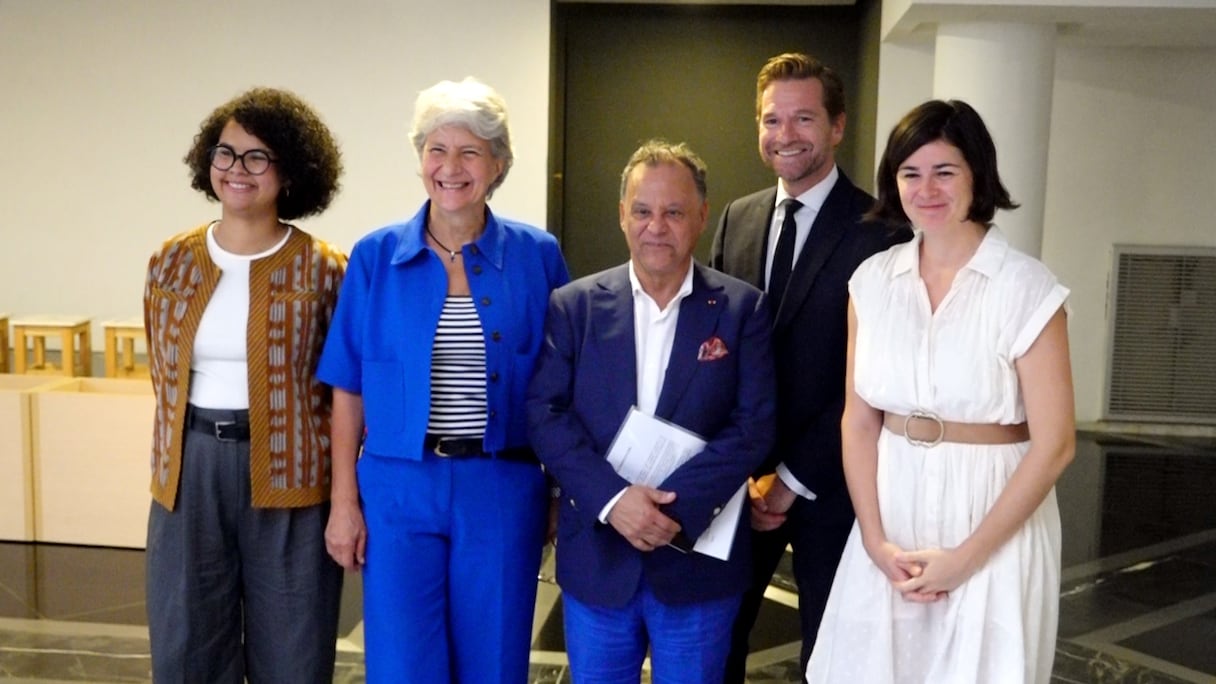
The National Museums Foundation (FNM) announced the findings of a feasibility study on Tuesday in Rabat. The study explored the development of a training program for museum and heritage professions.
Conducted in partnership with the French Development Agency (AFD) and France Muséums, and supported by France, the study is part of “a dynamic of cooperation and exchange of expertise,” according to a statement from the FNM. The findings were presented at the Mohammed VI Museum of Modern and Contemporary Art in Rabat.
The Foundation stated that the involvement of these partners allowed for “different perspectives and experiences to support discussions on creating a training program tailored to the needs of Morocco’s museum sector.” This collaborative approach, the statement added, supports “the professionalization and modernization of museums” in Morocco.
The study “identified current and future training needs, analyzed the skills required to develop museum institutions, and assessed the feasibility of a specialized training system.”
It also identified several areas of expertise for inclusion in the future training program. These include “preventive conservation, documentation and monitoring of collections, restoration, art handling, cultural mediation, arts and cultural education, exhibition design, as well as the design and management of exhibitions.”
The FNM highlighted the management and administration of institutions as a major focus area, alongside digital technology, innovation, and evolving practices and public expectations.
According to the Foundation, the presentation of the study’s findings is therefore “a structuring step to inform future decisions on the positioning of the training program, its target audiences, the definition of training pathways and educational content, as well as governance arrangements, partnerships, the economic model, and the conditions required to ensure the long-term sustainability of the system.”
Through this initiative, the FNM intends to develop a program tailored to the museum sector’s needs, drawing on “national and international expertise, as well as partnerships with higher education institutions, cultural institutions, and specialized organizations.”
The ultimate ambition, it concluded, is to strengthen “Morocco’s museum ecosystem, promote knowledge sharing, and reinforce professional practices in support of the international profile of Morocco’s cultural heritage.”
