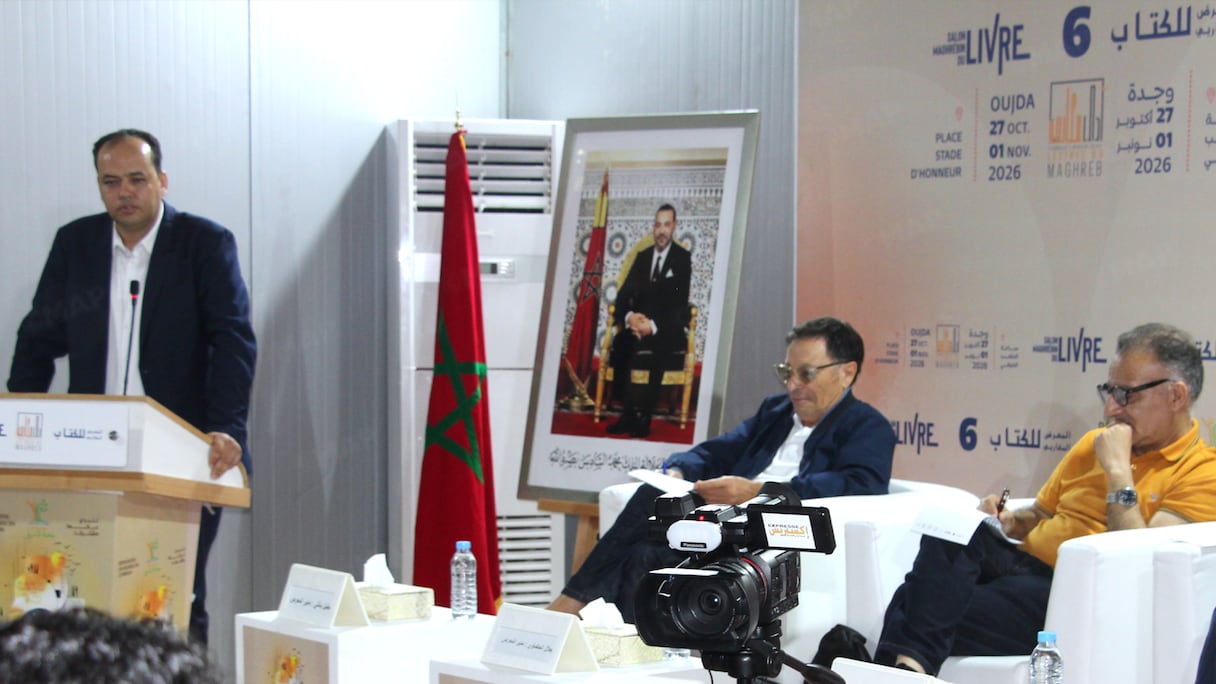
The sixth edition of the Maghreb Book Fair, “Lettres du Maghreb,” which wrapped up on Sunday, November 1, in Oujda, attracted more than 75,000 visitors of different age groups, according to the event’s organizers.
Speaking at a press conference to present the results of the edition, organized by the Oriental Development Agency (ADO) under the theme “Reinventing a Shared World,” the organizers described it as an “exceptional success.” Attendance was up by 15,000 compared with the previous edition.
El Kébir Hannou, head of the development division at ADO, said the cultural event brought together more than 30 publishers from different Moroccan cities, as well as publishers from Tunisia and France. African publishing houses were also notably represented through the “African Capitals of Culture” institution, which enriched the fair’s exhibition spaces with a diverse selection of publications from across the continent.
Hannou said the fair featured sustained intellectual activity, notably through book-signing sessions involving 62 authors, 90% of whom came from provinces in the Oriental region. He pointed to the exceptional public turnout as evidence of the interest generated by the various activities on the program.
He added that the fair continued to place particular emphasis on children and young people. Visits were organized for students from more than 88 schools in Oujda, as well as for children from nomadic communities in the Figuig highlands.
This edition also made a notable effort to include people with disabilities. It welcomed students from the Lalla Asmaa Foundation for Deaf and Hard-of-Hearing Children and organized interactive workshops for blind children.
In a statement to MAP, Hannou said ADO had honored two prominent figures this year: poet and writer Hassan El Amrani and intellectual and human rights activist Amina Lemrini El Ouahabi, in recognition of their distinguished academic and intellectual careers.
He added that the sixth edition also featured a series of “off-site” activities, including lectures at Mohammed First University delivered by prominent thinkers, as well as two cultural roundtables at Oujda’s local prison. The activities gave inmates an opportunity to take an active part in the cultural event.
For his part, ADO Director General and Fair President Mohamed Mbarki said the event’s significant progress and growing success had prompted organizers to consider developing a new identity and name that better reflect its true scope and standing on the international cultural scene.
He said the fair had helped challenge the notion of “cultural centrality,” turning Oujda into a national, continental and international cultural hub. The next ambition, he added, is to expand the event to benefit all provinces in the Oriental region and strengthen territorial equity in access to cultural activities.
Fair Commissioner Jalal El Hakmaoui said the choice of the theme “Reinventing a Shared World” built on the achievements of previous editions. He noted that guests had unanimously praised this year’s rich and diverse program and its ability to address pressing issues, including digital society, artificial intelligence and the challenges of translation.
El Hakmaoui also stressed that the book fair’s reach extended beyond culture to include cultural diplomacy and tourism promotion.
Alongside publishers’ and public institutions’ stands, spaces for young people and children and conference halls, this year’s edition, held from October 27 to November 1 across an area of approximately 5,000 square meters, featured in-depth discussions during 23 panel sessions on a range of literary and intellectual issues.
The fair thus continues to establish itself as a platform for intellectual and creative dialogue and an event contributing to Oujda’s development as a capital of books and reading, while strengthening Morocco’s cultural presence across the Maghreb and Euro-Mediterranean regions.
