Essaouira lit up on Thursday evening for the opening of the 21st Atlantic Andalusias Festival. Under the large tent set up at Bab El Menzeh Square, near the port, music lovers and festivalgoers gathered to celebrate a musical heritage that crosses borders, languages and faiths.
The opening night, held on October 29, brought together music and a message of cultural dialogue. André Azoulay made a strong case for coexistence, while Kaoutar Chakir Benamara addressed the audience in three languages. Performances by Moshé Louk, Marouane Hajji and Nouhaila El Kalai also shaped an evening built around sharing and bringing people together.
Organized by the Essaouira-Mogador Association through October 31, this year’s festival is held under the theme “Alif × Alef: Two Letters, One Story.” The title refers to the first letters of the Arabic and Hebrew alphabets and points to the links between the languages, cultures and musical traditions brought together on stage.
After the audience sang the national anthem, André Azoulay, adviser to King Mohammed VI and founding president of the Essaouira-Mogador Association, delivered the opening address. The ceremony was attended by provincial governor Mohammed Rachid, along with Moroccan and foreign figures from diplomatic, cultural and artistic circles.
Against a backdrop of international tensions and growing identity-based divisions, Azoulay spoke about what makes Morocco’s experience distinctive. “Morocco is doing here what the world no longer knows how to do,” he said, praising Essaouira’s ability to bring people of different faiths together through the simple pleasure of being together.
“Muslims, Jews, Christians and agnostics are here, of course, for the music. But they are here in Morocco, in Essaouira, for the joy of being together in all their differences and in the richness of their diversity,” he said.
He went on to describe this diversity as an essential part of the Moroccan model. “Here, all these forms of diversity are welcome. They are neither a crisis nor a complication. They are simply part of who we are, and they form the driving force at the heart of our social modernity.” He ended his address with an enthusiastic “Bravo Morocco and bravo Essaouira!”
The royal adviser also offered his condolences to the Spanish people and King Felipe VI following the railway disaster in the province of Toledo on October 28. He explained that Spain’s smaller presence at this year’s festival was due to the national mourning declared after the accident. Spain has been observing three days of mourning since October 29.
On stage, the festival’s message of bringing people together found musical expression in matrouz, an art form that brings Jewish and Arab musical and poetic traditions into dialogue. The meeting between Moshé Louk and Marouane Hajji, alongside Nouhaila El Kalai’s participation, gave musical expression to this year’s central theme: keeping a shared heritage alive and passing it on to future generations.
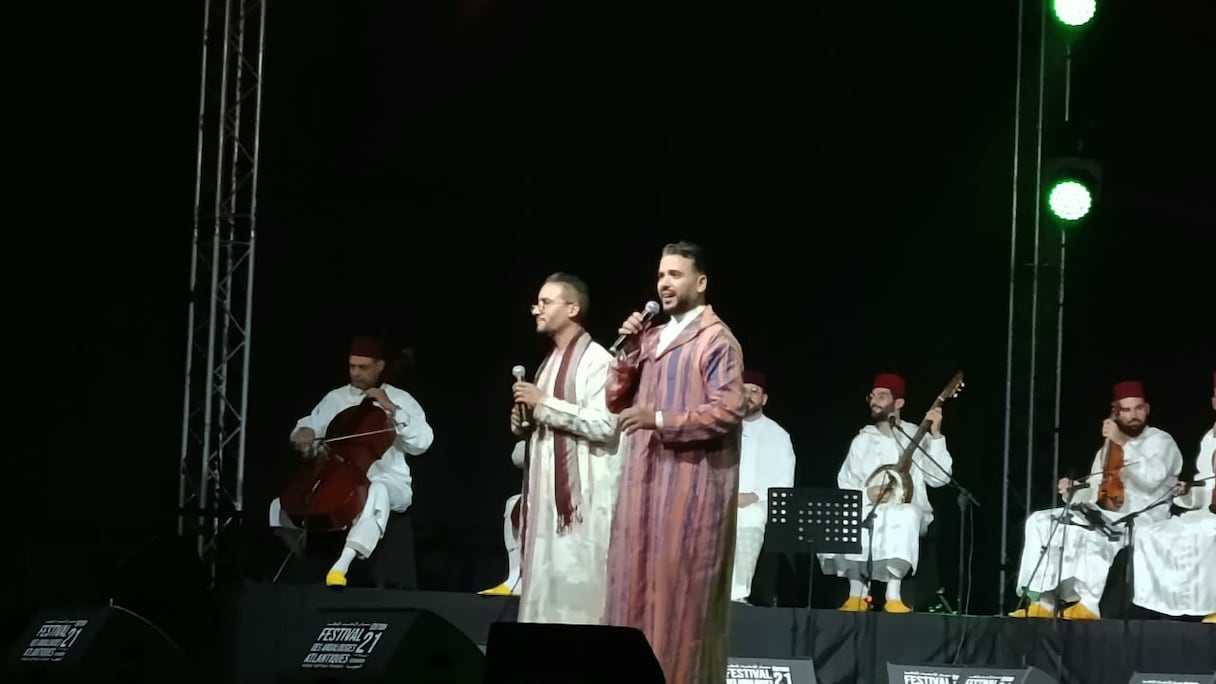
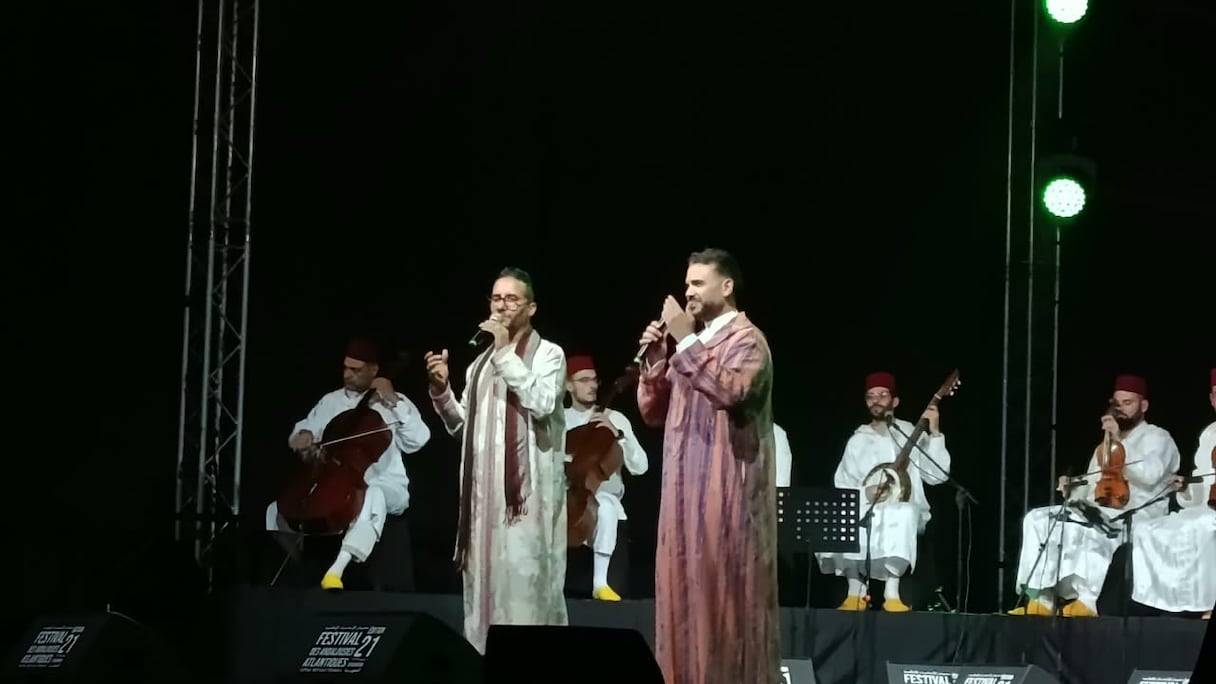
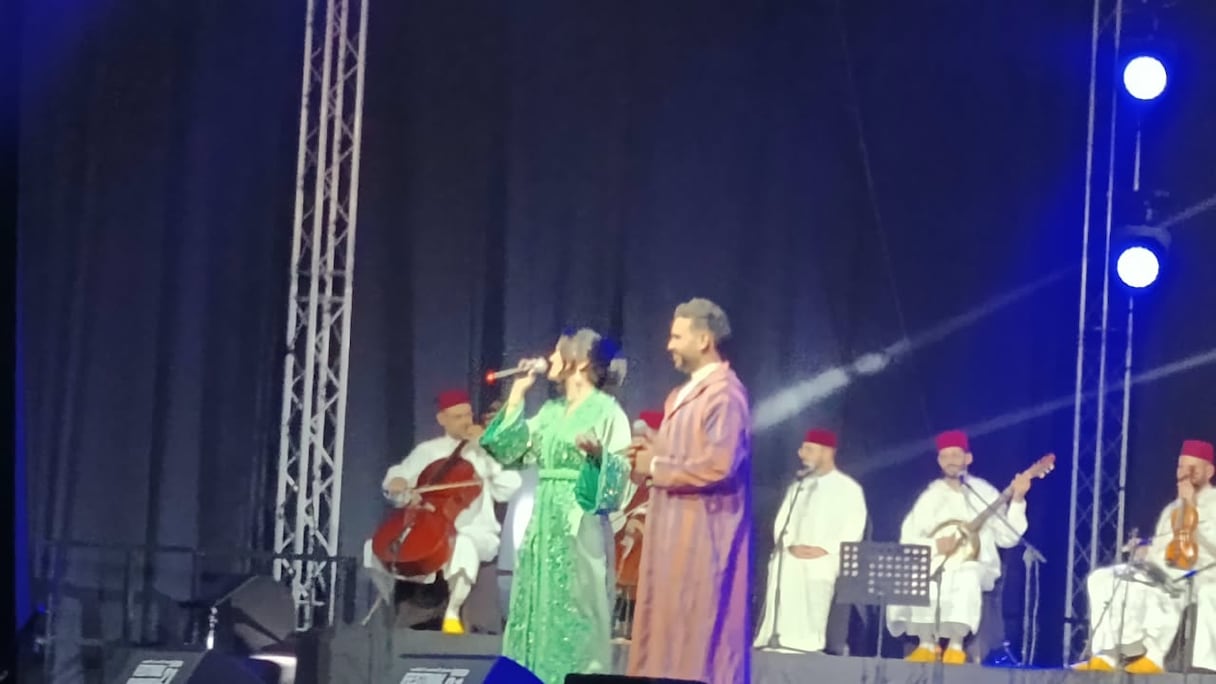
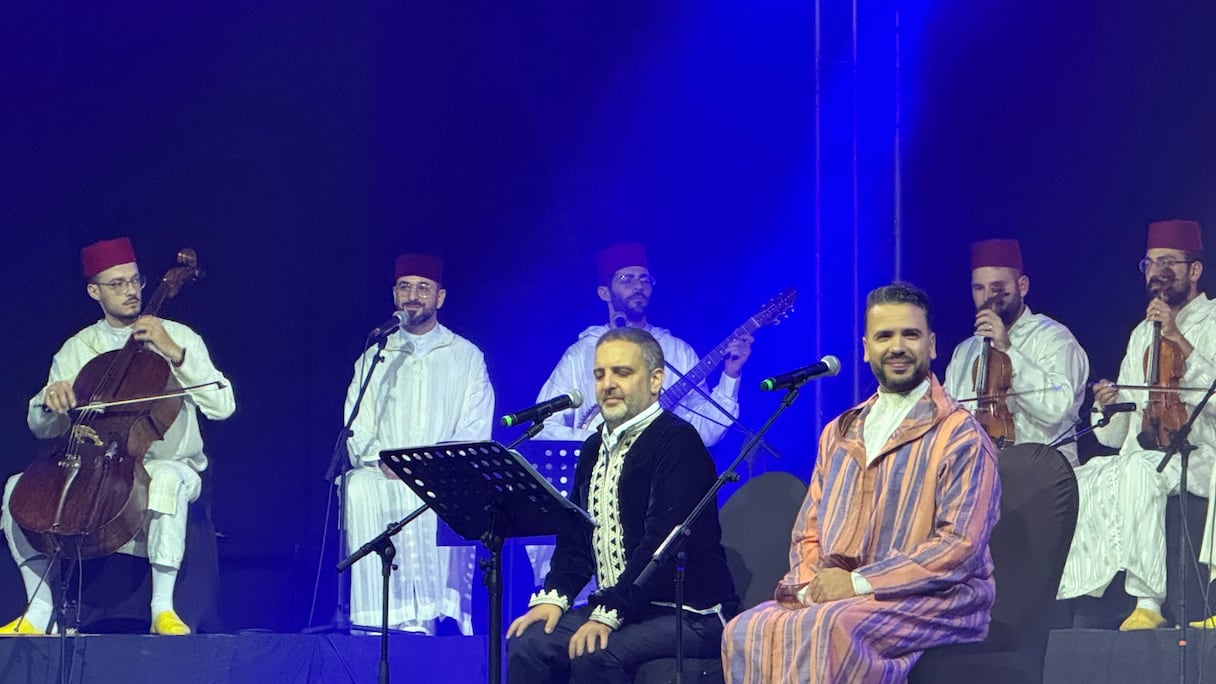
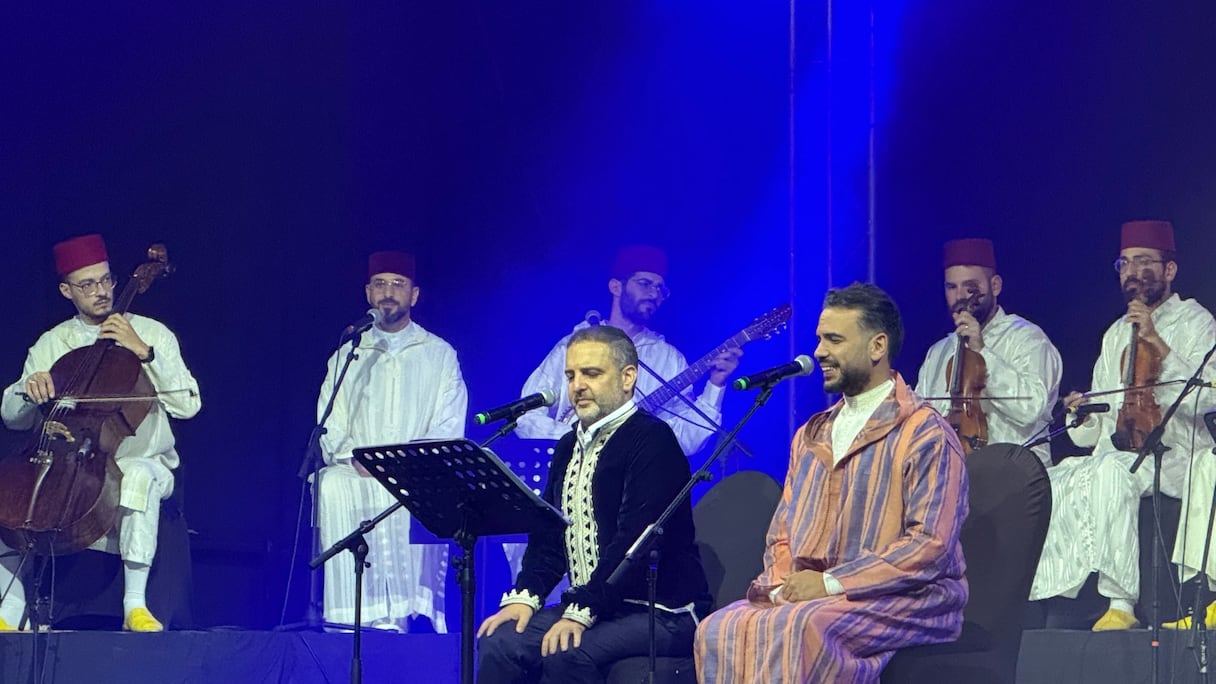
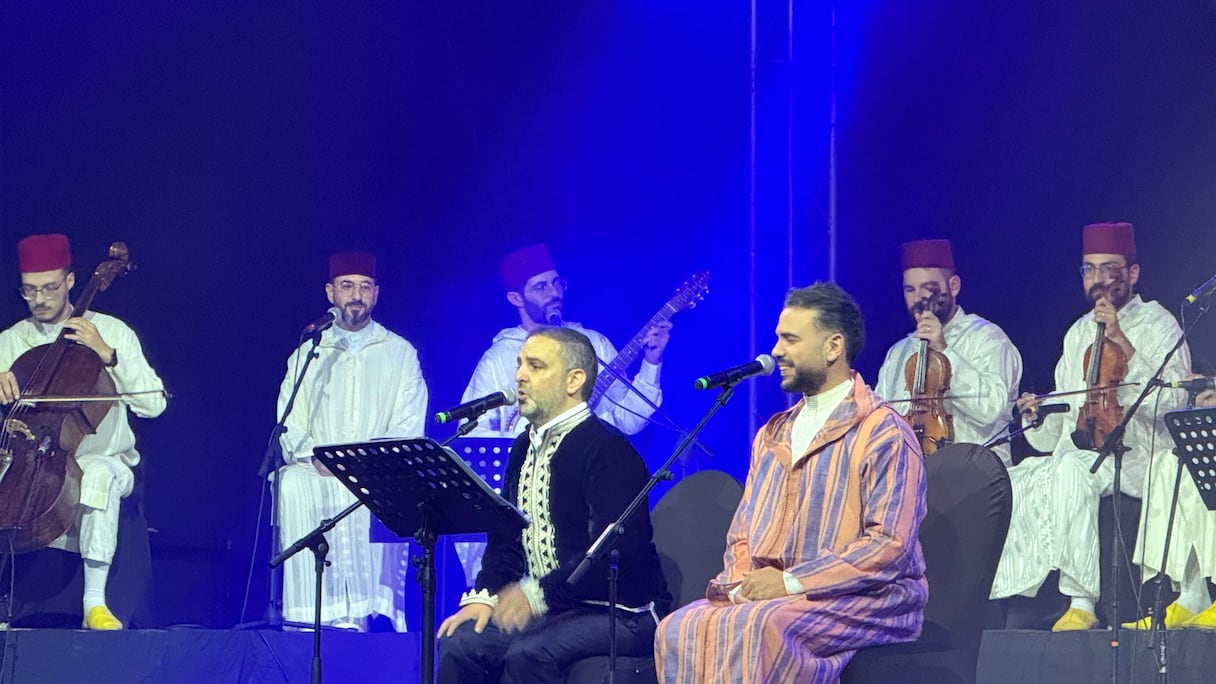
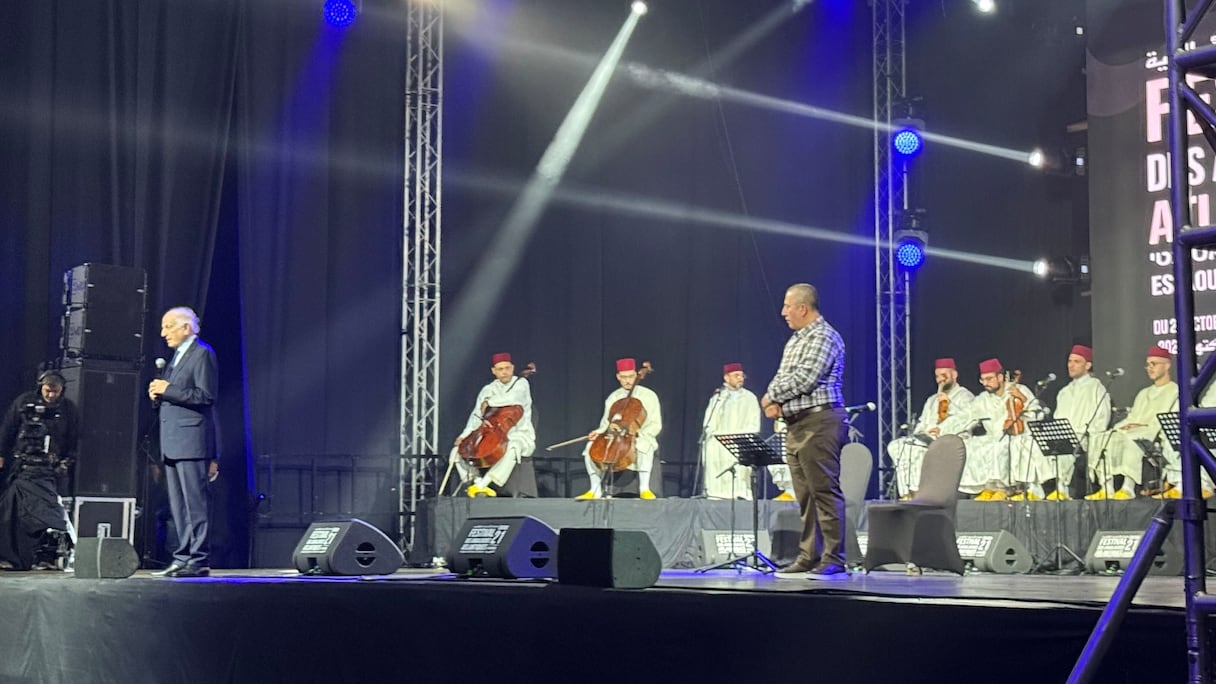
Hicham Dinar et Marwan Hajji à l'ouverture de la 21ème édition du festival Les Andalousies Atlantiques à Essaouira.
Kaoutar Chakir Benamara delivers one message in three languages
Kaoutar Chakir Benamara, secretary-general of the Essaouira-Mogador Association, also made her mark on the opening ceremony. As she presented the evening’s program, she addressed the audience in Arabic, French and Hebrew.
Her remarks in Hebrew drew warm applause, particularly from Israeli festivalgoers. The moment created a special connection with the audience and reflected the festival’s purpose.
“Music is a bridge to others and a living memory that connects the past to the future. Music is a language that needs no translator,” she said.
Moshé Louk and Marouane Hajji bring their voices together through matrouz
The evening then turned to music, with Moshé Louk, nephew of Rabbi Haïm Louk, and Marouane Hajji, a leading figure in Arab-Andalusian singing whose career began at the Atlantic Andalusias Festival. The two artists brought their voices together through matrouz, a tradition that weaves Arabic and Hebrew poetry into an Andalusian musical setting.
They were accompanied by the Ashdod Andalusian Orchestra, conducted by Elad Levi, and Moroccan musicians led by Anass Belhachemi. Their performance drew on a heritage shared by Morocco’s Jewish and Muslim traditions.
The concert also paid tribute to Rabbi Haïm Louk and Abderrahim Souiri, two iconic voices in the festival’s history.
Nouhaila El Kalai reunites with the audience that first welcomed her
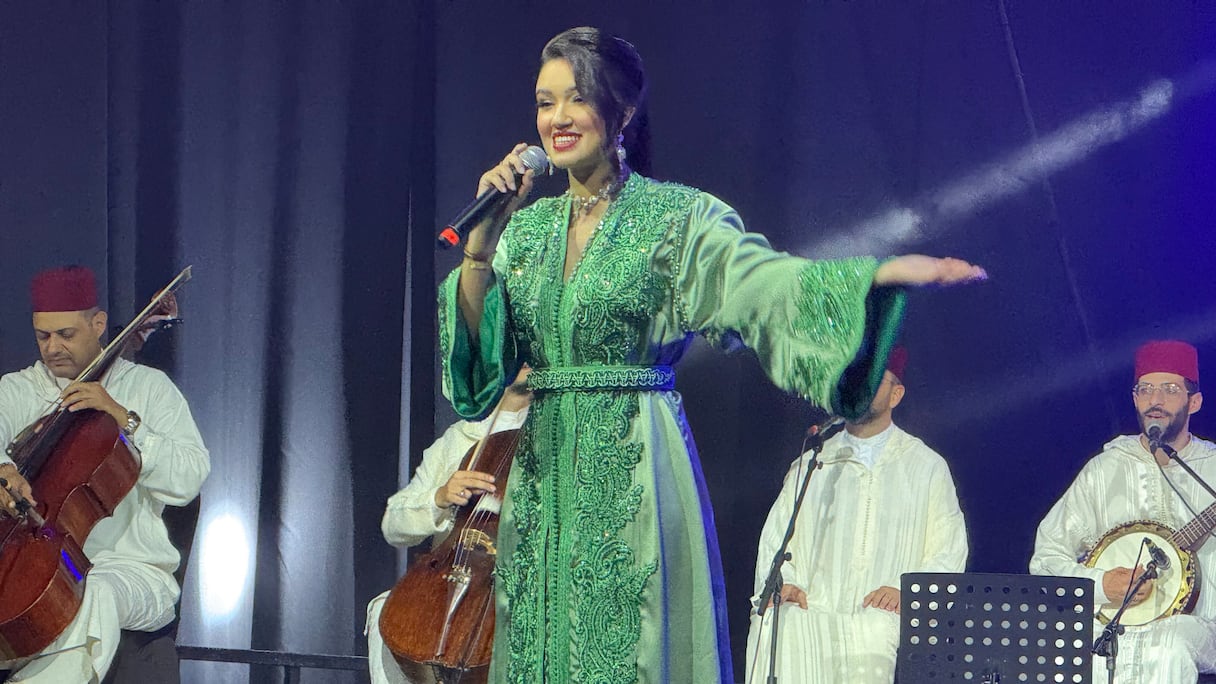
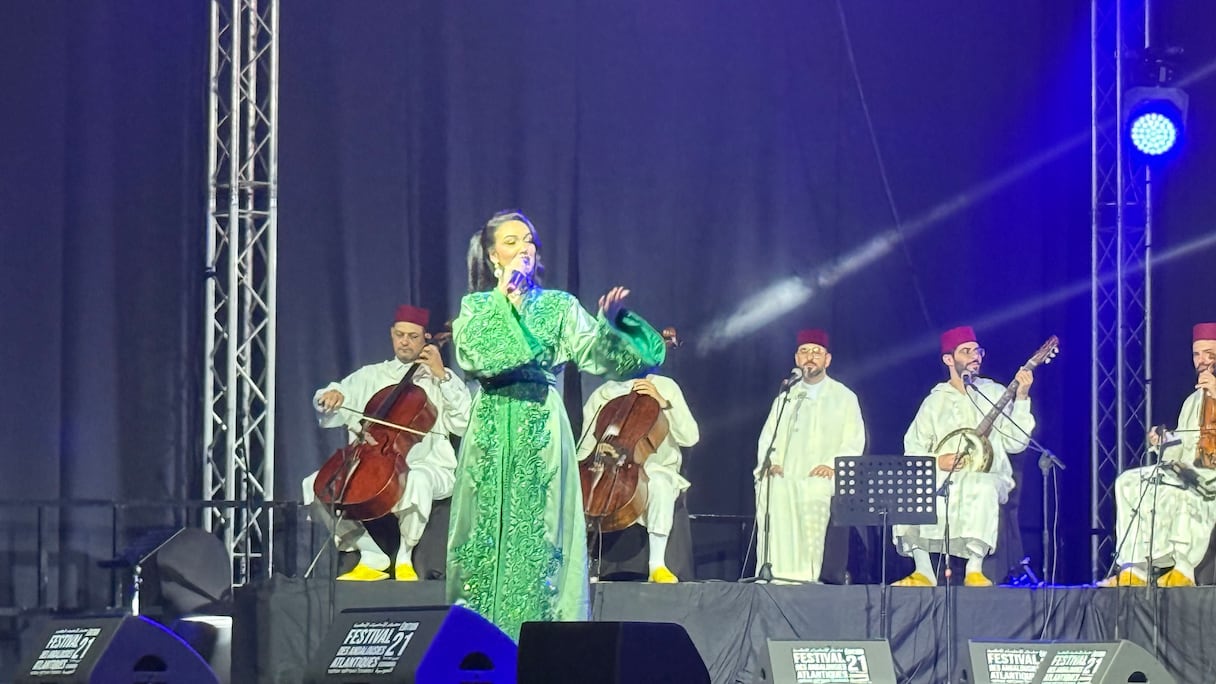
The evening continued with Nouhaila El Kalai, a singer from Fez taking part in the Atlantic Andalusias Festival for the fourth time. It was on this very stage that she made her debut at the age of 13.
With her clear, delicate voice, she performed several qasidas, drawing on the El Kaoui and chgouri repertoires. After opening with a solo performance, she was joined by Marouane Hajji for a duet that brought her set to a close.
Speaking to the press, the singer said she was delighted to be back in Essaouira, which she considers her second city, and praised its “extraordinary energy.”
Hicham Dinar takes up the torch
A handover from Abderrahim Souiri to Hicham Dinar was also planned for the opening night. Souiri was absent, although no reason was given. Marouane Hajji accompanied the segment dedicated to the next generation of artists.
Hajji recalled that the young Souiri-born artist had, like him, taken his first steps at the Atlantic Andalusias Festival. Drawing on the musical traditions of his hometown, Hicham Dinar focuses in particular on spiritual singing, including samaâ and madih.
Giving young voices a place on stage is one of the festival’s main aims. Artistic director Abdessalam Khaloufi stressed this point when speaking to the press. Beyond celebrating a living heritage and the values of coexistence, he said, the festival supports emerging young talent, several of whom have since made a name for themselves on the music scene.
