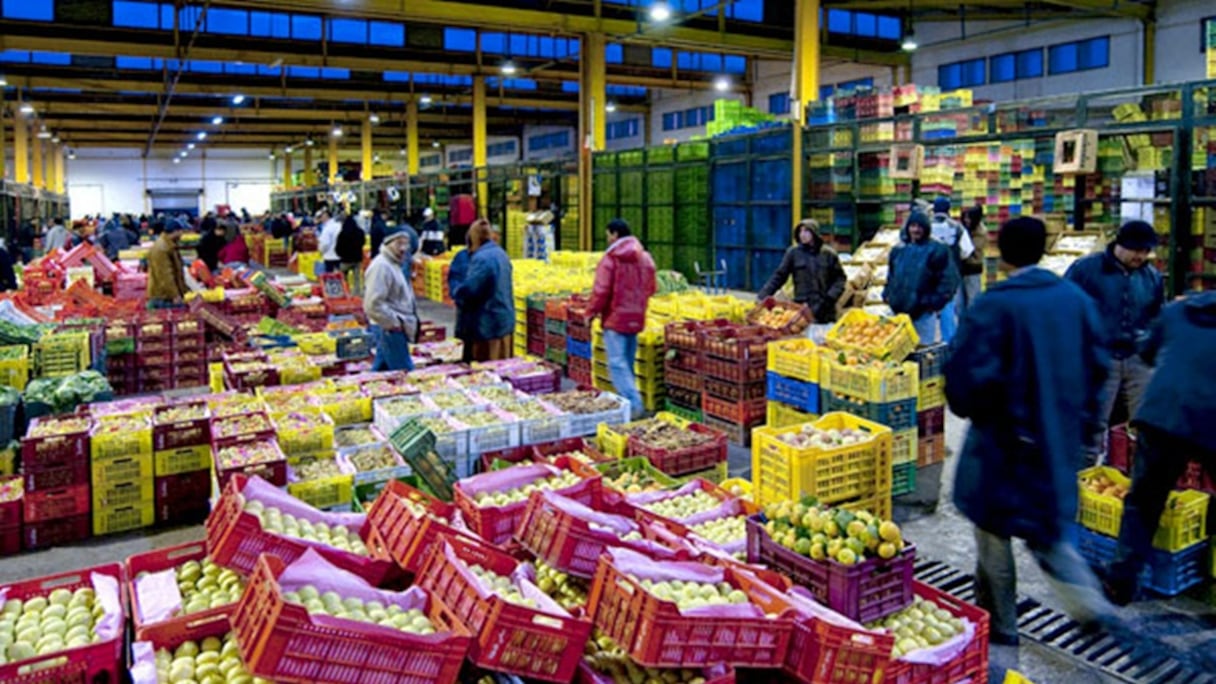
The rising cost of food is becoming an increasingly pressing concern in Morocco, weighing heavily on household purchasing power and fueling social concerns. Measures introduced by the previous government have failed to stabilize or bring down prices, as illustrated by the 1.6% increase in food prices recorded in September 2026, driven in particular by meat and vegetables, whose prices rose by 4.3%, according to the High Commission for Planning (HCP).
The impact is all the more significant given the large share of household budgets devoted to food. In 2022, food accounted for 38.2% of household spending, according to the HCP, making rising prices a direct threat to purchasing power and household finances.
Beyond fluctuations in producer prices, the distribution chain itself has become a central issue in the debate. According to a study by the Competition Council, intermediaries’ gross margins account for the largest share of the final selling price of agricultural products, averaging nearly 34% of the price paid by consumers. This exceeds the gross margins earned by wholesalers and retailers.
Meanwhile, between 35% and 45% of fruit and vegetables sold on the market are estimated to bypass wholesale markets, making it harder to track volumes and prices.
The PJD warns of market concentration
In response, the new government intends to change course, including by establishing regional companies and professional aggregation and marketing platforms operating under a unified set of specifications. The aim is to reorganize distribution channels, reduce the role of intermediaries and contain margins.
Read also : Morocco’s income tax reform: New brackets for 2027–2030 as top rate falls to 30%
The proposal has already come under political criticism. During a plenary session of the House of Representatives on Thursday, October 22, devoted to adopting the government program presented by Fatima Ezzahra El Mansouri and granting the new government its investiture, Driss El Azami El Idrissi, head of the PJD parliamentary group, strongly criticized the planned regional companies.
“Creating regional food distribution companies opens the door to corruption and tyranny,” he said. He argued that the system could concentrate distribution in the hands of speculators and influential figures, to the detriment of competition and consumers. “We are against this idea, and we are telling you so clearly,” he added.
From Brazil to Spain, as well as India and France, four international experiences offer possible ways to organize food supply chains, improve price transparency and cut logistics costs in an effort to lower retail prices.
Brazil: regional wholesale centers to consolidate supply
Brazil’s model is built around a network of supply centers known as Centrais de Abastecimento (CEASA), which organize the wholesale marketing of agricultural and food products. These markets bring together goods from different production areas and distribute them to retailers, supermarkets, restaurants and other professional buyers.
One of the main operators is CEAGESP, a public body established in May 1969 that handles the marketing of fresh produce and storage. Its main site, the São Paulo Terminal Market (Entreposto Terminal São Paulo, ETSP), is a major food distribution hub.
The model concentrates supply in a single professional marketplace rather than leaving it scattered among numerous producers and traders. These facilities receive, sort, store and market goods, while designated wholesale areas and logistics flows help streamline deliveries and collections.
Read also : 2027 Finance Bill allocates DH 45.4 billion to accelerate health system reform
For Morocco, this experience is particularly relevant to sectors that require large volumes of produce to be consolidated and suitable facilities to be available, an operator in food distribution told Le360. Regional platforms could be considered for fruit and vegetables, potatoes or onions, depending on the needs of production areas and consumer markets, he said.
However, building such facilities would not, by itself, guarantee lower retail prices, he noted. Their effectiveness would depend on operating costs, access conditions, the number of buyers and competition among wholesalers. Any logistics savings would also need to be passed on to consumers, he added.
India: producer groups and digital auctions
India has adopted a complementary approach based on a national online agricultural trading platform, e-NAM, and Farmer Producer Organizations (FPOs). The idea is to combine the physical consolidation of goods with digital competition among buyers.
Launched in 2016, e-NAM connects existing agricultural markets, known as mandis. Operated by the Small Farmers Agribusiness Consortium under the supervision of India’s Ministry of Agriculture, the platform facilitates transactions between sellers and buyers operating in different markets.
The system allows traders to register lots, inspect and grade products, submit bids electronically and make payments online. Participants also have access to information on arrivals, traded volumes and prices. Interstate trade is possible under the system, subject to applicable regulations and licensing requirements.
Read also : Morocco’s 2027 budget targets oil distributors with higher tax on bumper profits
FPOs operate further upstream by consolidating output from several farms. They can pool collection, sorting, grading and packaging operations, negotiate with buyers on behalf of their members and sell produce through e-NAM. This arrangement allows farmers to offer larger volumes and share certain costs.
As of March 31, 2026, e-NAM was connected to 1,656 agricultural markets across 23 states and four union territories, according to India’s Ministry of Agriculture. Since its launch, the platform had facilitated the marketing of 132.5 million tonnes of products, with a cumulative value of 4.84 trillion Indian rupees. It had more than 18 million registered farmers and 4,724 producer organizations.
For Morocco, this approach could combine regional physical platforms with a shared digital tool, the food distribution operator said. The physical facilities would consolidate, prepare and inspect goods, while the digital platform would allow approved buyers to compare lots, product quality and asking prices, he explained. The platform would not necessarily need to buy and resell products itself. It could instead focus on facilitating transactions and making them more transparent, he added.
France: Rungis, shared infrastructure under public oversight
France’s approach to organizing food distribution relies on national-interest markets, known as marchés d’intérêt national (MIN). The International Market of Rungis, near Paris, is the best-known example. Unlike a distribution company that directly buys and resells goods, a MIN provides producers and wholesalers with shared infrastructure and services to support their commercial activities.
These markets are defined as public management services offering facilities suited to specific categories of agricultural and food products. Their regulatory framework includes objectives related to regional planning, environmental quality and food safety. Access is reserved for producers and traders.
The facilities include specialized areas for fruit and vegetables, meat and seafood, as well as premises for wholesale businesses, storage facilities, logistics services and systems for health inspections and traceability. Commercial operators remain responsible for their own transactions.
Rungis covers around 234 hectares and hosts 1,226 companies. Its turnover reached 12.02 billion euros in 2024. By concentrating businesses in one location, the market allows professional buyers to compare offers from several wholesalers and enables companies to share some of the costs associated with receiving and marketing goods.
Read also : 2027 Finance Bill: Income tax cuts, higher pensions and social support measures to boost purchasing power
France also has a market monitoring system, the Réseau des nouvelles des marchés (RNM), run by FranceAgriMer. Its investigators track price movements for various fresh food products at Rungis. Their findings are supplemented by data collected from retail channels, allowing prices to be monitored at several stages of the supply chain, from dispatch to retail sale.
For Morocco, the value of this model lies in separating different functions, the food distribution operator said. Regional companies could manage infrastructure and shared services, while producers and wholesalers would continue to market their goods, he explained.
An independent price-monitoring system could operate alongside them, tracking prices at the production, wholesale and retail stages, he added. Such a separation would help prevent conflicts of interest if a public entity were also involved in commercial transactions.
Spain: a coordinated regional network
Spain offers the model most directly comparable to Morocco’s proposal for regional food distribution companies. Since the 1960s, the country has developed a network of wholesale platforms known as the Mercas, organized around the national public company Mercasa, established in 1966.
The system is designed to organize urban food supplies, modernize wholesale markets and adapt infrastructure to the distribution of fresh products. Mercasa provided technical expertise and public financing capacity, while municipalities contributed, among other things, by making land available and identifying local needs. Wholesalers and commercial businesses subsequently handled a large share of sales operations.
The network includes 24 food distribution centers, among them Mercamadrid in Madrid, Mercabarna in Barcelona and Mercazaragoza in Zaragoza. These platforms combine wholesale markets, logistics infrastructure and additional services for professional operators.
The network handles more than 6.8 million tonnes of fruit and vegetables each year, alongside substantial volumes of meat and seafood. Its platforms generate more than 110,000 transactions a day. These figures illustrate how a regional network can handle large volumes without concentrating all operations at a single national site.
The system is governed through mixed-economy companies jointly involving Mercasa and the municipalities concerned. Private operators, particularly wholesalers, run commercial spaces under concession or rental agreements.
For Morocco, Spain’s experience offers a possible model for regional companies that would manage professional trading platforms, pool logistics equipment and facilitate exchanges between producers, cooperatives, wholesalers and buyers, the food distribution operator said. Funding could combine contributions from the state and local authorities with private investment, depending on the structure chosen, he said. However, the legal status and business model for each platform should be determined through a study of local needs and financial viability, he added.
Which model for Morocco?
Taken together, the four experiences show different ways of organizing food distribution. Brazil focuses on physical wholesale supply centers, India combines producer organizations with digital trading, France separates market management from commercial activity and price monitoring, while Spain operates a network of regional platforms coordinated by a national body.
Read also : Morocco targets more than 1.8 billion cubic meters of desalinated water a year by 2031
Morocco could combine elements of these approaches, according to the operator. Producers, cooperatives and agricultural organizations would consolidate volumes and prepare deliveries. Regional professional platforms would handle collection, sorting, grading, storage, cold-chain management and quality control. A shared digital platform would then allow users to view available lots, compare prices and track transactions before products are sold to wholesalers, retailers, institutional catering services and other professional buyers.
Designing a model for Morocco would require decisions on several issues, starting with which sectors to prioritize, the operator said. It would be preferable to begin with a limited number of products for which difficulties in consolidating supply, logistics losses or marketing conditions justify specific intervention, he said.
Governance would be another major challenge, he added. Access criteria for facilities, service fees, rules for allocating trading spaces and relationships with private operators would all need to be transparent. The business model would also have to cover investments in warehouses, refrigeration equipment, transport and IT systems without generating excessive operating costs, he explained.
Above all, he stressed, concentrating supply must not result in replacing numerous intermediaries with a single dominant buyer. Competition among buyers must remain effective, while the respective roles of infrastructure managers, logistics providers and commercial operators must be clearly defined.
Evaluating the results would also be essential, he said. The assessment should compare prices at the production, wholesale and retail stages for products of comparable quality, while taking logistics costs, losses and margins into account. Tracking the gap between the net price received by producers and the price paid by consumers would provide a useful indicator, he added. However, that gap should not automatically be treated as profit, since it also includes the costs required to bring products to market.
The challenge for Morocco therefore goes beyond setting up new food distribution companies, the operator said. It lies in deciding whether these companies should manage infrastructure, provide logistics services, organize transactions or directly buy and resell products. International experience shows that these functions can complement one another, but each arrangement entails different choices in financing, governance and regulation, he concluded.
