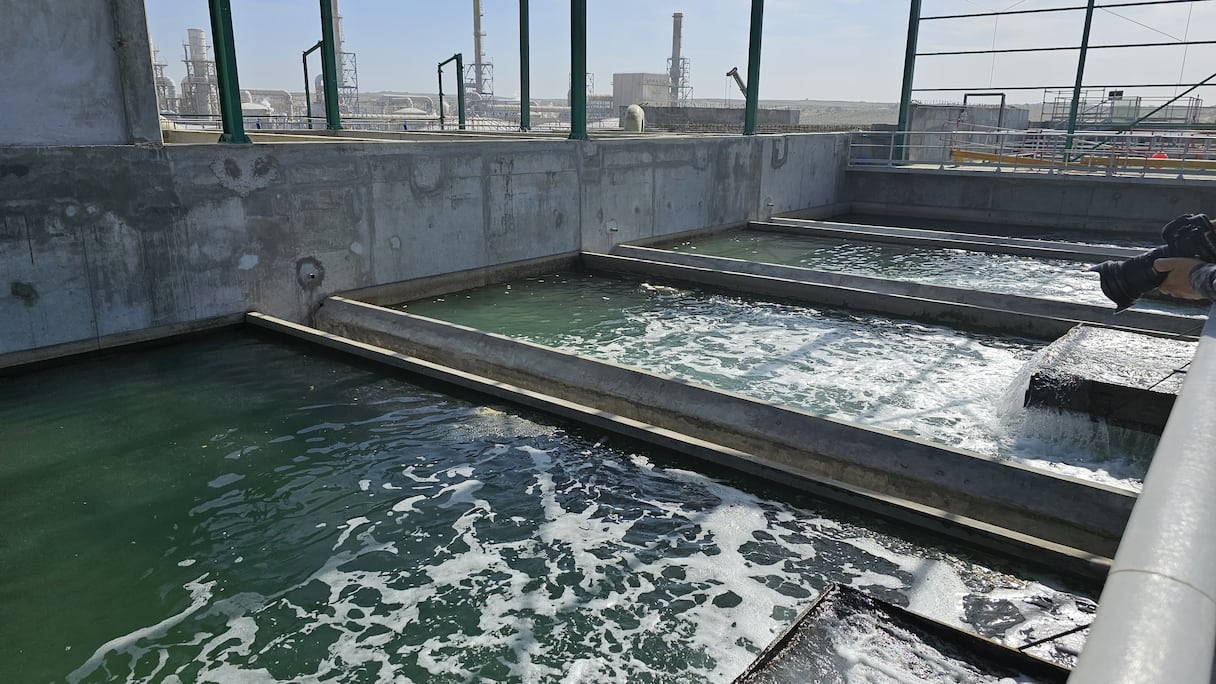
Morocco is pressing ahead with a water supply strategy that combines large-scale seawater desalination, increased dam storage and transfers between river basins, seeking to secure supplies for households, agriculture and industry while reducing pressure on existing resources.
The government is targeting annual desalinated water production of around 1.7 billion cubic meters by 2030, according to Al Ma Dialna, with new plants planned across the country and several major facilities approaching completion.
Dakhla, Safi and Grand Casablanca are expected to bring new desalination capacity into service in the coming months, adding to drinking water supplies and helping ease demand on groundwater and surface water.
Read also : Morocco’s dam reserves can cover drinking water needs for two years, minister says
Desalination is only one part of the plan. Morocco is also working to raise its total dam storage capacity to nearly 22 billion cubic meters by 2027, while accelerating the Water Highway, a network designed to move surplus water from wetter northern basins to regions facing persistent shortages.
The three approaches are intended to serve different needs: desalination provides an additional source of water, dams store available supplies, and inter-basin connections allow water to be moved to areas where demand is greatest.
Work is continuing on desalination projects included in the 2021–2026 program, among them the Agadir plant and the expansion of the Jorf Lasfar facility.
A further round of plants is planned for the Oriental region, Souss-Massa, Tangier, Guelmim, Tan-Tan and Rabat. These facilities are expected to operate entirely on renewable energy and enter service between 2029 and 2030.
Read also : Morocco targets 27 billion cubic meters in dam storage, 1.8 billion in desalinated water by 2031
The strategy also calls for greater reuse of treated wastewater, tighter management of water allocated to drinking supplies and agriculture, and measures to reduce losses from leaking distribution networks.
These steps are intended to make better use of water already available, alongside the investment in new production and storage capacity.
Morocco also wants to develop a domestic industry capable of supplying desalination technology and running the facilities. The plan includes increasing local manufacturing and training Moroccan specialists, reducing reliance on imported equipment and expertise over time.
The next milestones are the commissioning of the Dakhla, Safi and Grand Casablanca facilities, followed by the 2027 dam-capacity target and the planned expansion of renewable-powered desalination by 2030.
