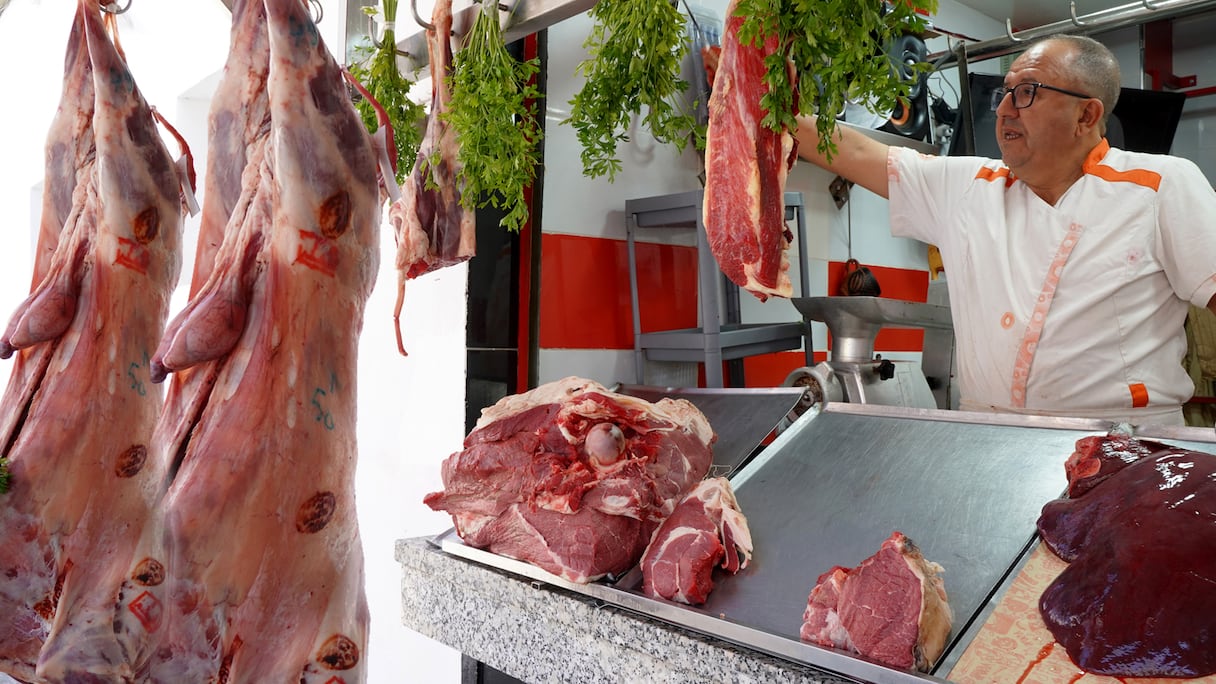
Industry professionals point to structural weaknesses in Morocco’s livestock sector and international market pressures to explain the surge, while disagreeing over the policies needed to bring prices down.
Mohamed Jebli, president of the Moroccan Federation of Livestock Sector Stakeholders, told Le360 that the increases reflect a global trend rather than a problem confined to Morocco. The country does not produce enough livestock to meet domestic demand and remains heavily dependent on foreign markets for supplies, he said.
As a result, rising international prices feed directly into the domestic market, Jebli explained.
Read also : Beef at MAD 120, lamb at MAD 160 as food price pressure spreads to chicken, eggs
He added that Moroccan prices have become closely tied to fluctuations in international markets because of the country’s dependence on imports and lack of self-sufficiency. Higher transport and fuel costs within Morocco have added to the pressure, while livestock imports remain subject to global market prices.
Tax breaks have failed to curb the increases
Jebli said previous government measures, including tax exemptions and the removal of customs duties on imports, have not been enough to stem the price surge.
Prices have continued to rise sharply, he said, pointing to record exchange rates for the US dollar, the euro and other currencies. Geopolitical tensions, ongoing wars and disruptions affecting major maritime routes, including the Strait of Hormuz, have also contributed to the pressure.
As for the outlook, Jebli warned that prices are likely to remain high and could rise further as long as international conflicts and crises persist.
Mustapha El Khouli, president of the National Association of Red Meat Fatteners, offered a different emphasis, criticizing government policies that rely heavily on imports without providing sufficient support for domestic producers.
He told Le360 that opening the door to imports and scrapping customs duties would not solve the underlying problem unless these measures were accompanied by meaningful support for local livestock farmers.
According to El Khouli, current policies make it easier for importers to source livestock and meat from countries such as Portugal, Brazil and Spain, while small Moroccan farmers receive little practical assistance or targeted incentives. He described these farmers as essential to maintaining the balance of rural economies and domestic markets.
Read also : High meat prices push Fez shoppers to buy less
El Khouli questioned what the government’s concessions to importers had achieved for the domestic sector. He argued that small-scale livestock farmers had been severely weakened, while middlemen had benefited at the expense of the national treasury and the local market.
He warned that continued reliance on large-scale imports, without protecting domestic production, had eroded the capital of small livestock farmers and sharply reduced their herds.
Supporting local supply chains and ensuring fair treatment for small farmers, he argued, are essential to achieving lasting price stability. Flooding the market with imported products, he said, does not necessarily improve the purchasing power of ordinary consumers over the long term.
