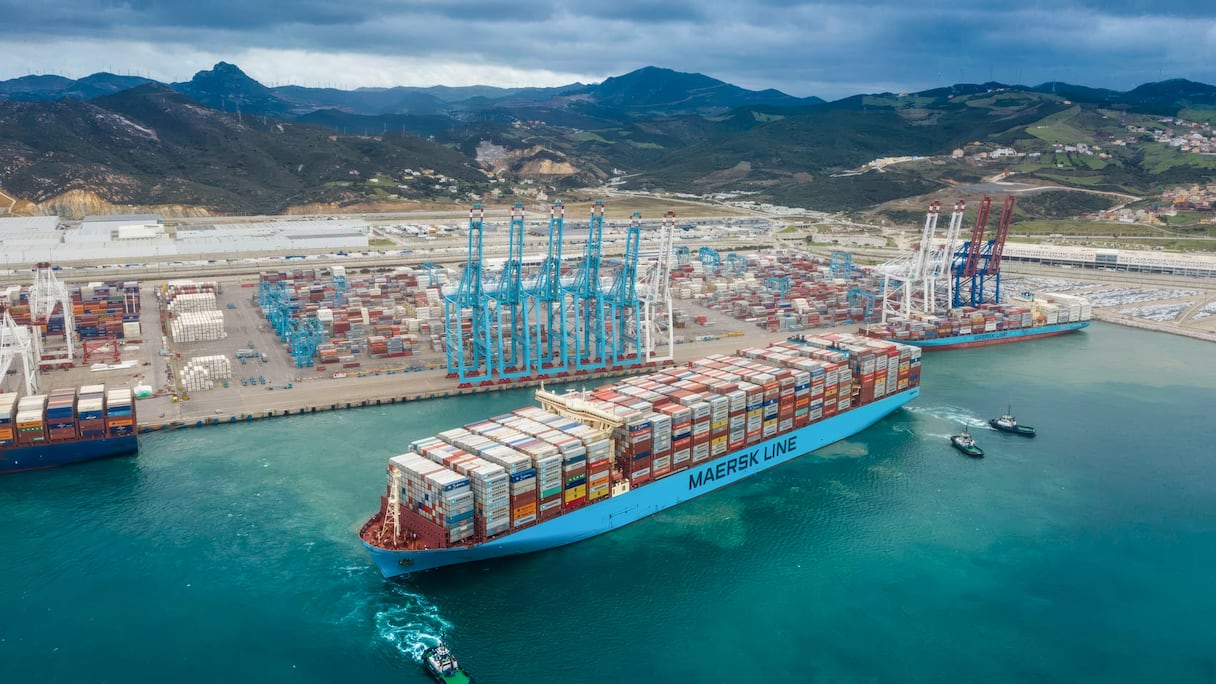
Global shipping and logistics group Maersk is expanding its use of rail between Tangier and Casablanca as part of a logistics model designed to give importers an alternative route into Morocco’s main commercial and industrial hub while reducing their exposure to congestion at the Port of Casablanca.
The Danish group said Thursday, August 13, that its rail service between the two cities is now fully operational, with regular departures connecting cargo arriving by sea in Tangier with Casablanca.
The strategy effectively combines two of Morocco’s principal logistics hubs. Tangier serves as the maritime gateway, drawing on its connections to major international shipping routes, while cargo destined for the Casablanca area can complete the domestic leg of its journey by rail.
For Maersk, the proposition is intended to offer customers greater predictability and flexibility as cargo volumes through Morocco continue to grow.
Casablanca remains one of the country’s busiest ports and a critical gateway for its largest economic center. The port handled 17 million tonnes of cargo during the first six months of 2026, according to figures cited by Maersk. Traffic reached 3.53 million tonnes in June alone, up 32% from the same month in 2025.
The port accounts for around 35% of Morocco’s overall port traffic, according to the company, making congestion and limited operational flexibility increasingly important considerations for supply-chain operators.
Maersk’s answer is to make greater use of Tangier’s international maritime connectivity while linking it directly to Casablanca by rail.
From ship to rail to final delivery
The service goes beyond moving containers between Tangier and Casablanca.
Maersk is offering the corridor as part of an integrated logistics chain beginning with ocean freight into Tangier, followed by dedicated rail transport to Casablanca.
Customers can then combine the service with customs clearance, inland storage and final-mile delivery by truck, allowing different stages of the journey to be managed through a single logistics provider.
Regular rail departures and more predictable transit times should also make it easier for businesses to plan inventories and maintain consistent flows of goods, according to the company.
The model is particularly relevant for cargo destined for Casablanca, Morocco’s largest economic center, without requiring the maritime leg of the shipment to terminate at the city’s port.
By routing cargo through Tangier and completing the journey south by rail, Maersk is seeking to give companies an additional option rather than leave supply chains dependent on a single port or transport mode.
The company also sees the corridor as part of a broader effort to strengthen and diversify logistics links between Morocco and Europe.
“What excites me most about this solution is that it addresses a challenge we hear from customers every day,” Ruben Moratinos, Maersk’s head of sales for the Maghreb, said.
“By bringing Tangier and Casablanca together, we’re creating a simpler way to move cargo into Morocco’s main commercial center. Customers benefit from broader access to global trade flows, more choices in how they manage their supply chains, and a solution that can support growth as their business evolves.”
Connecting two different logistics strengths
The proposition rests on the complementary roles Casablanca and Tangier play in Morocco’s economy.
Casablanca is the country’s principal industrial and commercial center and generates substantial import and export demand. Tangier, meanwhile, has developed into a major international maritime hub with extensive connections to global shipping routes.
Maersk argues that connecting those strengths by rail can make supply chains more resilient as Morocco’s trade volumes expand.
Rather than treating the two cities as competing gateways, the company is effectively integrating them into the same logistics chain, using Tangier’s maritime connectivity to serve businesses concentrated around Casablanca.
The approach also reflects a broader shift toward multimodal logistics in Morocco, where rail, road and maritime infrastructure are increasingly being combined to accommodate rising trade flows.
For businesses, Maersk says the immediate benefit is operational. More routing options can reduce dependence on a single gateway, while scheduled rail connections offer greater certainty over when cargo will reach Casablanca.
For Morocco’s logistics system, the implications are broader. As traffic continues to grow, shifting part of the flow through Tangier and moving it onward by rail could help distribute pressure between gateways rather than concentrating additional volumes at Casablanca.