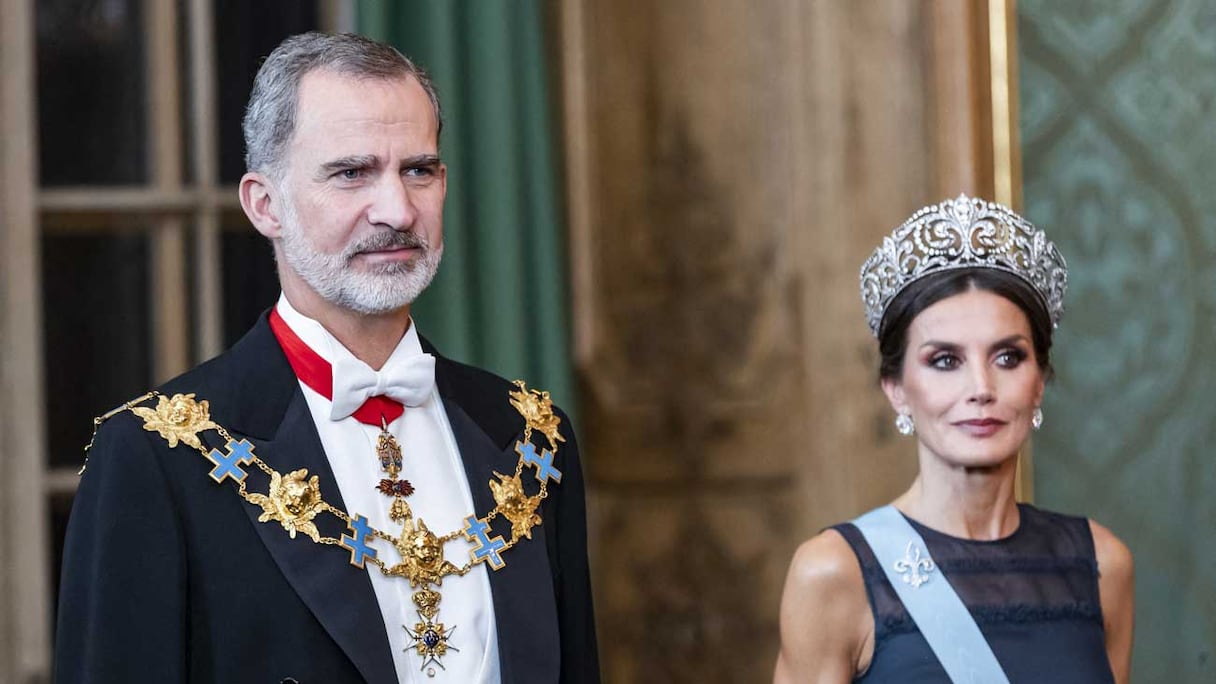
Nearly 20 years after a Spanish monarch last visited the occupied enclaves of Ceuta and Melilla — in November 2007, under the reign of Juan Carlos I — the announcement that King Felipe VI and Queen Letizia will travel there on October 13 and 14 marks a turn of events as ill-timed as it is difficult to comprehend. Agreed jointly by the Royal Household and Pedro Sánchez’s government, although the prime minister will not make the trip, this will be the current monarch’s first official visit to the occupied territories since he took the throne in 2014. And it comes at a moment fraught with political significance.
Madrid may be clumsily trying to pass off the visit as routine institutional business, dressing it up as an exercise in strengthening ties between the central government and the occupied presidios. But the combustible context in which it is taking place turns it into a glaring diplomatic false note. By choosing to set foot in these Moroccan enclaves in the immediate aftermath of the summer’s migration turmoil, the Spanish Crown is abandoning geopolitical prudence and yielding to the most retrograde instincts of the country’s political class.
The timing of the visit raises obvious questions. It comes when relations between Morocco and Spain have, by the broad consensus of observers, never reached such a degree of maturity and resilience. In recent years, the two countries have built a deep strategic partnership based on consultation, mutual trust and the joint management of major Euro-Mediterranean challenges, foremost among them the fight against criminal networks and the management of migration flows.
Read also : Puigdemont challenges Spanish position on Ceuta and Melilla
And yet, by scheduling the visit in the immediate aftermath of the summer tensions in Ceuta—tensions fuelled by viral calls for assaults on the border fences that were swiftly contained by Moroccan security forces in Fnideq—the Spanish Royal Household is stumbling just as the two countries’ diplomats are working to consolidate a climate of calm. The Spanish monarchy, meanwhile, is artificially reviving an anachronistic territorial dispute. By bowing to pressure from the most extreme voices and Spain’s accelerating shift to the right, Felipe VI is sending an ambiguous message, lending credibility to those in Spain who persist in weaponizing the occupied presidios to weaken the Rabat-Madrid axis and put Morocco in the crosshairs.
All this comes against the backdrop of an increasingly toxic public debate in Spain, with the crisis unleashing a torrent of anti-Moroccan hostility and hatred, whipped up by an opportunistic political class.
Spain’s political establishment, amplified by sections of the media in search of scapegoats, has shown no hesitation in peddling outlandish claims. Baseless accusations have been levelled directly at Morocco’s security services and authorities, falsely accusing them of tolerating or orchestrating pressure at the crossings between Fnideq and Ceuta, while wilfully ignoring the enormous efforts Morocco makes, at considerable human and material cost, to secure the area and stem illegal migration flows.
The crisis thus became a catalyst for the resurgence of an unmistakable discourse of hatred. Migrants were exploited for political ends, while the entire Moroccan community was tarred with the same poisonous brush and portrayed as a permanent threat. The Popular Party (PP) and the populist Vox party seized the opportunity with consummate cynicism. Turning Ceuta and Melilla into springboards for partisan political controversy, they launched repeated offensives in the European Parliament and across the media to systematically target the Kingdom, awakening old colonial demons that have no place in a 21st-century partnership.
Read also : Ceuta: PP and Vox’s anti-Morocco crusade suffers a stinging defeat in European Parliament
By deciding to visit in the wake of this populist onslaught, the Spanish monarch leaves the bitter impression that his institutional presence is lending legitimacy to the xenophobic and belligerent narratives promoted by these extremist factions. For the Moroccan people, this royal visit to occupied Moroccan territory is seen as a provocation.
Morocco demonstrates unfailing consistency and a keen sense of geopolitical responsibility on a daily basis. It plays an indispensable stabilizing role on North Africa’s flank, a status regularly acknowledged by the most clear-sighted Western capitals. Against that backdrop, it is deeply disappointing to see official Spain play into the hands of imperial nostalgists and the radical right’s constant attempts to outbid one another. No amount of historical inertia can obscure the reality of these colonial occupations on African soil, nor can it legitimize ostentatious visits designed to conceal the dead ends of Spain’s domestic politics.
Felipe VI’s visit to Ceuta and Melilla on October 13 and 14 will go down as a missed opportunity for de-escalation. In seeking to placate extremist forces of every stripe in Spain, the Crown is eating into the reservoir of trust painstakingly built between two neighboring countries bound to build their future together. At a time when bilateral cooperation has demonstrated a remarkable ability to withstand crises, this visit casts an unnecessary shadow over a partnership that deserved far better than the narrow calculations of Spain’s partisan politics.
