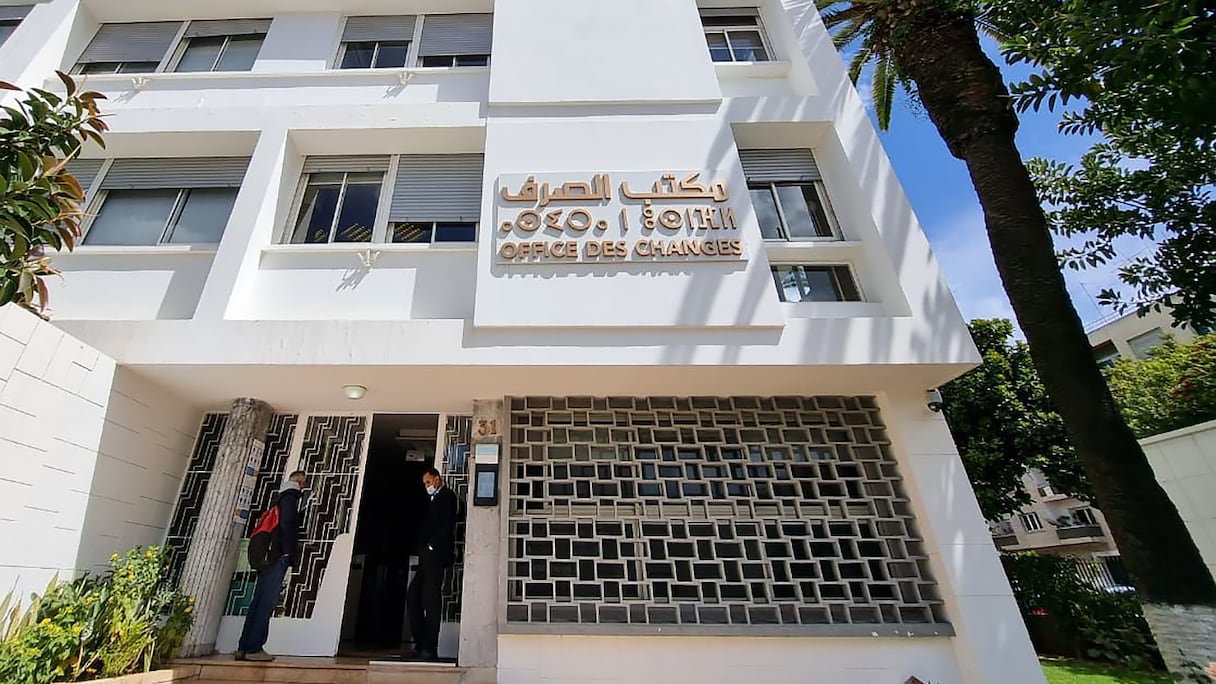
The Foreign Exchange Office is tightening the regulatory framework governing offshore holding companies, with the aim of ensuring effective and proportionate oversight while strengthening the compliance, transparency and security of their operations.
On August 10, 2026, the Foreign Exchange Office published a circular on the due diligence and internal monitoring obligations of offshore holding companies. Signed by Minister of Economy and Finance Nadia Fettah, the text is dated July 23, 2026 and entered into force on the date of its signature.
Offshore holding companies are legal entities established by foreign individuals or legal entities that exclusively engage in portfolio management and equity investments in companies.
Under the new circular, each offshore holding company must establish a due diligence and internal monitoring system adapted to the size of its activities and the risks associated with them, in terms of combating money laundering, terrorist financing and the financing of the proliferation of weapons.
A seven-part compliance framework
The framework must cover seven areas: customer and beneficial owner identification and due diligence (individuals who directly or indirectly own 25% or more of a company’s capital and/or voting rights); monitoring and surveillance of transactions based on a risk-based approach; verification of the source and destination of funds; and the updating and retention of documents.
It must also include procedures for screening data against the lists of the National Commission responsible for implementing sanctions provided for under United Nations Security Council resolutions (CNASNU), suspicious transaction reporting to the National Financial Intelligence Authority (ANRF), as well as staff awareness and training.
These procedures must be set out in a manual that is updated periodically to reflect changes in legislative and regulatory provisions, the company’s activities and newly identified risks.
Each offshore holding company must also conduct regular analyses and assessments of the money laundering and terrorist financing risks associated with its activities, the nature of its transactions, its customer profiles and the geographical areas concerned, while taking into account the findings of the national risk assessment. The results of this assessment must be documented, regularly updated, brought to the attention of senior management and made available to the Foreign Exchange Office.
Read also : Moroccan textile industry faces warning of economic and social crisis by 2050
The circular specifically targets three categories of risk. The first concerns risks arising from the development of business activities, including new portfolio management practices involving the purchase and sale of financial assets in Morocco and abroad.
The second concerns risks related to equity investments in Moroccan or foreign companies, including shareholder current-account advances, related-party loans and dividend distributions. The third concerns risks associated with the use of new technologies. Risk assessments must be carried out before any new product, practice or technology is adopted.
From an organizational standpoint, each offshore holding company must appoint an AML/CFT compliance officer (Anti-Money Laundering/Counter-Terrorist Financing) to the ANRF and CNASNU, in accordance with the procedures set by those authorities.
The officer, who is responsible for managing and overseeing the compliance framework, must in particular centralize and promptly review unusual or complex transactions, ensure enhanced monitoring of high-risk business relationships, keep senior management informed, and liaise with the ANRF and CNASNU. The company may rely on third parties to implement certain due diligence measures, but remains ultimately responsible for complying with its obligations.
Customer and beneficial owner identification
The Foreign Exchange Office sets out detailed requirements in the circular for identifying and conducting due diligence on business relationships, occasional customers and beneficial owners. Before entering into a business relationship or carrying out an occasional transaction with an individual customer, an offshore holding company must prepare an information form containing, in particular, the customer’s first and last names, date of birth, exact address, occupation, identity card or passport number depending on the customer’s status, as well as information on the source of funds and the purpose of the proposed business relationship.
For legal entities, the form must include the company name, legal form, business activity, registered office address, commercial register number, tax identification number, the identity of directors, partners or shareholders, as well as information on the beneficial owner obtained from independent and reliable sources, notably the Public Register of Beneficial Owners. For legal arrangements, including trusts, the form must include information on the establishment and name of the entity, as well as the identity and address of its beneficial owner.
The text also provides for simplified due diligence measures, except where there is a suspicion of money laundering or terrorist financing and based on the findings of the national risk assessment. These measures notably allow the customer’s and beneficial owner’s identities to be verified after the business relationship has been established and reduce the frequency with which identification information must be updated.
Read also : Morocco launches investment week for Moroccans living abroad
The circular stipulates that where there is doubt about the accuracy or relevance of identification data, or where the identity of the persons concerned is incomplete or clearly fictitious, the offshore holding company must refrain from establishing the business relationship or terminate it, and promptly file a suspicious transaction report with the ANRF.
The offshore holding company must also implement CNASNU decisions relating to targeted financial sanctions by regularly consulting the lists published in the Official Gazette, conducting checks and matching them against its customer database, and immediately freezing the assets of the persons concerned.
With regard to transaction monitoring and surveillance, the circular requires offshore holding companies to classify their customers and transactions according to the types of risks they present. Those considered high-risk notably include individuals or transactions identified as such by the company under its risk-based approach; politically exposed persons; nationals or residents of countries at high risk of money laundering or terrorist financing; transactions involving assets located in such countries; persons from countries for which the Financial Action Task Force (FATF) calls for enhanced due diligence measures; and legal entities with excessively complex ownership structures.
Enhanced due diligence measures
For these high-risk profiles, the circular provides for enhanced due diligence measures. These include collecting additional information, obtaining information on the reasons for transactions, securing prior approval from senior management before entering into a business relationship, enhanced and ongoing monitoring, obtaining information on the source of funds, and regularly informing senior management about the nature and volume of transactions carried out. The text also specifies that offshore holding companies must exercise particular vigilance over business relationships that do not involve the customer’s physical presence.
Unusual or complex transactions are defined as those that do not appear to have an economic justification or an apparent legitimate purpose, involve amounts disproportionate to the transactions normally carried out by the customer, or display an unusual degree of complexity, particularly where there is a mismatch between the transaction and the customer’s professional activity. Any such transaction must be brought to the attention of the compliance officer and subjected to a documented review, which must result in a prompt report to the ANRF if a suspicion is substantiated or persists.
As regards reporting obligations, the circular requires offshore holding companies to promptly report to the ANRF any funds, transactions or attempted transactions suspected of being linked to offenses covered by Articles 218-1 to 218-4 and 574-1 to 574-2 of the Criminal Code, or where there are doubts about the identity of the originator or beneficiary.
Read also : From savers to investors: How Moroccan households are rethinking their money
They must also submit systematic reports on certain financial transactions, regardless of whether there is any suspicion, under conditions established by the ANRF in coordination with the Foreign Exchange Office, and provide these authorities with any documents and information requested within the specified deadlines.
The circular further requires offshore holding companies to retain for 10 years all documents relating to transactions carried out, starting from the date on which they were conducted, as well as all documents obtained as part of due diligence measures, starting from the date on which the business relationship ends.
The collection and processing of this data must comply with Law No. 09-08 on the protection of personal data. The text also states that professional secrecy may not be invoked by an offshore holding company against the Foreign Exchange Office or the competent authorities responsible for combating money laundering and terrorist financing.
Penalties for non-compliance
The circular provides that no civil or criminal liability action, or sanction, may be brought against an offshore holding company, its directors or employees for making a report in bad faith, when the suspicious transaction report was filed in good faith.
Offshore holding companies, their directors and employees who fail to comply with the obligations set out in Law No. 43-05 are, however, subject to the disciplinary or financial penalties provided for under that law, without prejudice to any applicable criminal sanctions.
The text also recalls that directors and employees who knowingly disclose to the person concerned or to third parties the existence of a suspicious transaction report, or who knowingly use the information collected for purposes other than combating money laundering and terrorist financing, are liable to the penalties provided for under Article 446 of the Criminal Code, unless the conduct constitutes an offense carrying a more severe penalty.
In addition, the CNASNU applies the financial penalties provided for under Article 28 of Law No. 43-05 against any individual or legal entity that fails to comply with obligations relating to targeted financial sanctions and systematic reporting.
