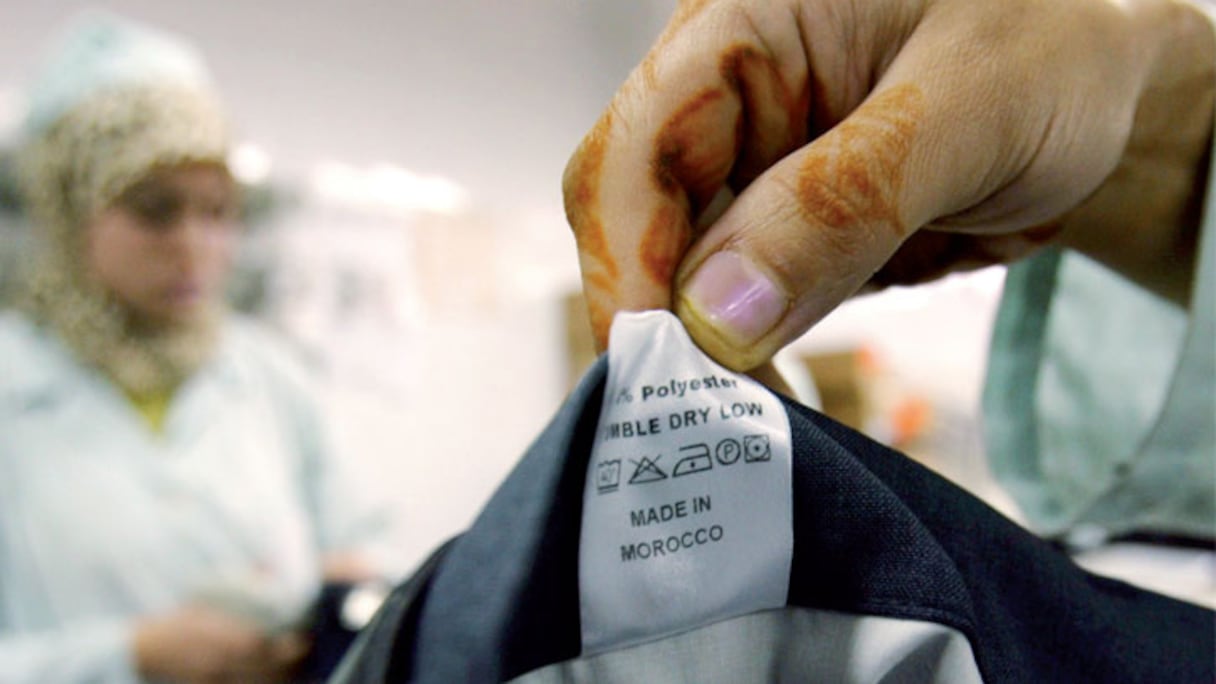
Moroccan textile and clothing exports have continued to contract. According to figures from the Moroccan Exchange Office, 2025 ended with a 3.9% decline in exports of finished clothing and a 7.4% drop in knitted goods. The downward trend accelerated in the first half of 2026. By the end of June, finished clothing exports had fallen 5.7% to 14.04 billion dirhams, while knitted goods declined 9.7% to 3.84 billion dirhams.
To examine the reasons behind the decline, Le360 sought the analysis of Jean-François Limantour, a textile and clothing industry expert and president of Evalliance, an association promoting textile cooperation between the European Union, Southeast Asia and the Mediterranean.
According to Limantour, Moroccan exporters face a dual challenge, both cyclical and structural. On the cyclical side, the European clothing market is experiencing a broad downturn, with consumers concerned about their purchasing power, fuel prices, heatwaves and conflicts in Iran and Ukraine.
According to Eurostat data on European Union clothing imports through the end of May 2026, the latest figures available, imports had fallen 10%. Against this broader backdrop, Morocco recorded a 9% decline, a smaller drop than several of its competitors.
Bangladesh saw its clothing exports to the EU fall 19%, followed by Pakistan (-17%), Turkey (-16%), India (-13%) and Cambodia (-11%). Tunisia, which has been experiencing a decline for several years, fell a further 7%. China, Europe’s largest supplier, limited its decline to 4%.
On the structural side, Limantour points to the long-term decline in Morocco’s share of the European clothing market, which fell from 4.5% in 2005 to 3% today. In his view, this decline reflects deeper weaknesses than the current market downturn alone.
Read also : Morocco’s pension system faces growing pressure despite 340.8 billion dirhams in reserves
Structural weaknesses
Asked about the structural causes of the decline, Limantour identified several weaknesses. The sector remains largely made up of numerous small subcontracting companies operating in low-value-added segments, he said.
This is compounded by a weak and poorly structured domestic market and a fragile, narrow textile upstream sector, leaving the clothing industry heavily dependent on foreign suppliers for raw materials and accessories, the expert noted.
Limantour also highlighted insufficient technological development, citing a lack of substantial investment in production, design and marketing over the past 20 years. He also pointed to a European preferential customs regime that is less favorable than those enjoyed by most of Morocco’s Asian competitors.
Taken together, these weaknesses reflect the sector’s continued dependence on a low-value-added subcontracting model that Limantour believes is now reaching its limits.
Asked about the future of Morocco’s textile and clothing industry as it faces competitors with lower costs and faster delivery times, Limantour noted that major Asian competitors have made significant investments in industrial and marketing competitiveness.
He particularly pointed to the rapid growth of Chinese hyper-fast-fashion platforms such as Shein and Temu. On this basis, the expert warned that “there will not be much left of Morocco’s textile and clothing industry by 2050 if the sector does not radically move away from its current subcontracting model,” describing such an outcome as an economic and social crisis.
On Morocco’s geographical proximity to the EU, long seen as a major competitive advantage, Limantour said “the benefit remains important but is becoming increasingly limited by the logistics and commercial performance of Chinese ultra-fast-fashion platforms, which rely on air freight and logistics centers located in Europe.”
He also noted that the European market is shifting toward lower- and mid-range products, putting pressure on the short supply chains in the mid- and high-end segments where Morocco has historically been a leading player.
As for the customs agreements between Morocco and the EU, Limantour considers them significantly less favorable than those granted by the bloc to countries such as Bangladesh, Pakistan, Myanmar, Cambodia and Sri Lanka.
EU-Morocco: preferential trade regime needs improvement
Against this difficult backdrop, Limantour recommends making one priority urgent: keeping Moroccan factories supplied with orders by finding new markets.
He called for a broad mobilization of public authorities and industry leaders to quickly organize exceptional promotional campaigns in Morocco’s two main European markets, Spain and France, as well as in two or three other European markets, including Germany, the Netherlands, Italy and Switzerland.
Beyond the immediate market downturn, the expert stressed the importance of addressing structural issues over the medium term through a 2026-2030 strategic plan.
The plan should include major public support for competitive industrial and marketing investment in advanced technologies powered by artificial intelligence, he said, with the aim of modernizing the sector and developing new skills.
Limantour also called for regulatory and tax policies to encourage foreign direct investment, including from Asian investors, as well as a stronger promotional and communications strategy around the “Made in Morocco” label.
Finally, he called for EU-Morocco customs rules to be aligned with the bloc’s “Everything But Arms” preferential regime, granted to some of Morocco’s largest competitors, or, failing that, with the model of the EU-Turkey Customs Union.
