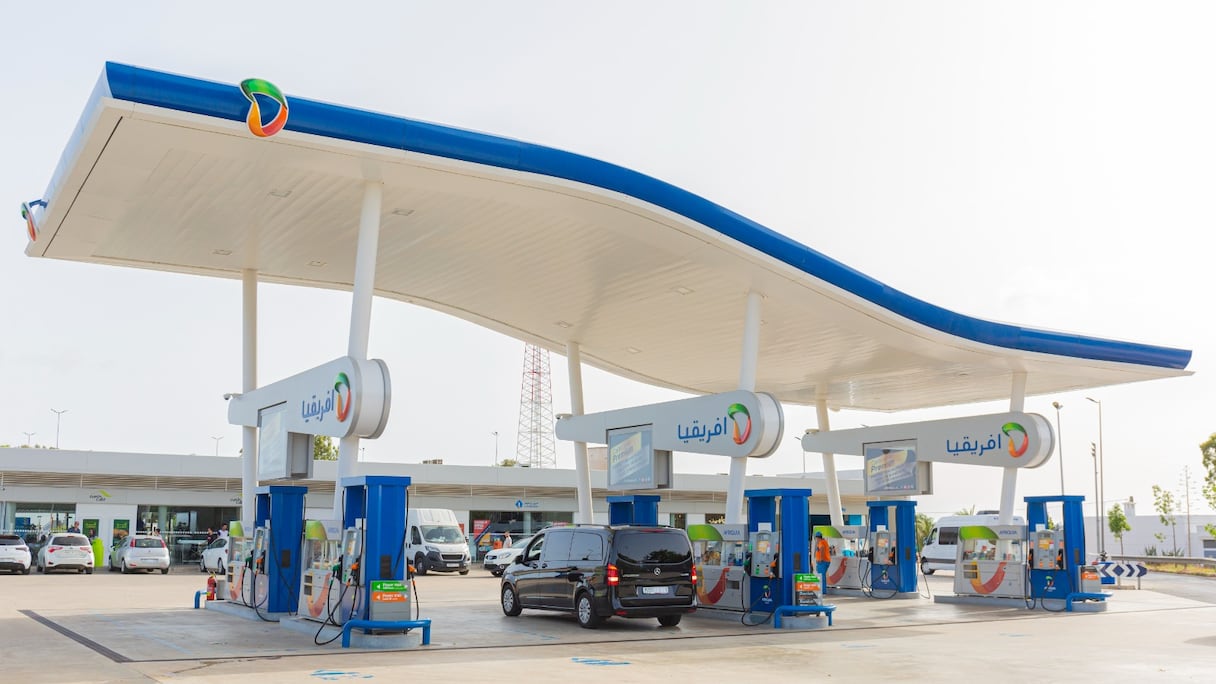
Appearing on Al Aoula, Abdellah Bouanou, head of the PJD parliamentary group, criticized what he considers an inconsistency between the evolution of crude oil prices and pump prices in Morocco. According to the lawmaker, in February, when the price of a barrel stood at around $70, a liter of gasoil sold for 11.20 dirhams. As the Strait of Hormuz crisis unfolded, the price of a barrel then climbed to as much as $100 or even $115, pushing the price of gasoil to 14.52 dirhams.
“Today, in August, the price of a barrel has fallen back to $75, while gasoil is selling for 14.65 dirhams. Does that make sense? Three dirhams?” he asked, pointing to what he considers an unjustified gap.
His remarks drew a response from Houssine El Yamani, secretary-general of the National Oil and Gas Union and president of the National Front for the Preservation of Samir. The union official disputes this interpretation and offers several explanations.
He first points out that the crude oil market does not necessarily move in tandem with the market for refined products such as gasoil. According to him, the international market is currently facing a shortage of refined products, linked in particular to declining refining capacity following the destruction or shutdown of certain refineries in conflict zones in Ukraine and the Gulf.
Read also : Fuel prices: A one-dirham hike raises fresh questions over competition in Morocco’s fuel market
Regarding the three-dirham gap cited by Abdellah Bouanou, Houssine El Yamani explains that it corresponds to the refining margin, meaning the difference between the price of crude oil and the finished product, rather than distributors’ margins. “Under normal circumstances, this gap does not exceed one dirham. In a context of a shortage of finished products, it can reach as much as four dirhams,” he said.
The union official also noted that between the first and second halves of July, the international price of gasoil rose sharply, from around 7.5 dirhams to 9.4 dirhams, an increase of more than 25%, while the price of a barrel of oil rose by less than 10%. Taking into account transportation and insurance costs, various charges, taxes and distribution margins, the price of a liter of gasoil in Morocco should, according to him, have exceeded 15 dirhams.
Some observers have suggested that there may have been a “political” intervention at the beginning of August, encouraging distributors not to immediately pass on the full increase but instead spread it over time. This would explain the “cacophony” surrounding the latest price adjustment, which took place on August 3 instead of August 1, as is usually the case.
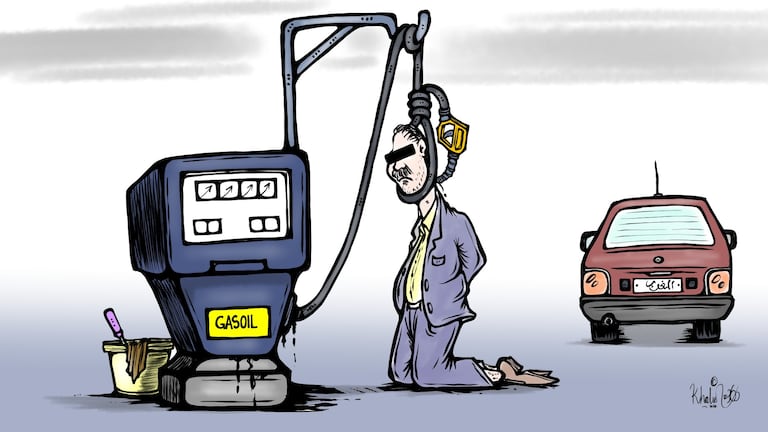
Beyond these short-term developments, El Yamani has renewed his call for the reopening of the Samir refinery, arguing that Morocco would benefit from restoring domestic refining capacity in order to gain greater control over prices. He also criticized the liberalization of the fuel sector, introduced under the PJD-led government, which he considers a key factor behind rising prices, alongside the halt in refining operations in Mohammedia.
This view is partly supported by the latest 2025 annual report of the Economic, Social and Environmental Council (CESE), published this week, which warns of the country’s structural vulnerability in terms of energy supply. The council notes that, despite efforts toward the energy transition, petroleum products still accounted for 51% of the national energy mix in 2025, with consumption estimated at 12.8 million tons, dominated by gasoil at 73%. This dependence is expected to increase, with a projected 16% rise by 2030.
Read also : Russia imports gasoline shipment from Morocco as fuel shortages persist
Above all, the CESE warns of the risks associated with the shutdown of the Samir refinery in 2015. Since then, the national market’s supply has relied exclusively on imports of refined products, leaving Morocco more exposed to disruptions in international supply chains and price volatility. The finding echoes calls to restore domestic refining capacity to strengthen the country’s energy security.
For Houssine El Yamani, returning to price levels more compatible with consumers’ purchasing power requires tighter market regulation, lower taxation, the revival of domestic refining and a review of the sector’s legal framework, particularly regarding stock management.
The union official is calling for “political courage” to take responsibility for past decisions, urging Abdellah Bouanou to engage in self-criticism and acknowledge, in his words, the “grave mistake” that the liberalization of prices represented in a market dominated by a limited number of players.
