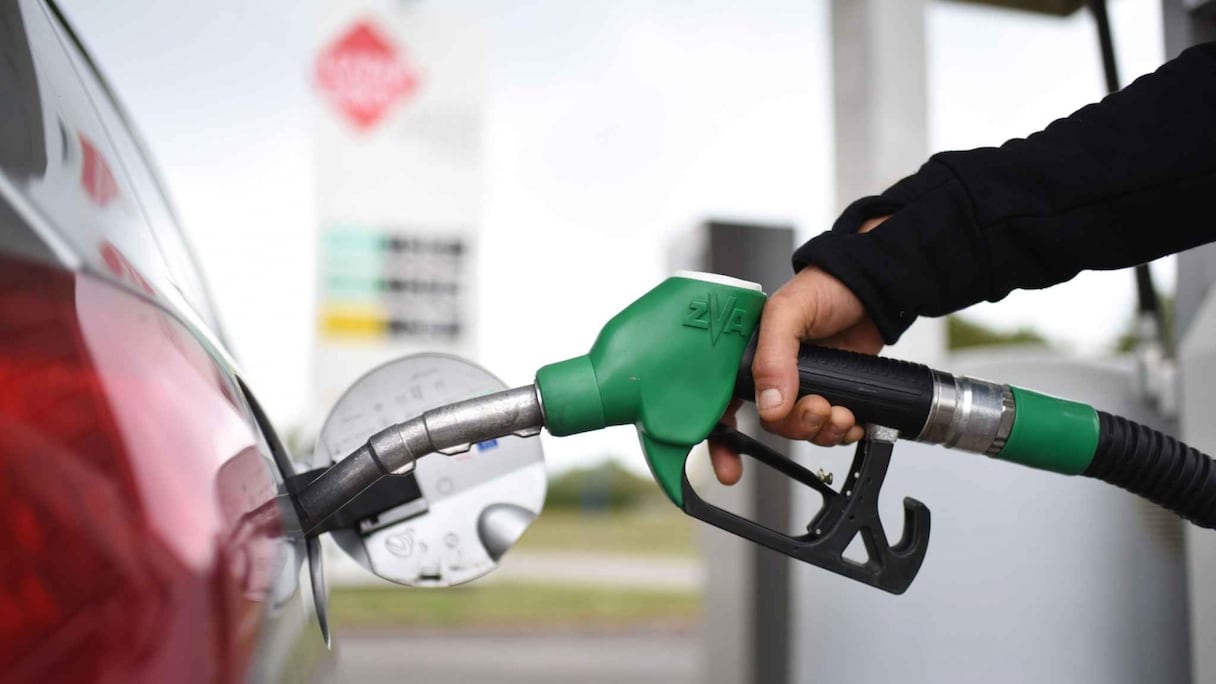
In downtown Casablanca, price differences between brands remained negligible. Diesel was selling for MAD 14.25 per liter at Afriquia and Winxo, compared with MAD 14.28 at Petromin Oils and Shell. Gasoline ranged from MAD 15.22 at Petromin Oils and Shell to MAD 15.23 at Afriquia and Winxo.
The near-identical pricing gives the impression of a carefully balanced market, with some operators marginally more competitive on diesel and others on gasoline.
The increase marks the second price hike in a month. In mid-July, diesel prices rose by MAD 0.69 per liter, while gasoline increased by MAD 0.39, extending an upward trend driven by developments on international energy markets.
Beyond the price increase itself, several aspects of the latest adjustment have drawn attention.
The timing is one of them. Fuel prices in Morocco are typically revised either at the beginning or the middle of each month. This latest increase, however, took effect on August 3, breaking with the usual schedule.
The days leading up to the increase were also marked by reports of fuel shortages at service stations in several cities, a situation widely shared on social media.
Some distributors withheld existing fuel stocks while waiting for higher prices to take effect in order to maximize profit margins—a practice that could amount to speculation and is prohibited under Moroccan law.
Another issue highlighted is the almost perfect synchronization of price increases across competing companies.
Despite repeated warnings from the Competition Council, distributors continue to adjust prices almost simultaneously, reinforcing perceptions of coordinated behavior in what is officially a liberalized market.
“In a fully liberalized system, prices are not set at the same time by every operator,” Competition Council President Ahmed Rahhou recently told Le360, describing the practice as “an anomaly.”
While such synchronization may have been easier to explain during periods of relatively stable international prices, Rahhou argues that growing market volatility makes the practice increasingly difficult to justify.
According to the regulator, fuel distributors should move away from pricing habits inherited from the pre-liberalization era.
Each company, Rahhou said, should independently determine its pricing policy based on its own costs, inventory levels and commercial strategy.
“Pricing is an internal calculation for each company,” he said, emphasizing that the Competition Council neither has the authority nor the intention to impose how frequently prices should be revised, whether daily, weekly or otherwise.
The former practice of revising prices every two weeks gave consumers a degree of predictability by guaranteeing temporary price stability. However, a truly competitive market should function differently.
Under such a system, price cuts would typically reach consumers more quickly, as companies compete to attract customers, while price increases would tend to occur more gradually because operators would be reluctant to raise prices ahead of competitors.
“Complete pricing freedom tends to delay increases and accelerate decreases,” Rahhou said, describing such a model as ultimately more beneficial for consumers.
For now, however, Morocco’s fuel market appears far from that scenario. Monday’s one-dirham increase—implemented rapidly, simultaneously and across all major distributors—once again raises questions about the true level of competition in the sector.