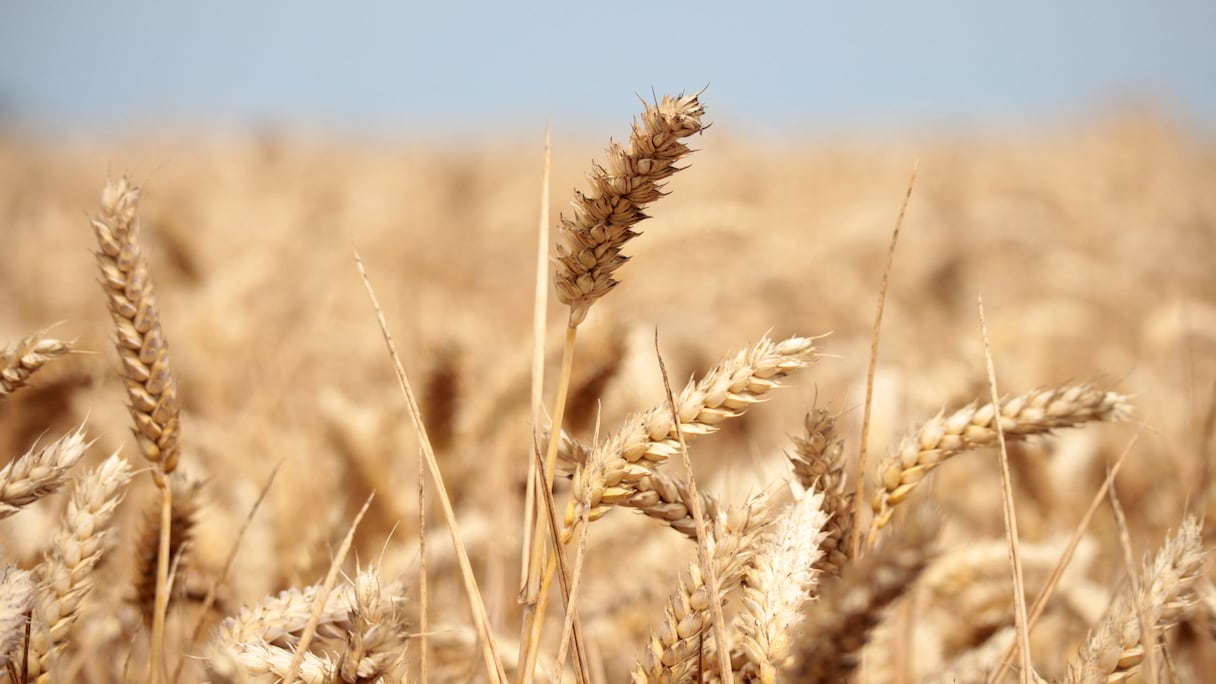
Morocco will once again support soft wheat imports for industrial milling after domestic collection fell short of expectations. The mechanism will be reinstated from September 16 to December 31, 2026, with importers receiving a subsidy to offset part of the cost of wheat purchased on international markets.
According to industry professionals, around 6 million quintals of soft wheat have been collected, compared with a target of 15 million quintals, representing roughly 12% of annual needs. Meanwhile, stocks built up before imports were suspended have gradually declined.
According to a circular issued by the National Interprofessional Office for Cereals and Legumes (ONICL), the mechanism is based on a reference price of 270 dirhams per quintal. When the landed cost of imported wheat exceeds that threshold, importers will receive a subsidy covering the difference. The amount will be recalculated each month based on changes in international prices and transport costs.
Read also : Why Morocco’s imports are rising faster than exports as coverage falls to 56.8%
The reference cost will be determined by ONICL using several countries of origin, including France, Germany, Argentina and the United States. The calculation will also take into account wheat prices, maritime freight costs, the dollar-dirham exchange rate, handling and delivery costs, as well as a fixed margin of 22.5 dirhams per quintal for importers.
The monthly subsidy amount will be set by a committee bringing together representatives from the Ministry of Economy and Finance, the Ministry of Agriculture and ONICL. The committee must determine the amount applicable for the following month no later than the third working day after the end of each month.
Read also : OPEC cuts 2026 oil demand forecast again as production rises
Support will be conditional on the effective delivery of the imported wheat to industrial mills. For quantities that are imported but not delivered, subsidies already paid may be recovered. Importers will also be required to ensure that their prices reflect the state support received.
The subsidy will be paid in two installments. An initial 80% will be paid based on the quantities effectively imported, while the remaining 20% will be released once importers provide ONICL with proof of the quantities actually delivered to industrial mills.