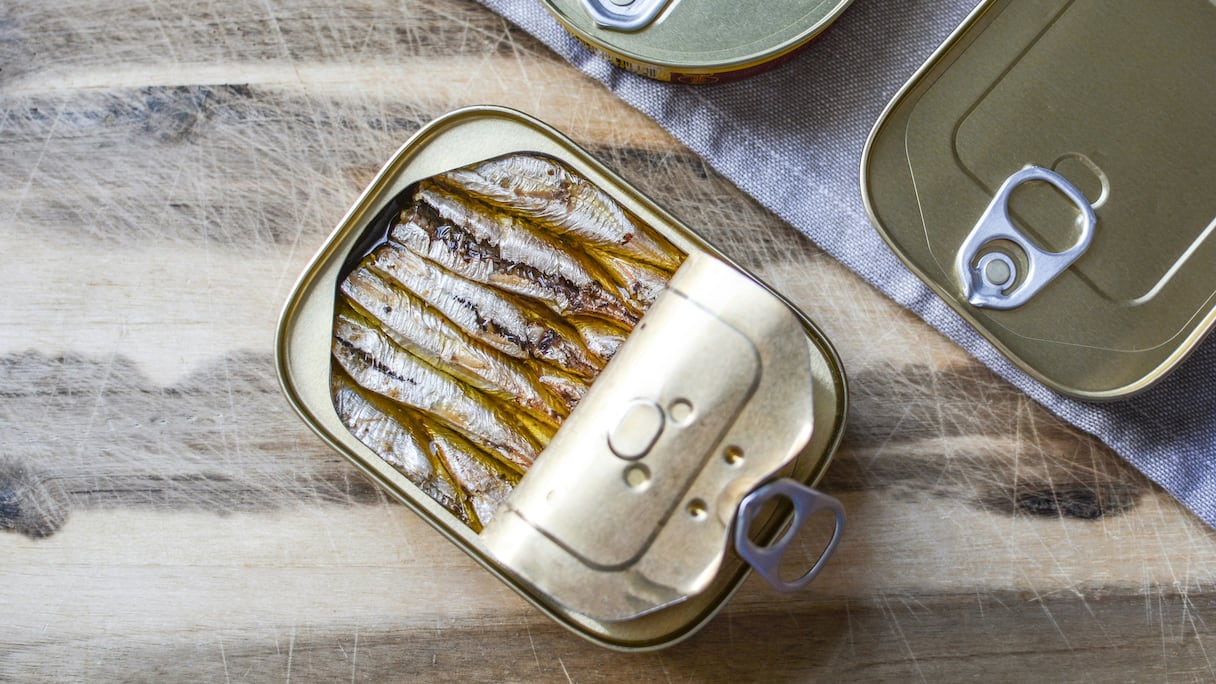
According to figures obtained from the National Union of Fish Canning Industries (UNICOP), the sector comprises 37 member companies, 37,000 direct jobs and more than 120,000 indirect jobs. It generated MAD 4.8 billion in exports in 2025, shipping to more than 130 countries, and accounts for 66% of global catches of Sardina pilchardus along Morocco’s 3,500-kilometer coastline.
More fish are being landed, but less is reaching the canneries. The trend is raising concerns across the industry. According to UNICOP, landings of small pelagic fish rose by 14%, while sardine landings jumped 68%. But the share destined for canning fell by 32%. Sardines sent to canneries now account for 17% of total sardine landings, down from 30%, while the share for small pelagics has fallen from 25% to 13%. Anas Lamhandaz, UNICOP’s director general, attributes the shift to the size of the fish. An increasing share of the catch consists of sardines that are too small for industrial canning.
The State Secretariat for Maritime Fisheries has also confirmed the decline. Its 2025 figures show 1.2 million tons of fish landed, down 15% year on year, with a value of MAD 15.5 billion, down 5%. Sardines alone accounted for 61% of the overall decline, with landings falling 23% in one year. Their share of small pelagic catches also dropped from 75% in 2022 to 49% in 2025.
Read also : Sardine deaths in South Africa? Fisheries officials say Morocco has a different species
Data through August 2026 show some improvement, with landings reaching 786,000 tons, up 6%, and their value rising 4% to MAD 12.5 billion. Sardine landings rebounded 66%, returning to a profile similar to 2022. The recovery remains fragile, however: landings are still 31% below 2022 levels for the same period, and the State Secretariat says the improvement cannot yet be taken for granted. The resource is also increasingly concentrated in the south, with around 50% of sardine landings in Laâyoune-Sakia El Hamra and 71% of small pelagic landings in Dakhla and Laâyoune.
Warming waters, fragmented stocks
The situation also recalls the shortage of canned sardines in Morocco’s supermarkets ahead of Eid Al-Adha, when the product became increasingly difficult to find in large and medium-sized stores. The scarcity of the resource was directly linked to rising Atlantic water temperatures.
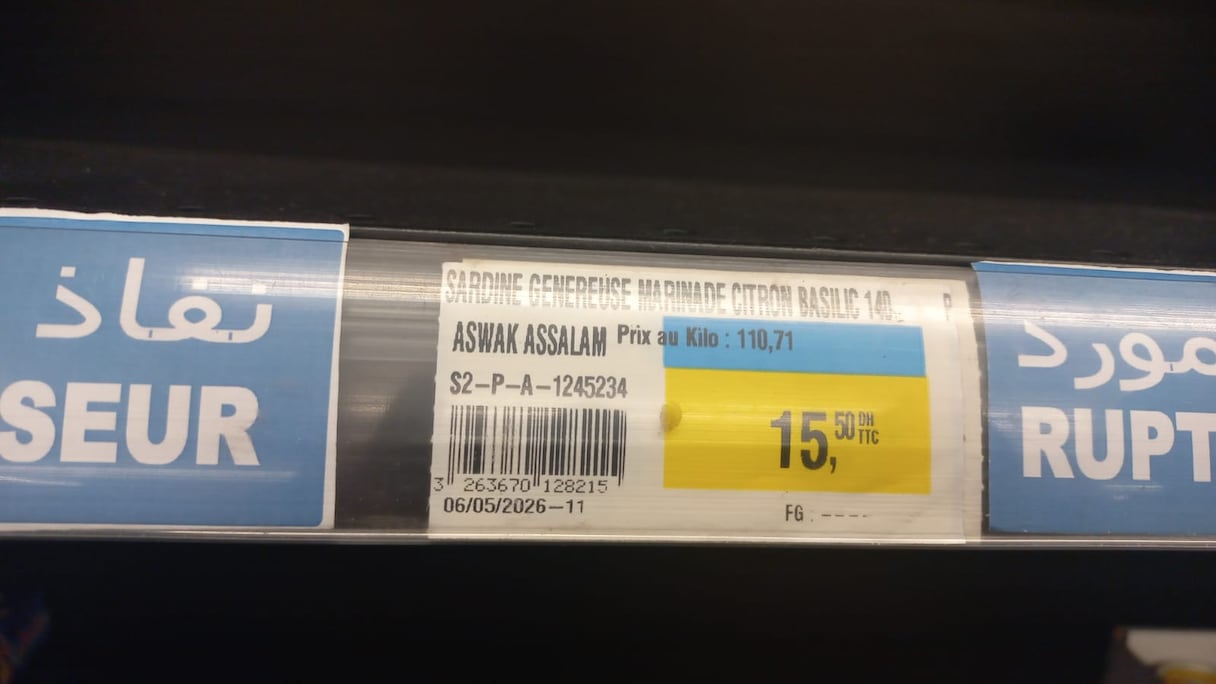
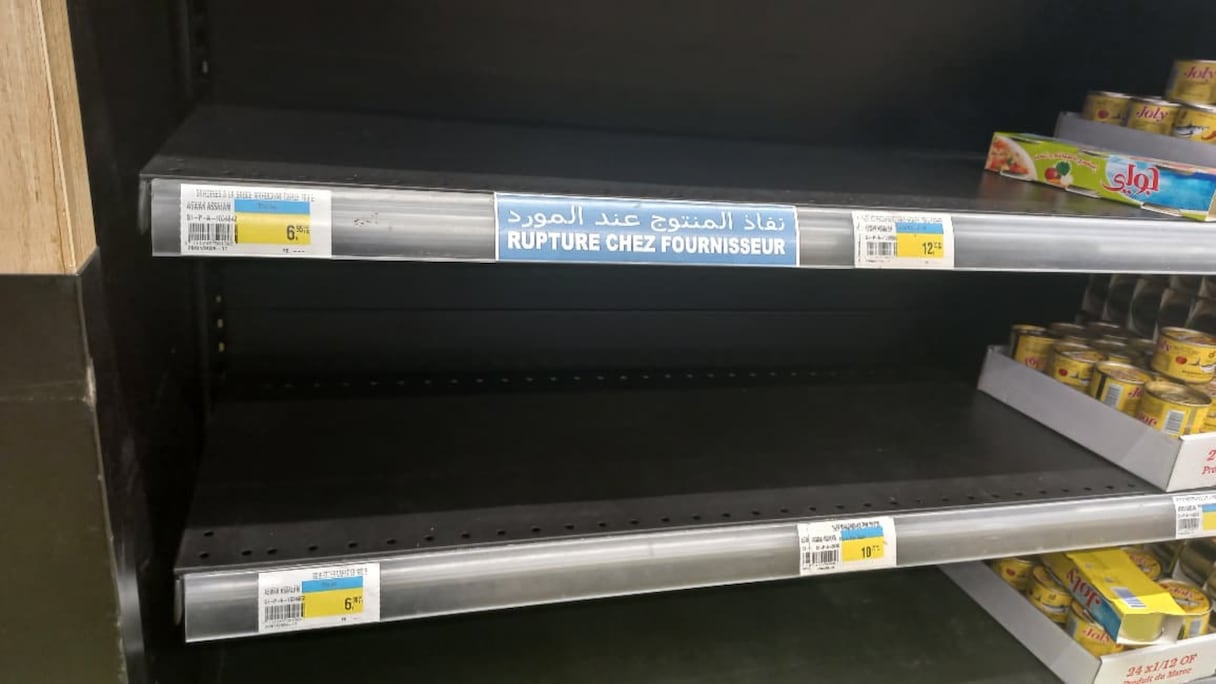
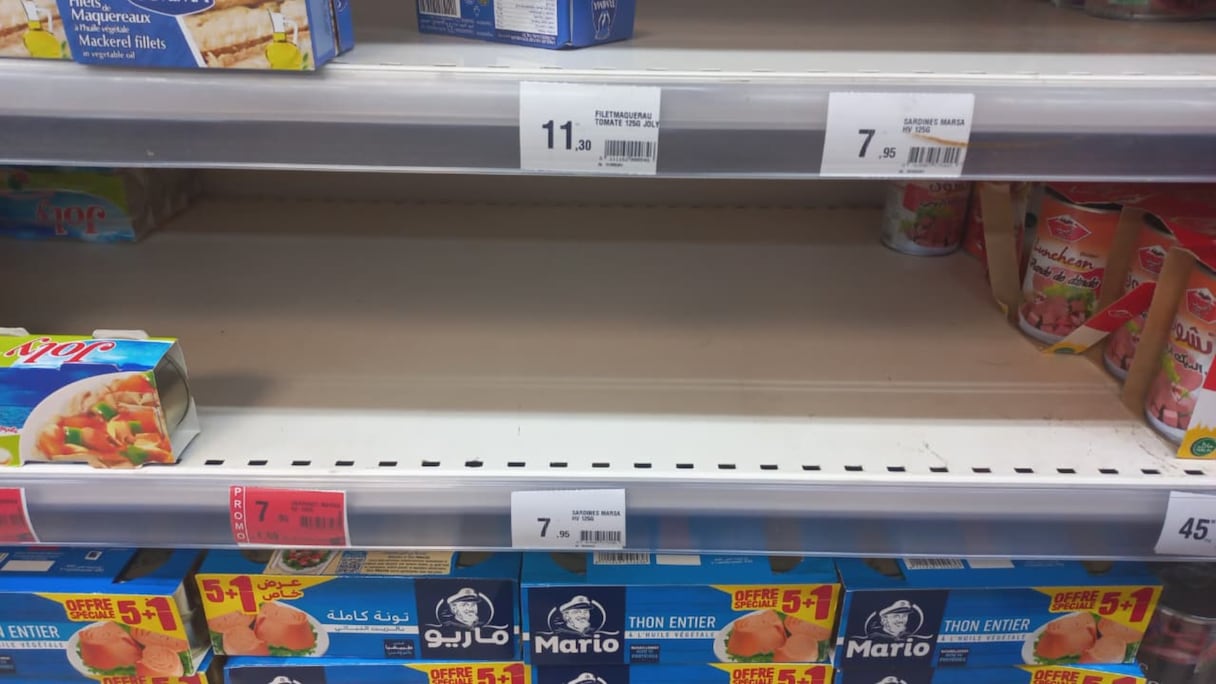
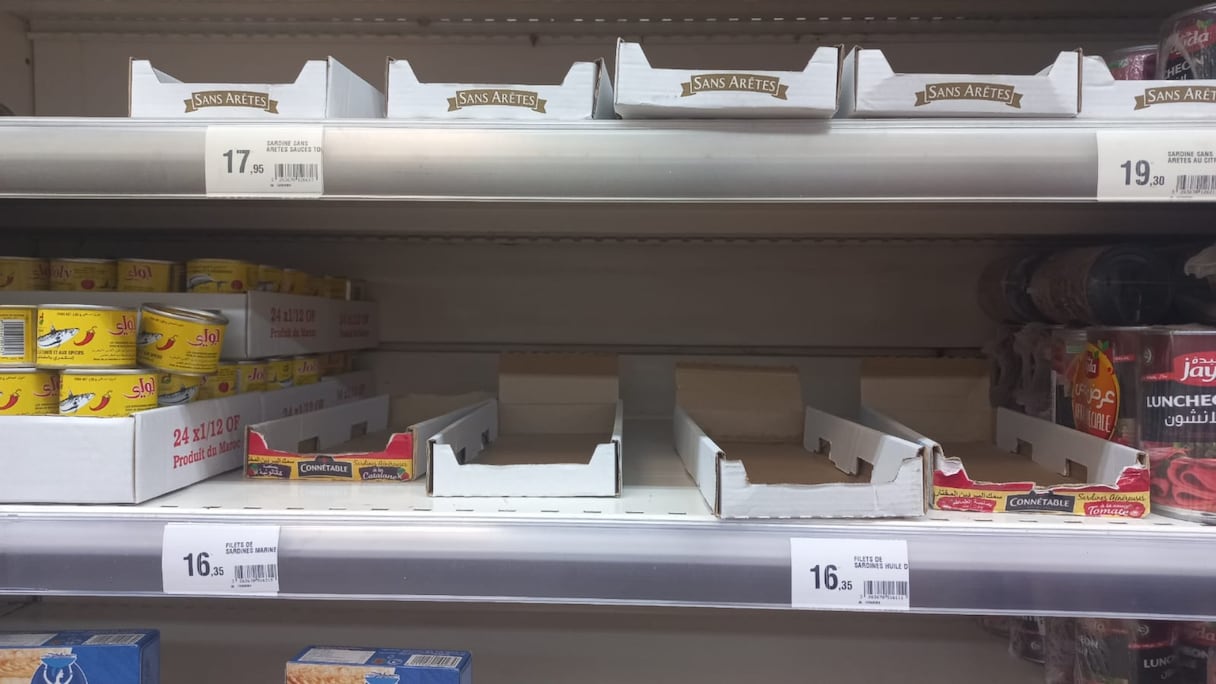
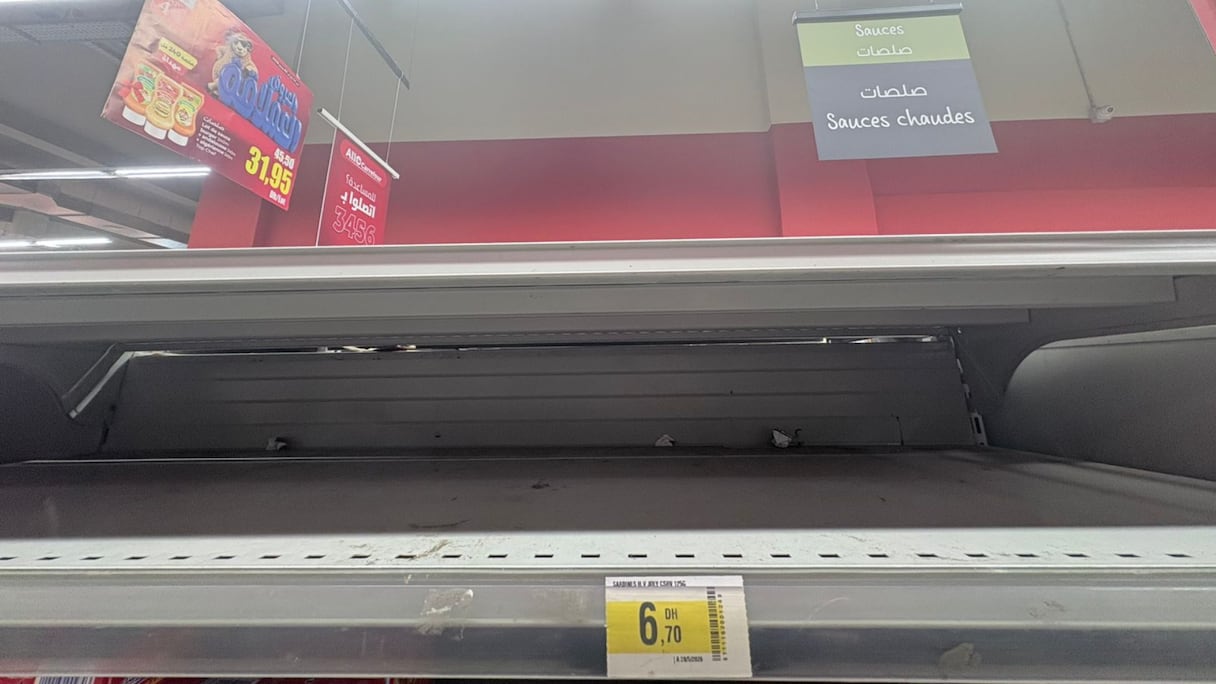
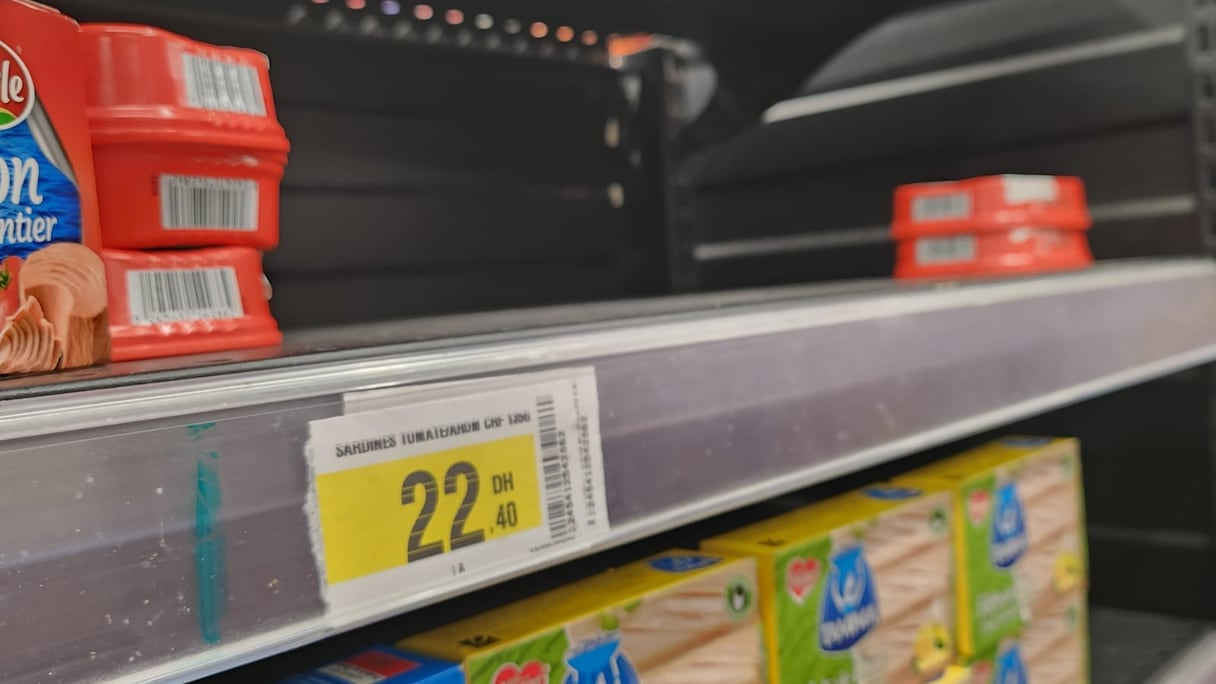
A notice announcing that the supplier is out of stock of sardines, displayed at a supermarket in the Hay Riad neighborhood.
Sardina pilchardus is particularly sensitive to temperature changes. According to UNICOP, its reproductive cycle and larval survival depend on water temperatures ideally ranging between 14°C and 16°C. Above that threshold, juvenile mortality rises sharply. Warmer waters also disrupt Atlantic upwelling, the crucial process that brings cold, nutrient-rich water to the surface and determines plankton availability and the distribution of fish schools. As a result, stocks move offshore or farther south, into areas that are much less accessible to artisanal and coastal fishing fleets.
For UNICOP, the main problem is not so much declining volumes as competition between different sectors for access to the raw material.
Morocco loses ground to China on the global market
According to data from Morocco Foodex, the global canned fish market is worth $34 billion and remains highly concentrated. The top 10 importing countries account for 60% of trade flows, while the top 10 exporters account for 69%, with Asia dominating the market. Morocco remains among the world’s top 10 exporters, with $814 million in exports, 185,000 tons in volume and a 3.4% market share, 98% of it coming from sardines. Yet between 2021 and 2025, Morocco’s export volume posted a negative average annual growth rate of 10.2%.
In the canned sardine market alone, Morocco’s global market share fell from 29% in 2021 to 16% in 2025. China’s share rose from 18% to 38% over the same period, with Chinese export volumes increasing 137% while Morocco’s fell 37.5%.
Africa is Morocco’s largest market, accounting for 37.3% of its export volume, but Moroccan exports to the continent have fallen 57% since 2021, while Chinese supply has increased 217.5%.
China’s share of the African market has consequently jumped from 34.3% to 79.5%, while Morocco’s has dropped from 65.7% to 20.5%.
Morocco Foodex and UNICOP draw the same conclusion: the future lies not in competing with Asia on volume, but in strategically increasing the value of Moroccan-origin products.
Moving up the value chain, but a wide gap remains
As Morocco loses ground in volume, the figures already point to a strategy focused on value. In 2025, the unit value of Moroccan canned sardine exports reached $4.87 per kilogram, up 46% since 2018. The gap with European competitors remains significant, however, with Portugal exporting at $8.07 per kilogram and Spain at $8.66 per kilogram that same year.
UNICOP’s value-added strategy rests on four strengths: a recognized species, Sardina pilchardus Walbaum; a century-old expertise covering preparation, canning, processing and quality control; an export reputation built across more than 130 markets; and a clearly identifiable origin backed by the “Made in Morocco” label. Canned anchovies are seen as the segment with the strongest growth potential for Morocco’s industry in the years ahead.
That shift toward higher-value products will have to contend with an increasingly complex European regulatory framework, which directly affects compliance costs and timelines.
A growing body of European regulations
According to COLEAD (Committee Linking for Entrepreneurship, Agriculture and Development), a private nonprofit association founded in 1973 that works mainly on the sustainable transformation of agricultural and food systems, particularly in African, Caribbean and Pacific countries, the European regulatory calendar is becoming significantly more demanding in 2026. New hygiene rules for frozen tuna in brine have applied since January 27. The Listeria criterion has been extended to the entire shelf life of products, while 10 primary smoke flavorings have been banned since July 1.
A new antimicrobial certificate for aquaculture products took effect on September 3. For packaging, bisphenol A has been banned in varnishes and coatings used on cans since July 20, 2026. The deadline has been pushed back to January 20, 2028, for canned fish itself. Documentation required under the Packaging and Packaging Waste Regulation (PPWR) also became mandatory on August 12, 2026.
The electronic CATCH catch certificate will become mandatory for importers on January 10, 2027, with a fully implemented version due in 2028. COLEAD also estimates a 21% probability of food fraud in the fisheries and aquaculture sector, with species substitution and mislabeling remaining the most common violations. Morocco is also negotiating several trade agreements, notably with Mexico and Mercosur, while benefiting from sardine availability and longstanding ties with Spain, France, Italy and Portugal.
Decarbonization adds another item to the list of deadlines. According to data from BearingPoint, an international management and technology consulting firm, Morocco’s fisheries industry accounts for 1.3 million tons of CO2 equivalent, or 5% of emissions from the food industry in 2024. Of that total, 53% comes from the fisheries supply chain and 22% from energy use and refrigeration at processing plants.
Read also : Sardine prices rise to MAD20 per kg
Morocco, the European Union’s third-largest supplier of seafood products, with MAD 19 billion in exports in 2024, will be directly exposed to the future Carbon Border Adjustment Mechanism. Three scenarios have been projected for Morocco’s fisheries sector through 2040.
Under a business-as-usual scenario, emissions would reach 2.2 million tons, a 70% increase. A scenario based on measures already proven effective would bring emissions down to 1.4 million tons, a 34.6% reduction. A scenario aligned with Morocco’s Nationally Determined Contribution would target a 37% reduction.
International competitors are already moving ahead, with Thai Union targeting a 42% reduction in its direct emissions by 2030 and Nueva Pescanova aiming for carbon neutrality by 2040.
Morocco Foodex has also launched a sustainability standard called MSFS (Morocco Sustain Food), built around three pillars: quality, social responsibility and the environment, with three levels of maturity. Since its launch in Agadir in November 2025, 22 companies have already received the certification.
Cooperation with the International Trade Centre (ITC) on due diligence has also trained 30 Moroccan coaches and involved more than 40 companies, resulting in the first national assessment of companies’ readiness for the European CS3D directive.
A reassuring compliance record, but histamine remains a concern
Morocco Foodex’s five-year quality record, covering 2021 to 2025, is largely positive. Only 41 batches were rejected during the period, none for health reasons, with all the causes deemed preventable. Marking and labeling alone accounted for 73% of the rejections. Of the 228 EU RASFF notifications recorded across the fisheries sector between 2021 and 2025, a 59% decline over the period, canned products accounted for just 13, or 9.5%, making them the least-notified segment of processed fish. One concern remains in the US market, however: the FDA issued four notifications involving canned products over five years, three of them related to histamine and all concentrated in 2025 around the same exporter.
Exports rely on 494 approved seafood facilities, representing 35% of all facilities approved by Morocco Foodex, with 61% exporting to the European Union. Three regions accounted for 68% of export volume in 2025: Souss-Massa with 33.4%, Marrakech-Safi with 20.7% and Laâyoune-Sakia El Hamra with 14%.
On the health-control side, Morocco’s food safety agency ONSSA has introduced the ATLAS platform for registering establishments exporting to Morocco. It has processed 2,778 applications and registered 1,767 establishments from 57 participating countries. The reference limits applied to canned products, comparable to those in force in the European Union, Russia and China, cover histamine, cadmium at 0.25 mg/kg for sardines, mercury at 0.5 mg/kg and tin at 200 mg/kg.
The agency is also changing its approach to inspections, moving away from uniform checks of 100% of batches toward targeted, risk-based controls tailored to each establishment. Facilities are classified into four categories, with testing frequencies ranging from one batch in 30 to one in five. Export certification will increasingly depend on operators’ own quality controls and compliance records, with faster processing expected for facilities with the strongest ratings.
Alternative markets offer opportunities, but also risks
In France, consultant Pierre Commère, formerly with FIAC/PACTALIM, notes that Morocco supplies 93% of EU27 imports of canned sardines and similar products. The apparent market is around 69,000 tons a year, far below the 600,000 to 700,000 tons recorded for tuna.
Between 2023 and 2025, 47% of French households bought canned sardines, averaging four purchases a year, at €13 per kilogram compared with €10.80 for tuna. Food purchases linked to the Nutrition+, Origin+ and Planet+ consumer trends account for more than €30 billion in France and are growing. Sardines are well positioned in the Nutrition+ category, which generated an additional €3 billion in spending between 2022 and 2025.
Commère nevertheless points to a short-term warning sign. A surge of interest in sardines on social media triggered what he described as a “demand crisis” this summer, leading to empty shelves. He sees an opportunity, provided the industry can ensure consistent supply and prices, maintain quality and protect the product’s image.
Brazil is another potential market, although there are caveats. Brazil’s Ministry of Fisheries and Aquaculture describes a market of 213 million people, with average consumption of 12.6 kilograms per person per year, 44% of which is supplied by imports.
Tariffs, however, shape the market. Frozen sardines enter duty-free, while canned sardines face a 32% tariff, encouraging Brazil to look to Morocco mainly as a supplier of raw material. Morocco’s sanitary system is recognized as equivalent, but Brazilian imports of Moroccan frozen sardines fell sharply, by 44.9% in 2025 and 8.2% in the first half of 2026. Brazil has also imposed a five-month biological fishing closure since 2020, which has helped its catches recover over the past three years. Brazilian sardines have become particularly large, however, creating yield losses during the canning process.
Read also : German supermarkets run short of sardines as catches off Morocco slump
The OECD puts the issue into a broader global context. Only 62% of assessed global fish stocks are considered healthy, while data remain limited in many areas. Some 75% of exclusive economic zones are expected to be affected by climate-related shifts in fish stocks, with small pelagic species among the most exposed. Global public support for fisheries amounted to $10.7 billion a year in 2020-2022, 65% of which carries a risk of encouraging unsustainable fishing.
In Morocco, VAT exemptions on fuel and on the sale and repair of vessels are classified as high or moderate risk, while investments by the National Fisheries Research Institute (INRH) in stock research and monitoring are considered to carry no such risk.
A new OECD legal instrument is expected to steer public support toward sustainably managed fisheries and exclude operators involved in illegal, unreported and unregulated fishing.
Three possible paths to 2036
The diagnosis ultimately leaves the industry facing a question of where to go next. UNICOP has outlined three possible paths through 2036.
A status quo scenario would lead to a decline in which access to the resource and employment deteriorate sharply, while value per kilogram remains low.
A volume-driven strategy would preserve access to the resource and jobs, with factories operating at full capacity, but would deliver little improvement in value per kilogram.
A value-driven strategy, backed by stronger commercial efforts, would generate higher margins per ton while preserving access to the resource and employment at more moderate levels.
UNICOP is calling for joint action by the government, shipowners, processors and industry association around four priorities: putting quality ahead of volume alone, strengthening traceability, securing reliable access to the resource and retaining workers. Its message can be summed up in one sentence: “Volume = jobs. Value = margin. Without a reliable supply, no strategy can succeed.”