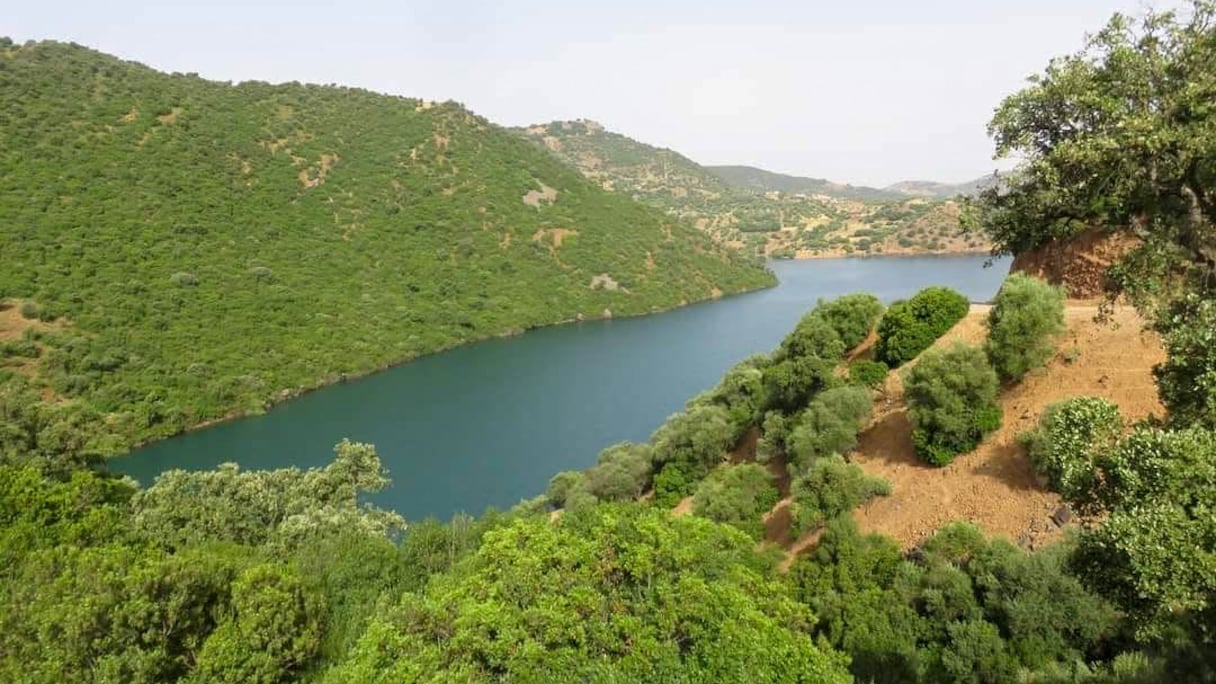
Official data published on the Ministry of Equipment and Water’s “Al Maa Dyana” platform showed that the Kingdom’s dams had an overall filling rate of 66.6% as of Monday, September 14, 2026, with total reserves reaching 11,355.7 million cubic meters, compared with 33.3% during the same period last year, when reserves stood at 5,578.2 million cubic meters, representing an increase of more than 104%.
In this context, the Oum Er Rbia Basin recorded a filling rate of 58.8%, with reserves estimated at 2,946.1 million cubic meters. This was supported by high filling rates at several dams in the basin, including Sidi Driss Dam, at 97%, with 0.5 million cubic meters, Al Hassan I Dam, at 85%, with 195.8 million cubic meters, and Al Massira Dam, at 39%, with 1,059.5 million cubic meters.
Read also : Sebou Basin to study new dam and sub-basin water interconnections
The Loukkos Basin also maintained its water reserves at 1,532.2 million cubic meters, representing a filling rate of 78.3%. This was due to strong filling rates at several of its dams, including Dar Khroufa Dam, at 90%, with 428.9 million cubic meters; Oued El Makhazine Dam, at 70%, with 488.3 million cubic meters; April 9, 1947 Dam, at 70%, with 216.4 million cubic meters; and Chefchaouen Idrissi Dam, at 87%, with 116.8 million cubic meters.
In the eastern region, the Moulouya Basin recorded 393.3 million cubic meters of stored water, with a filling rate of 56%, thanks to several dams reaching full or near full capacity. These included the dam on Oued Za, which reached a 100% filling rate, with nearly 88 million cubic meters; Safsaf Dam, at 98%, with 17.2 million cubic meters; and Rkiza Dam, at 88%, with 13.8 million cubic meters. By contrast, the basin’s largest dam, Mohammed V Dam, was more affected by the heatwave, with its filling rate falling to 23%, leaving it with only about 39 million cubic meters.
The Sebou Basin recorded exceptional water levels, with an overall filling rate of 79.4% and stored water reserves of nearly 4,264.9 million cubic meters. Sidi M’Barek Dam topped the basin’s water facilities with a record filling rate of 97%, holding 21.3 million cubic meters, followed by Sahla Dam at 91%, with 65 million cubic meters; Bab Louta Dam at 89%, with 30.8 million cubic meters; and Allal El Fassi Dam at 87%, with 13.7 million cubic meters. The basin’s largest dam, Al Wahda Dam, also regained its water reserves, reaching a filling rate of 82%, with a massive reserve of 2,863.5 million cubic meters.
In the Bouregreg Basin, the overall filling rate reached 78.2%, with total stored water reserves of 1,152.4 million cubic meters. Tiddas Dam recorded the highest rate in the basin at 89%, with 454.4 million cubic meters, followed by Tamesna Dam at 79%, with 40.8 million cubic meters, and Sidi Mohammed Ben Abdellah Dam, the region’s strategic facility, at 73%, with reserves of 632.5 million cubic meters.
The Tensift Basin also showed a marked recovery, recording an overall filling rate of nearly 78.7%, equivalent to 159.9 million cubic meters of stored water. Yacoub El Mansour Dam ranked first at 87%, with 50.5 million cubic meters, followed by Moulay Abderrahmane Dam at 83%, with 49.9 million cubic meters, and Abi Abbas Sebti Dam at 82%, with 18.3 million cubic meters.
Read also : Taounate to update irrigation plan to improve water use
In the Souss-Massa Basin, the overall filling rate of the water facilities stood at 47.7%, with total reserves of 345.3 million cubic meters. Rates varied from one dam to another, with Dakhla Dam recording the highest rate in the region at 94%, with 0.2 million cubic meters, followed by Moulay Abdellah Dam at 86%, with 70.5 million cubic meters, and Ahl Souss Dam at 80%, with 3.9 million cubic meters. Meanwhile, the filling rate at Youssef Ben Tachfine Dam stood at 47%, with 137.6 million cubic meters.
In the Draa-Oued Noun Basin, the overall filling rate of the dams reached 33.1%, with reserves of 347.4 million cubic meters. Mansour Eddahbi and Akdez dams recorded the same filling rate of 39%, with reserves of 176 million cubic meters and 95.5 million cubic meters, respectively. Touizgui Rmouz Dam recorded a filling rate of 25%, with 19.8 million cubic meters, while Moulay Ali Cherif Dam stood at 20%, with 56 million cubic meters.