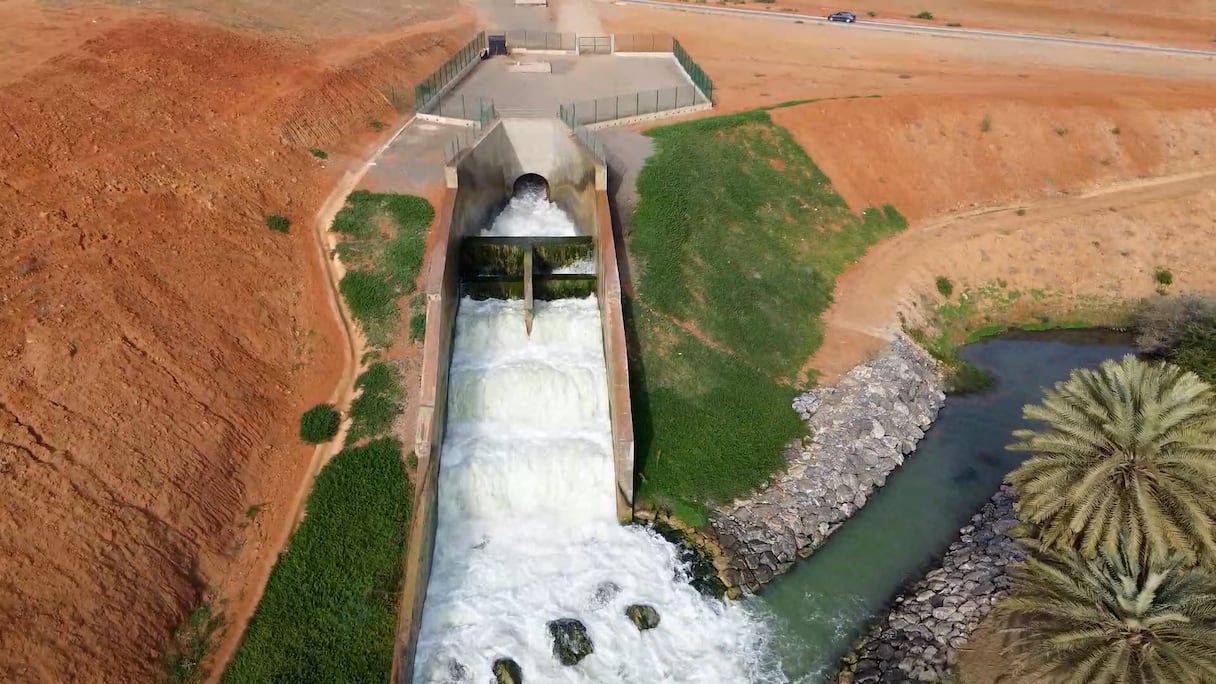
The study, which comes amid growing pressure on water resources and the effects of climate change, will focus in particular on interconnecting the Sahla and Bouhouda dams, as well as the Ouergha, Lben and Inaouen sub-basins, in order to strengthen the resources of the Idriss I Dam.
According to the ABHS, optimizing the management of hydraulic infrastructure is a major lever for strengthening water security in the Sebou Basin.
The study will notably assess available water resources and related needs, model the hydraulic operation of the systems under review and simulate several interconnection scenarios.
Read also : Morocco’s dam storage capacity more than doubles since 1979
It will also identify the best solutions from hydraulic, technical, economic and environmental perspectives, estimate investment and operating costs, and define the topographical and geotechnical investigation programs needed to carry the studies forward.
Covering the Ouergha, Lben and Inaouen watershed areas in the provinces of Taounate and Taza, the study will be structured around two main components. The first, dedicated to hydrological analysis and system modeling, aims to assess the performance of the various interconnection projects through an in-depth hydrological analysis and integrated modeling of the water resource management system.
This will involve collecting, validating and analyzing hydrological, hydrometeorological and climate data, as well as data related to the operation of existing infrastructure, with the aim of establishing an assessment of available resources and current and future needs for different uses.
Particular attention will be paid to the effects of climate change on water resources to incorporate this dimension into the simulations and assessment of the various scenarios.
Read also : Summer chips away at dam recovery, with 1.46 billion m³ drawn since May
A simulation model of the hydraulic system will be developed using specialized water resource management software. It will take into account hydrological inflows, existing dams, management rules, different water uses and planned interconnection infrastructure.
The second component will focus on the technical feasibility of the options selected following the first phase. It will cover the interconnection of the Sahla and Bouhouda dams and the interconnection of the Ouergha-Lben-Inaouen sub-basins.
For both projects, the study will provide a comparative analysis of the various possible technical solutions, including gravity-fed or pumped transfers, pressurized pipelines, open canals and mixed solutions.
Read also : Oued El Khadr Dam in Azilal 86% complete, nine months ahead of schedule
For each selected option, the study will define the preliminary route of the transfer infrastructure and carry out preliminary hydraulic sizing of the main facilities. It will also specify the general characteristics of the pipelines, intake structures, potential pumping stations and regulation facilities, along with an assessment of energy needs and the main implementation constraints.
A preliminary environmental analysis will also identify the main regulatory and environmental constraints likely to affect the feasibility of the projects.
Finally, the study will provide preliminary estimates of investment and operating costs, along with an economic analysis to assess the relevance of the projects in light of their expected benefits for water resource management.
