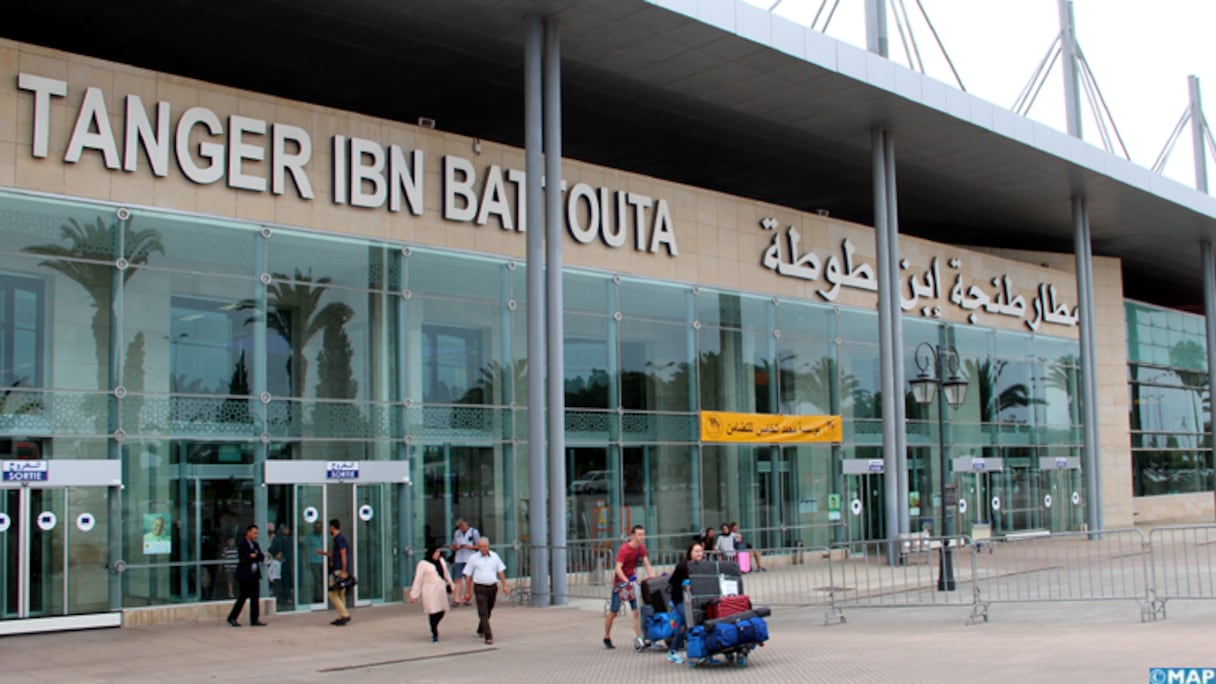
ONCF has begun looking for companies to build a 22.5-kilometer railway from central Tangier to Ibn Battouta Airport, taking forward a line that will also serve several neighborhoods and the Grand Stade.
The National Railways Office has opened prequalification for the infrastructure and civil engineering works, which have been divided into three construction lots. Applications are due by 9am on October 1.
The electrified line will start at Tangier Ville station and run through Tangier Medina, Bni Makada, El Aouama and Gzenaya before reaching the airport.
Stops are planned at Mghogha, Aouama, El Bharayine, the Grand Stade Ibn Battouta, the Faculties area and the airport, while the route will also provide access to the wholesale market and the new bus station.
The line will generally have two tracks and is intended to carry both daily commuters and passengers travelling to the airport and stadium. It is also planned as the first section of a future regional express rail network for Tangier.
Read also : ONCF receives first batch of five CRRC Ziyang diesel locomotives
The first construction lot covers about 10km from Tangier Ville to PK 11+500, with part of the new railway to be built alongside tracks that are already in service.
The work will include earthworks, drainage, road crossings and railway structures, including a viaduct of about 175 meters and crossings over the Mghogha canal. The new line will also pass beneath the existing high-speed railway at a grade-separated crossing.
The second lot runs for about 7.5km from PK 10+800 to the Grand Stade Ibn Battouta. A double-track railway platform will be built along the section, together with drainage works, bridges, soil stabilization, and structures needed where the new railway cuts across existing roads and routes.
A viaduct of about 275 meters is planned on this stretch.
Read also : 3.3km rail tunnel, new footbridge coming up along Bouregreg
The most substantial elevated section comes after the stadium. The third lot covers roughly six kilometers between the Grand Stade and the new airport terminal, with almost the entire stretch to run on an elevated railway structure.
That will allow trains to cross major roads and other infrastructure without cutting through traffic on the developing corridor between the stadium and the airport.
Across the three sections, the project will also require pedestrian bridges, retaining structures and other civil works. Preliminary studies put the earthworks at around three million cubic meters of excavation and two million cubic meters of fill.
