Buy the textbook, but only if you take the notebooks and other school supplies with it.
That is the complaint surfacing among parents at the start of the school year, with some accusing bookstores of refusing to sell required textbooks on their own.
And according to the National Federation of Consumer Associations, making one purchase conditional on another is prohibited.
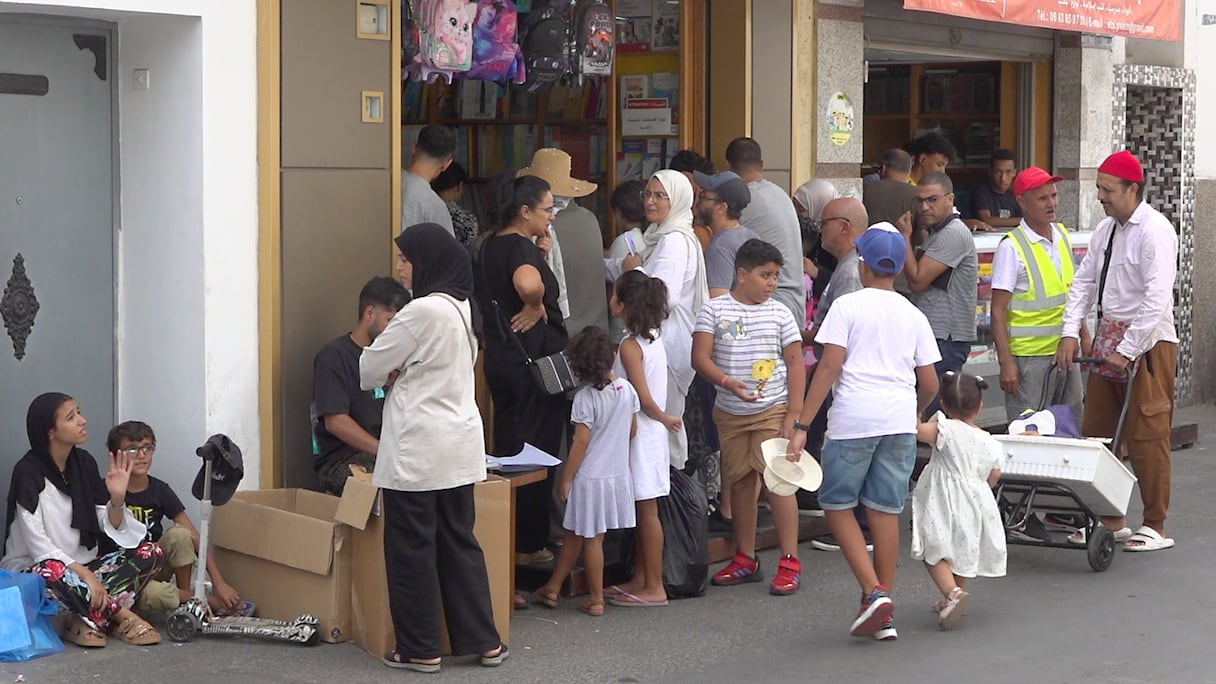
Le360 visited bookstores in Casablanca’s Habous district ahead of the new school year, where booksellers gave differing accounts of the practice.
One bookstore owner said her shop bundles some textbooks with the rest of a pupil’s required supplies because the books themselves leave little room for profit.
The problem, she said, mainly concerns books used by Pioneer Schools.
“These books give us a profit margin of only between 5% and 10%,” she told Le360.
“For example, if a textbook costs nine dirhams, how much profit will I make from it? It is only a few centimes.”
For some of those books, she said, the shop therefore sells the full set of required school materials together.
Not everyone in the trade does so.
Another Habous bookseller told Le360 his shop sells items separately and described bundling as an older practice.
“Here in the Habous area, we do not use this method,” he said.
He said some schools had previously struck arrangements with particular bookstores so pupils could find all their required textbooks in one place.
For some parents, however, being directed towards particular suppliers remains part of the problem.
“The school is the one imposing this on us,” one customer told Le360. “There are some books that we currently have to buy exclusively from a particular company.”
He also complained that some required textbooks were not yet available.
“When we went to the printing house, they told us that the books had still not been printed,” he said. “The strange thing is that the school is asking us for books that have not even been printed yet.”
Up to MAD 10,000 fine
Wadie Madih, president of the National Federation of Consumer Associations, told Le360 that forcing a customer to buy one product in order to obtain another is prohibited under Article 57 of Law 31.08 on consumer protection.
“The law prohibits all practices that make the provision of one service conditional on the provision of another service, or the sale of one product conditional on the purchase of another,” he said.
Madih said violations are punishable by fines ranging from MAD 1,200 to MAD 10,000, with the amounts doubled for repeat offenses.
He said competition rules also prohibit such practices and can carry substantially heavier penalties, reaching up to 10% of the previous year’s turnover.
“I cannot, for example, sell you a textbook unless you also buy notebooks from me,” Madih said. “This is prohibited.”
The practice itself is not new. What has returned this year, he said, are the complaints.
Madih said the federation had not received complaints about the issue in recent years but had picked up fresh criticism while monitoring consumer discussions on social media during this year’s back-to-school period.
The federation can receive complaints from consumers and is entitled to take legal action against suppliers it believes are violating consumer protection law, he added.
The Moroccan Booksellers’ Association has cautioned against treating the reported cases as representative of the profession as a whole.
It said professional bookstores sell textbooks individually and allow customers to choose which books, notebooks and other supplies they want to buy.
The association instead pointed to informal sellers and practices outside the professional bookstore sector, which it says create unfair competition for businesses that bear the costs and obligations of operating formally.
