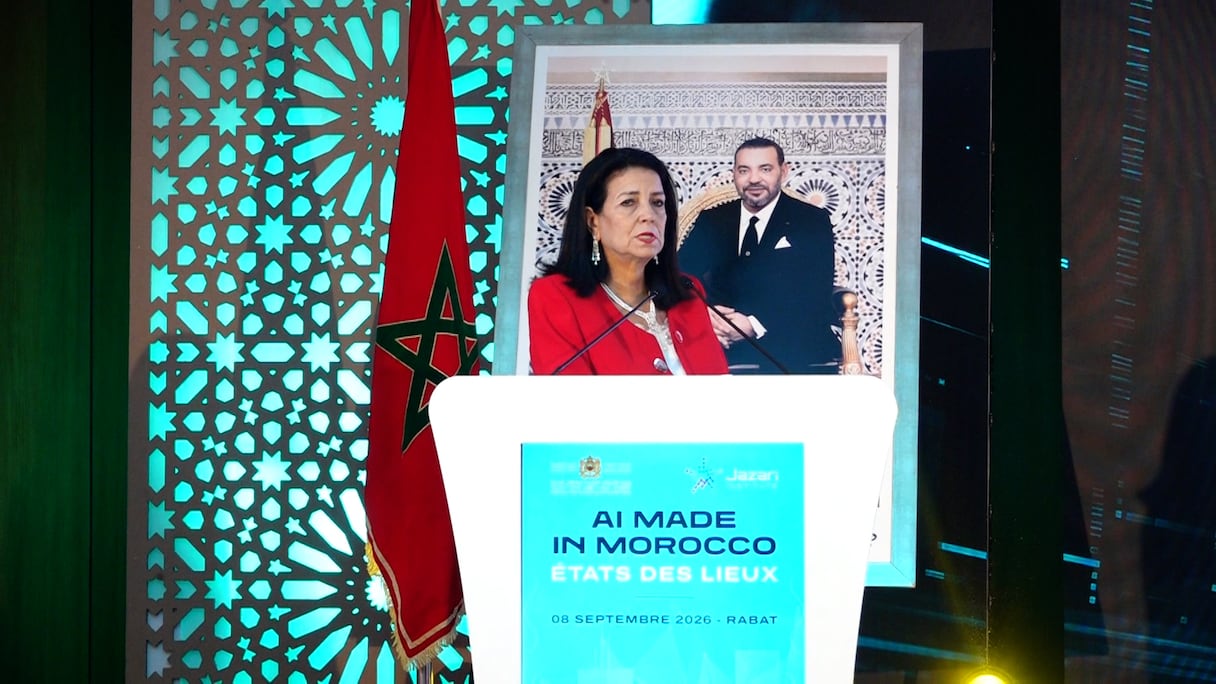
Amal El Fallah Seghrouchni has laid out the projects and targets behind Morocco AI 2030, detailing how the government intends to turn its artificial-intelligence ambitions into infrastructure, jobs and locally developed capabilities.
The roadmap targets MAD100 billion in added value by 2030, alongside 50,000 direct and indirect jobs and the training and certification of 200,000 people.
It also puts numbers on the infrastructure needed to support that ambition.
Data center capacity is planned to reach nearly 1GW, including a green mega-campus in Dakhla with capacity of up to 500MW and a 50MW facility in Rabat connected to a sovereign cloud.
The Dakhla campus is planned over around 100 hectares and is to run entirely on renewable energy, with capacity added progressively.
The roadmap also includes the expansion of the Benguerir data center and a “Move to Cloud” program for public administrations.
Another program, Digital X.0, is intended to establish rules for the use of AI, covering regulation, ethics, security and fundamental rights. Interoperability between information systems and digital identity also form part of the program.
Morocco AI 2030 is organized around three pillars—sovereignty and trust, innovation and competitiveness, and impact, adoption and outreach—with 10 flagship programs planned.
Read also : Govt wants AI to add MAD100bn to GDP, create 50,000 jobs by 2030
Connectivity targets run alongside the AI infrastructure.
The ministry said 4G coverage stood at 99.63% in 2024, while 5G is targeted to reach 70% by 2030.
The number of households eligible for fiber has risen from 1.5 million in 2022 to 4.4 million in 2026, with 5.6 million targeted by the end of the decade. Internet subscriptions currently exceed 41.2 million.
The roadmap forms part of Digital Morocco 2030 and is intended to develop domestic capacity to produce and deploy AI rather than rely solely on imported technology.
Its priorities include building national technology companies, using AI in public services including health and education, and positioning the Kingdom as a digital hub linking Africa and the Arab world.
