The government wants artificial intelligence to generate MAD100 billion in additional value for the economy and create 50,000 direct and indirect jobs by 2030 under a roadmap presented on Tuesday.
Another 200,000 people are to be trained and certified in AI, with exposure to the technology beginning in childhood, according to targets presented by the Digital Transition and Administration Reform Ministry.
The figures form part of the Morocco AI 2030 roadmap, which the ministry says is now moving into implementation.
Minister Delegate for Digital Transition Amal El Fallah Seghrouchni said the government wanted to build its own capabilities rather than remain a user of technology developed elsewhere.
“The challenge today is to leverage new technologies to strengthen our capabilities, consolidate our digital sovereignty, and create more value for our economy and our citizens,” she said.
The plan is divided into 10 programs built around three areas: sovereignty and trust, innovation and competitiveness, and adoption and international reach.
Much of the work will run through a national network of JAZARI institutes, which the ministry describes as the operational arm for AI research and innovation.
The network will comprise JAZARI ROOT, JAZARI Smart City, JAZARI EduTech and JAZARI Industrie X.0.
The government also presented what it calls a sovereign AI marketplace, intended to give users access to AI services while keeping data protected and infrastructure under domestic control.
Among the first products shown was Idarati AI, an AI assistant intended to help people find information and navigate administrative procedures.
A proof of concept was also presented for a national meta-application and e-wallet.
The proposed system is intended to bring public services together and allow different administrative systems to work with each other, with the government seeking to reduce the number of separate interactions required to complete procedures.
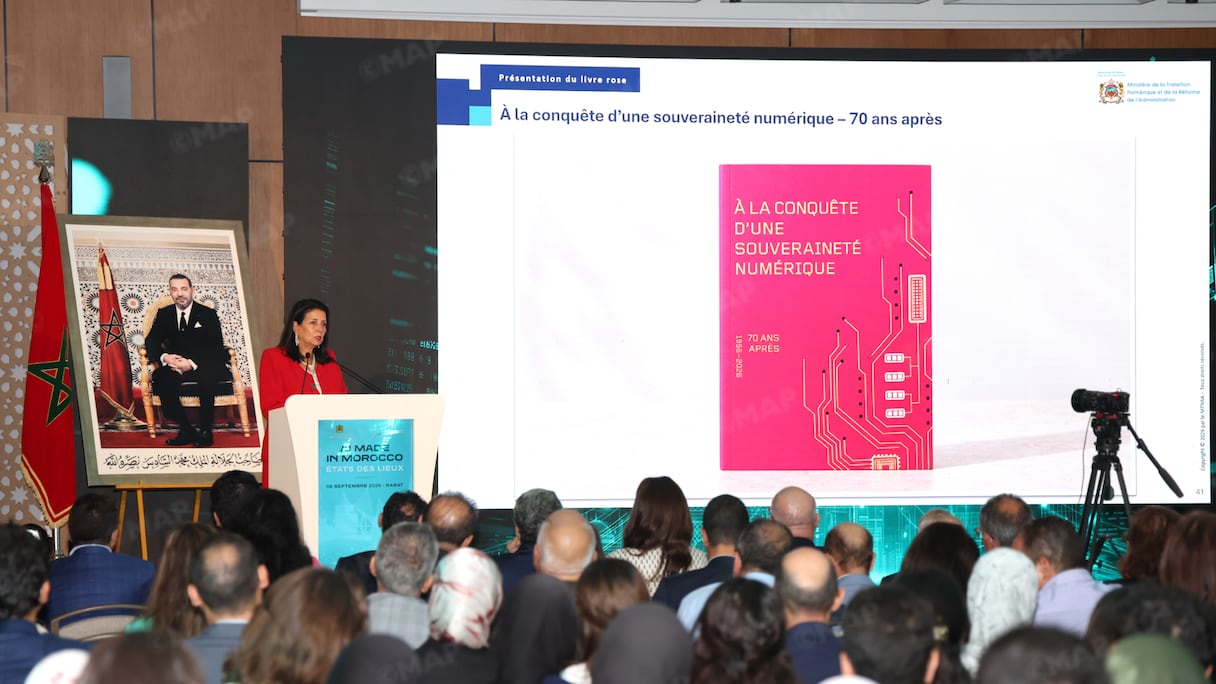
The ministry also unveiled a publication titled Towards Digital Sovereignty – 70 Years Later, 1956-2026, setting out its approach to developing domestic technological capabilities.
Seghrouchni said the AI program was moving from ambition to implementation, with the government seeking to use the technology in public administration as well as in business and research.
