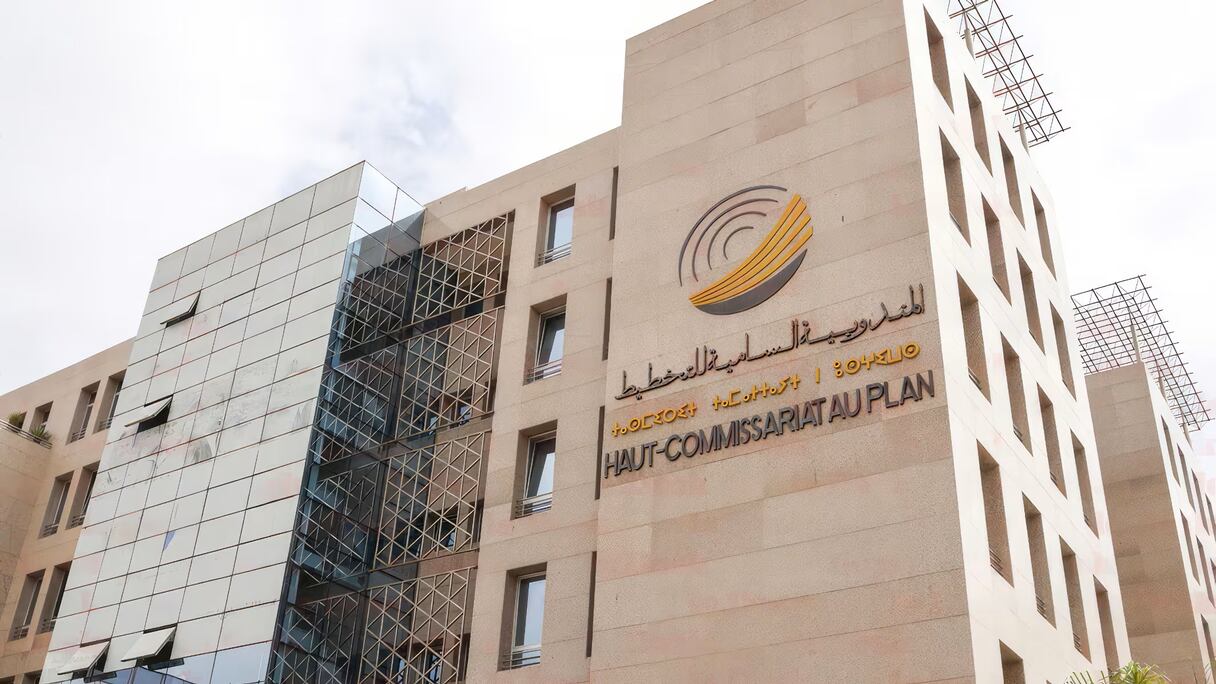
Three regions, Casablanca-Settat, Rabat-Salé-Kénitra, and Tangier-Tétouan-Al Hoceïma, together accounted for 58.4% of Morocco’s GDP, reinforcing long-standing structural imbalances in the distribution of economic output across the Kingdom.
According to the HCP, this concentration reflects the strong industrial, commercial, and services sectors in these major economic hubs, supported by more advanced infrastructure than many other regions.
Casablanca-Settat remained Morocco’s largest economic contributor, generating 32.3% of national GDP, followed by Rabat-Salé-Kénitra with 15.5% and Tangier-Tétouan-Al Hoceïma with 10.7%.
Regional wealth distribution and growing disparities
The remaining economic output was spread across the rest of the country. Five regions together accounted for 33.8% of GDP, playing an important role in regional development despite a smaller economic footprint.
These included Marrakech-Safi (8.7%), Fès-Meknès (8.2%), Souss-Massa (6.6%), Béni Mellal-Khénifra (5.3%), and the Oriental region (5.1%).
Meanwhile, Drâa-Tafilalet, Guelmim-Oued Noun, Laâyoune-Sakia El Hamra, and Dakhla-Oued Ed-Dahab recorded the lowest contributions, accounting for a combined 7.8% of national GDP.
The HCP said these trends led to slight widening of regional disparities in wealth creation. The average absolute gap, which measures the difference between each region’s GDP and the national regional average, increased from MAD 83.6 billion in 2023 to MAD 90.9 billion in 2024.
Household spending follows the same pattern
Household consumption was similarly concentrated. Five regions accounted for 74.4% of total household final consumption expenditure, which reached MAD 944.1 billion nationwide.
Casablanca-Settat alone represented 25.3% of household spending, followed by Rabat-Salé-Kénitra (14.8%), Tangier-Tétouan-Al Hoceïma (11.6%), Fès-Meknès (11.4%), and Marrakech-Safi (11.3%).
The remaining regions shared the other 25.6%, with individual shares ranging from 0.8% in Dakhla-Oued Ed-Dahab to 7.2% in Souss-Massa.
As a result, regional disparities in household consumption also widened. The average absolute difference between regions rose from MAD 48.5 billion in 2023 to MAD 51.5 billion in 2024, reflecting an increasing concentration of purchasing power in Morocco’s most dynamic urban centers.
On a per capita basis, the HCP estimated average annual household consumption at MAD 25,664 per person. Six regions exceeded this national average, led by Dakhla-Oued Ed-Dahab (MAD 34,515), followed by Casablanca-Settat (MAD 31,173), the Oriental region (MAD 27,805), Rabat-Salé-Kénitra (MAD 27,250), Tangier-Tétouan-Al Hoceïma (MAD 27,210), and Laâyoune-Sakia El Hamra (MAD 25,696).
The average absolute gap in per capita consumption also widened, increasing from MAD 3,423 in 2023 to MAD 3,609 in 2024.
Regional growth driven by key sectors
Regional economic growth did not fully mirror the concentration of wealth. Eight of Morocco’s twelve regions recorded growth rates above the national average of 4.4%.
Laâyoune-Sakia El Hamra posted the strongest growth at 7.6%, driven by non-market services and the fisheries sector. It was followed by Dakhla-Oued Ed-Dahab (7%), supported by fisheries as well as construction and public works.
Souss-Massa expanded by 6.8% thanks to strong performances in agriculture and services, while Drâa-Tafilalet grew by 6.2%, largely due to a rebound in construction.
The Oriental region recorded 5.9% growth, benefiting from the recovery of industrial and service activities, while Marrakech-Safi grew 5.1%, driven by accommodation and restaurant services.
Tangier-Tétouan-Al Hoceïma expanded by 4.9% on the back of manufacturing and services, while Guelmim-Oued Noun posted 4.6% growth, supported by primary industries and services.
The remaining regions also recorded positive growth, though below the national average, with rates ranging from 1.6% to 4.3%. Casablanca-Settat grew 4.3%, followed by Rabat-Salé-Kénitra (3.5%), Béni Mellal-Khénifra (2.1%), and Fès-Meknès (1.6%).
Overall, Morocco’s economy expanded by 4.4% in 2024, with real GDP reaching MAD 1.55 trillion. At current prices, GDP rose to MAD 1.61 trillion, marking 8.7% nominal growth compared with 2023.
