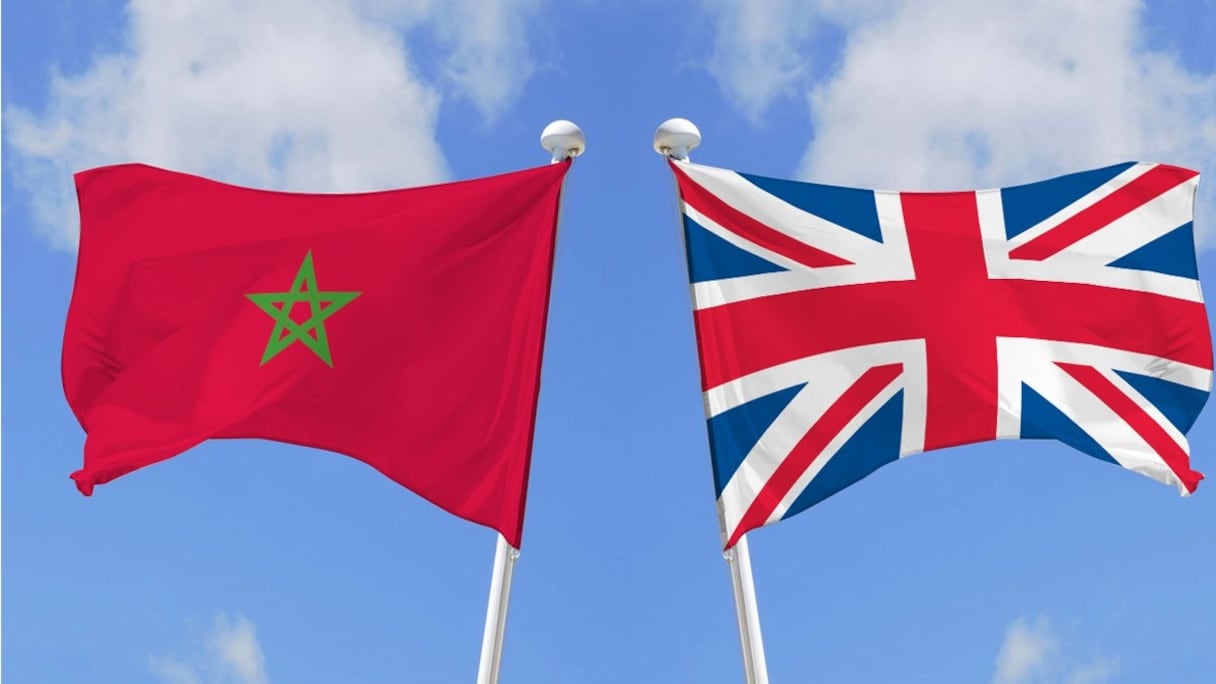
The United Kingdom is refocusing its trade relationship with Morocco. Having secured the continuation of tariff preferences post-Brexit, London now aims to tackle the more sensitive area of public procurement. An information note published on August 24, 2026, proposes adding a chapter on public procurement to the association agreement between the two countries.
The British document outlines a clear objective: to establish an enforceable framework that ensures an open, transparent, and non-discriminatory system, guaranteeing equal treatment for goods, services, and suppliers from both nations. The economic scope of this framework will depend on details yet to be determined, including the specific public authorities and state-owned companies covered, applicable thresholds, relevant sectors, permitted exceptions, and dispute settlement mechanisms.
The note estimates the relevant Moroccan market at over 400 billion dirhams “over the coming years,” though it does not specify the period or disaggregate the amount by works, supplies, and services. This figure represents potential business opportunities rather than a guaranteed volume of contracts for British companies.
The primary goal of the consultation is to gather insights from British companies currently involved in Moroccan public procurement. The project is still in its preliminary framework stage, and any subsequent work program will necessitate further discussions. Consequently, no timetable has been set for negotiations or the agreement’s entry into force.
London is building on existing foundations. A memorandum signed in June 2025 on cooperation in public procurement had already placed this issue on the bilateral agenda. The 2025 strategic dialogue also identified infrastructure for the 2030 World Cup, water, ports, urban mobility, healthcare, and airports as key areas for cooperation. Notably, a cooperation agreement worth up to £200 million was announced for water and port infrastructure.
Public procurement thus represents the commercial extension of an already advanced diplomatic and financial relationship. In 2022, UK Export Finance announced its capacity to provide up to 50.5 billion dirhams in financing for Moroccan buyers, provided that at least 20% of the value of supported projects originates from British suppliers.
The opening of public tenders and the provision of export financing could therefore be mutually reinforcing, simultaneously reducing commercial risk for British companies and lowering financing costs for certain Moroccan projects.
This combination creates an attractive offer for contracting authorities, particularly when investments require technology, engineering expertise, and long-term financing. It also pits Moroccan companies against competitors capable of combining expertise, export credit, and international experience. Competition will, therefore, depend on operators’ ability to offer integrated solutions covering an entire project, from design and financing to maintenance.
According to the latest UK Department for Business and Trade factsheet, trade in goods and services reached £5.3 billion in the 12 months to the end of March 2026, up 16.7% in current-value terms. UK exports to Morocco rose 29.8% to around 32.8 billion dirhams, while imports from Morocco increased 6.3% to 34.1 billion dirhams.
The difference in growth rates has already changed the balance of the relationship. The UK’s trade deficit with Morocco fell from £546 million to £112 million, equivalent to a decline from around 6.9 billion to 1.4 billion dirhams in one year.
For goods alone, the UK moved from a deficit of around 2.6 billion dirhams to a surplus of 2 billion dirhams. Part of this increase came from crude oil, which accounted for around 8 billion dirhams, or 32.1% of British merchandise exports to Morocco over the period.
The growth in trade flows confirms the increasing depth of the partnership, although the figures are expressed at current prices and do not fully isolate the effects of price and exchange-rate changes. They mainly show that British exporters are already gaining ground before any new guarantees on public procurement are introduced. The future chapter, therefore, reflects a strategy to consolidate an already developing commercial relationship, rather than build one from scratch.
What about legal and economic reciprocity?
According to the British government, the proposed framework would establish the UK’s first legally binding public procurement commitment with Morocco and with an African country. This development is particularly significant because Morocco is not a party to the World Trade Organization’s Government Procurement Agreement, and the two countries currently lack substantial bilateral commitments in this area.
A British parliamentary report on the association agreement explicitly acknowledges this, noting that the existing agreement contains no substantial public procurement obligations, despite its objective of gradual and reciprocal liberalization. Moving from a general objective to enforceable rules would fundamentally alter the nature of the commitment. This shift could also restrict Morocco’s ability to modify certain market-access conditions in the future without consulting London.
While equal treatment under a treaty does not automatically yield equal results, British entities often possess advantages in size, certification, financing, and experience on major projects. Conversely, Moroccan companies, particularly SMEs, could theoretically gain access to British tenders but still encounter barriers related to technical standards, market development costs, financial guarantees, and a lack of local references.
Morocco’s interests will therefore hinge on how the agreement’s scope is defined. Implementing appropriate thresholds, transition periods, protection for sensitive sectors, effective access for SMEs, and requirements for partnership, skills transfer, and local value creation could transform increased market access into a productive opportunity.
The future chapter must also align with Morocco’s ongoing public procurement reform. The Ministry of Economy and Finance highlights that Decree No. 2-22-431 of March 8, 2023, enhanced competition, national preference, bid evaluation, and digital procedures. Thus, the challenge extends beyond simply opening the market further; it involves determining how a bilateral commitment can coexist with the use of public procurement as an instrument of industrial policy.
