The European market for greenhouse vegetables has opened significantly to suppliers from outside the bloc. Imports of the five main products analyzed rose from an annual average of 828,000 tons between 2015 and 2017 to 1.33 million tons between 2023 and 2025, an increase of 60.1%. This expansion has created more room for Moroccan exports while also attracting competitors who are rapidly gaining market share, according to Eurostat data cited in HortiDaily’s “Overview of Greenhouse Vegetables in the EU” series.
According to Eurostat, Morocco and Turkey now play a central role in supplying the European Union with tomatoes, peppers, cucumbers, eggplants, and zucchini. Together, in 2025, they accounted for 65% of EU eggplant imports and 91% of tomato imports from outside the bloc.
Moroccan exports to the European Union increased by 55.9% over the period covered by the study. The growth of the European market has, therefore, been strong enough to support higher Moroccan sales, although it has not guaranteed that Morocco will maintain its relative market share.
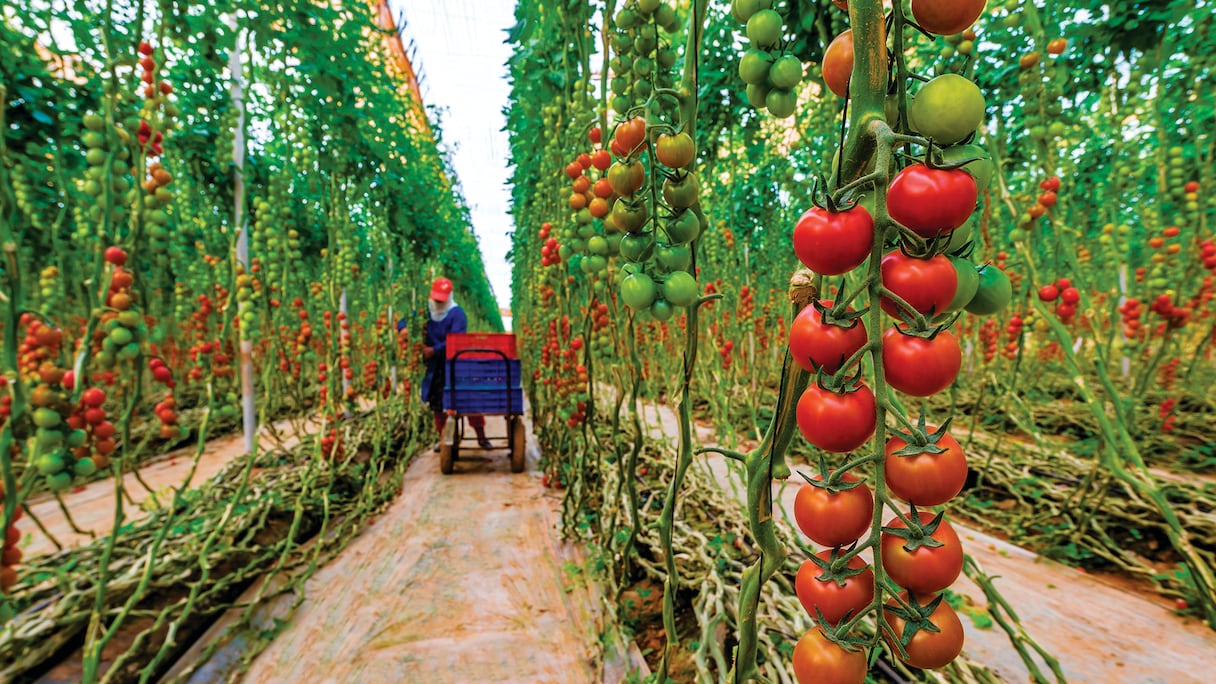
Morocco’s position is particularly strong in tomatoes. The report states that the Kingdom accounted for 68.1% of EU tomato imports from non-EU countries in 2025, while its export volumes increased by 53.4%.
This share places Morocco well ahead of its competitors and underscores the importance of the European market to the country’s tomato industry. The 10-year trend, however, shows a relative decline in market share, which was higher in 2015. Morocco is selling more, but its share of a larger and more competitive market has decreased.
This shift does not mean Morocco has lost its advantage, but it indicates that the country’s position can no longer rely solely on its historically dominant role. Moroccan suppliers now face stronger competition from Mediterranean exporters seeking to capture a growing share of additional European demand.
Zucchini shows sharper decline
The shift is more visible in the zucchini market. According to the source, EU imports from Morocco fell by 4.5%, while imports from Turkey almost doubled, rising by 92.8%.
The impact on market shares is clear. Morocco accounted for 72.5% of EU zucchini imports from outside the bloc in 2015, compared with 49.1% in 2025.
Zucchini is, therefore, the main area of concern for Moroccan suppliers. Unlike tomatoes, where the relative decline in market share has coincided with strong volume growth, zucchini has experienced both a loss of market share and a slight decline in export volumes. The trend could reflect stronger competition, changes in production, or shifts in European demand, but the document does not identify a specific cause.
Eggplants follow a different pattern. Morocco and Turkey together accounted for 65% of EU purchases from non-EU countries, highlighting the concentrated supply between the two sides of the Mediterranean.
The pepper market offers a more favorable picture for Morocco, with the report showing that Moroccan volumes destined for the European Union increased by 80.6%.
Cucumbers show an even more fragmented market. Moroccan exports to the European Union increased by 168.5%. Morocco is therefore benefiting from the expansion of demand for this product, although its position is not as dominant as it is in tomatoes.
Overall, the growth in Moroccan exports confirms the Kingdom’s ability to respond to rising European demand. The figures also show significant differences between products, with Morocco maintaining a dominant position in tomatoes, recording strong growth in peppers and cucumbers, but losing ground in zucchini.
