Held under the theme “Developing Coastal Countries and Ending the Continent’s Landlocked Isolation Through the Interconnection of Development, Climate and Security,” the event brought together prominent speakers, including former Beninese agriculture minister and president of the Elephant Coalition’s Council of Elders Azizou El Hadj Issa; Najib Soumai, founding president and member of the Mediterranean Development Center; statistics and planning expert Diegni Virgile; and Oyoyossi Charles Balogoun, director-general of the Africa Hope and Development organization.
The event provided an opportunity to highlight the dimensions of King Mohammed VI’s strategic initiative, which is based on cooperation, solidarity and shared prosperity.
In his remarks, Soumai said that “the Atlantic momentum led by Morocco offers an opportunity to strengthen not only cooperation between states, but also ties between African civil society actors.” He added that the Royal Atlantic Initiative provides “an inclusive framework for developing structured cooperation around skills, youth, territorial resilience and regional integration.”
For his part, El Hadj Issa said that opening new outlets to the Atlantic Ocean would “strengthen integration between coastal and landlocked countries, particularly in the agricultural and food sectors.”
Read also : Colombia announces change of its position, recognizes Morocco’s sovereignty over Sahara
The former Beninese minister added, according to a statement from the organizers, that the King’s initiative “offers significant prospects for ensuring supply security, facilitating access to inputs and expanding market opportunities for producers in the region.”
Virgile, meanwhile, stressed that “the link between development, climate and security can only become operational if planning succeeds in bringing together data that are still often addressed separately.” He added that “improving the measurement of vulnerabilities, infrastructure needs and productive capacities makes it possible to anticipate risks and better direct public action.”
Balogoun pointed out that “Atlantic countries often face similar environmental challenges, whether related to erosion, pressure on land or water resource management.” He stressed that closer cooperation among civil society actors would make it possible to share experiences, data and solutions that have already proven effective on the ground.
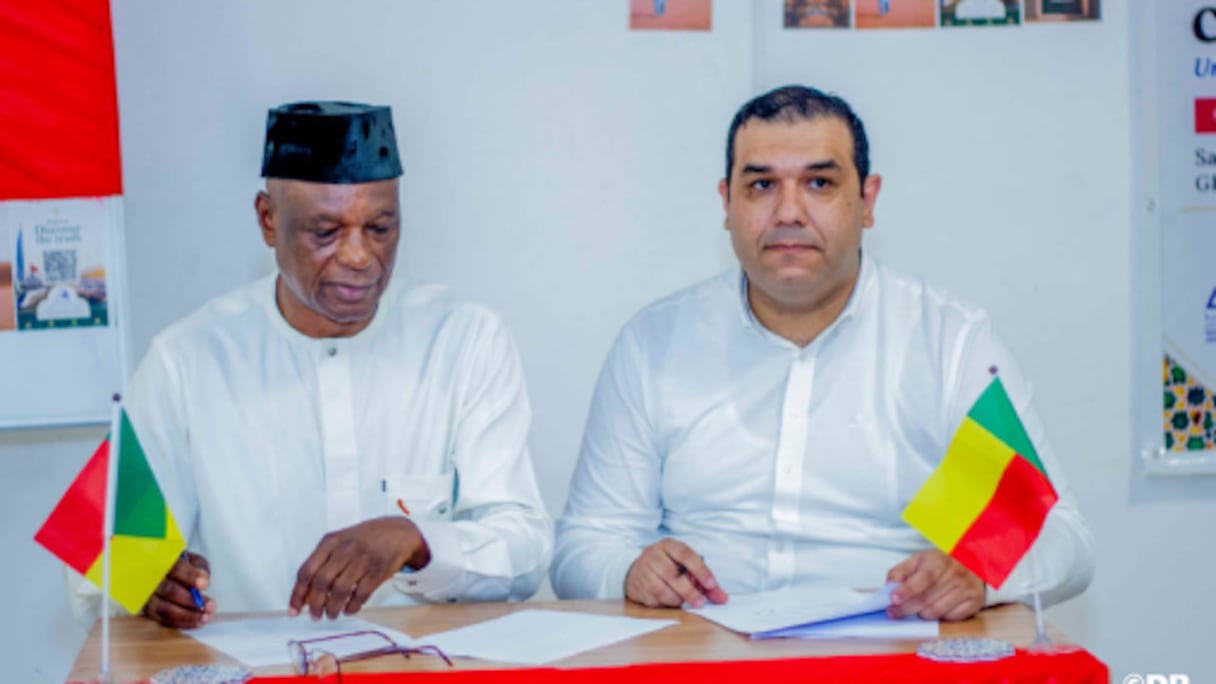
On the sidelines of the conference, the Moroccan think tank Mediterranean Development Center initiated the signing of a memorandum of understanding between the Beninese organization Africa Hope and Development and the Elephant Coalition. The agreement aims to establish a framework for cooperation in development, climate, security and the integration of Africa’s Atlantic space.
The agreement provides for the joint preparation of policy briefs and analyses, the organization of conferences and workshops, as well as exchange and learning programs.
A dedicated focus will also be given to Atlantic Africa, particularly regional cooperation, connectivity, access to the sea for landlocked countries, the blue economy, maritime security and the energy transition.
