This is a digital dragnet from which the Algiers junta will not recover anytime soon. In attempting to escape through the back door of disinformation and a frantic cleanup of accounts, the military regime has trapped itself in a judicial and technical dead end. The operation organized around the enclaves of Ceuta and Melilla was by no means an unforeseen surge of people, but a provocation planned in the barracks of Morocco’s eastern neighbor and riddled with evidence that now incriminates its organizers.
For months, Algerian military intelligence services repeatedly issued calls for people to storm Ceuta. The calls were made through fake accounts, invented identities, and hijacked Moroccan phone numbers. They tried on September 15, 2025, and failed. October 11, 2025, another failure. January 18, 2026, failure again. May 12, 2026, yet another failure. Nothing. No response. No impact.
That continued until they found what they believed was a legal loophole they could exploit, Riffi recalls in his weekly Sunday column on Chouf TV.
On June 29, 2026, the fifth section of the Administrative Litigation Chamber of Spain’s Supreme Court issued ruling No. 814/2026, which was made public on July 8. The decision blocked the immediate pushback of migrants arriving by sea. According to the high court, systematic returns could only apply at land borders, where physical barriers exist.
At sea, the barrier was gone. Algerian services saw an opportunity and immediately restarted the operation with viral messages and false promises of residence permits, Spanish nationality, and jobs for anyone arriving before July 31. They deliberately targeted the most vulnerable, including minors, teenagers, young people who had dropped out of education, and unemployed people who were easily persuaded.
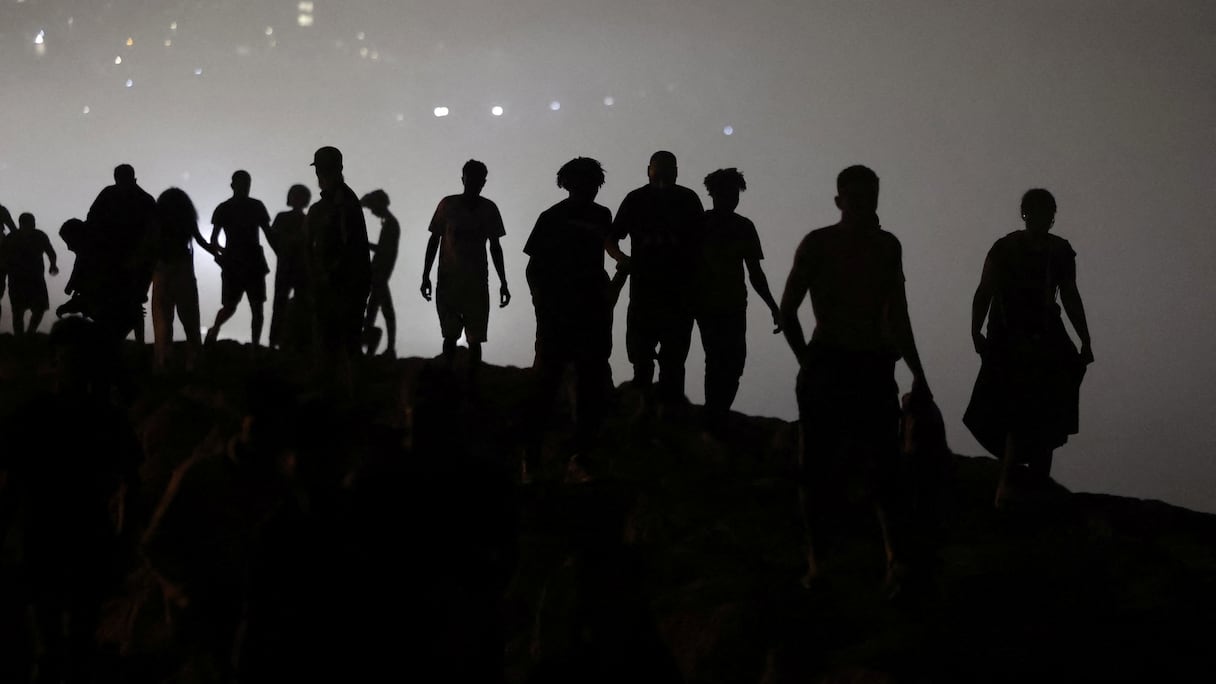
This time, it worked. For two hours, hundreds of harraga surged into Ceuta. Shops were looted, cafés closed, and disorder spread across the city. It was a temporary scene of chaos.
The evidence, the names and the mistakes that gave them away
Algerian platforms openly amplified the operation, including “Algeria Gate,” “Algeria 24,” “Military DZ,” and “L’Armée électronique algérienne.” Influencers such as “Jamra,” “Alpasino,” “Mustapha Bounif,” and notably “Hafsi Ahmed”—who is based in London and openly coordinated the campaign—then took over.
A WhatsApp group called “Harga Sebta@Mlilya” was operated using unassigned Moroccan numbers. According to cited evidence, the entire operation was conducted under the direction of structures linked to Algeria’s military services.
Read also : Report: Evidence shows the Ceuta and Melilla assault was directed from Algeria
A 75-page report by Spanish analyst José María Gil Garre, director of the International Security Observatory, confirmed the operation. The document references telephone numbers with the +213 country code for Algeria and +216 for Tunisia, which Morocco shared in real time with Spanish authorities. Gil’s work is based on open sources and is publicly available.
However, the most telling element was the language used.
In calls for demonstrations on August 9, organizers used the Arabic terms “أوت” and “أغسطس,” while Moroccans typically use “غشت.” They also referred to “wilayas,” a term specifically associated with Algeria, which Moroccans do not use to describe their country’s regions.
These details, though seemingly insignificant, constitute identifying markers, indicating that the authors were not Moroccan and were operating from across Morocco’s eastern border.
The regime then attempted to restart the campaign. Pages impersonating the visual identity of “GENZ212” called for gatherings on August 7 and 8, followed by a nationwide movement on August 9. This campaign was amplified by “Instance d’Algérie,” “La Voix d’Algérie,” Mansour Kaddour Benattia, and Samir Debkaoui.
Another page, “Maghrébins qui ne sont pas marocains,” with 220,000 followers, operated under the identity “Mohsine Kadi” and was linked to “MLmm212.” This page was created in 2021 under the name “anti_zlayjiya” before being renamed in 2024.
Its owner, Abdelhay Ennajari, from Errachidia, had previously served a prison sentence for violating Morocco’s territorial integrity.
The actual members of GENZ immediately denied any involvement and rejected calls for demonstrations.
Europe tightens the net
The most worrying development for Algiers is the European reaction. Henna Virkkunen, Executive Vice President of the European Commission for Digital Sovereignty, Security, and Democracy, summoned Meta and TikTok. She stated that the platforms “must act decisively to preserve the integrity of the digital space, particularly in times of crisis,” and called for stronger monitoring and closer cooperation with fact-checkers. The European Union announced immediate follow-up measures.
The message from Brussels was clear: European authorities believe the campaign involved organized manipulation.
Spain and Morocco have referred the matter to the platforms, and the FBI is also involved. Digital traces do not simply disappear. Even if pages were deleted overnight between August 7 and 8, Meta and TikTok servers retain IP addresses, accounts, timestamps, phone numbers, and activity histories.
Read also : Ceuta: Algerian network preparing fresh mid-August mobilization, warns Stefano Piazza
A judicial request is sufficient to obtain these records, leaving little room for evasion.
The Algerian military regime has reason to be concerned. This time, the evidence is not limited to what could be dismissed as “Moroccan accusations.” It includes technical, linguistic, and chronological elements.
The eastern neighbor’s plan failed across the board. Morocco immediately decided to receive all migrants who entered Ceuta, mobilizing hundreds of buses around the clock. Within 24 hours, returns began. Minors were handed back to their parents under official records, wanted individuals were referred to authorities, and identities were checked.
The city quickly returned to its normal rhythm. While Spanish estimates put the number of people remaining in Ceuta at between 2,000 and 4,000, Chouf TV correspondents on the ground reported seeing only scattered groups totaling fewer than 1,000 people.
During a European Commission meeting, Spain’s Interior Minister officially praised Morocco’s cooperation, describing it as rapid and effective.
The Algerian regime had sought to portray Morocco as unwilling to cooperate; the opposite occurred.
Today, digital traces remain, names are known, and linguistic mistakes have been documented. Europe has opened the file, and the platforms will have to provide access to their records.
The Algerian military regime sought to play the role of an apprentice in hybrid warfare. Instead, it exposed its methods, agents, accounts, and lack of professionalism.
Those who believed they could operate in the shadows have found themselves exposed in full view.
The day of technical and judicial accountability is drawing closer. This time, there will be no room for evasion.
