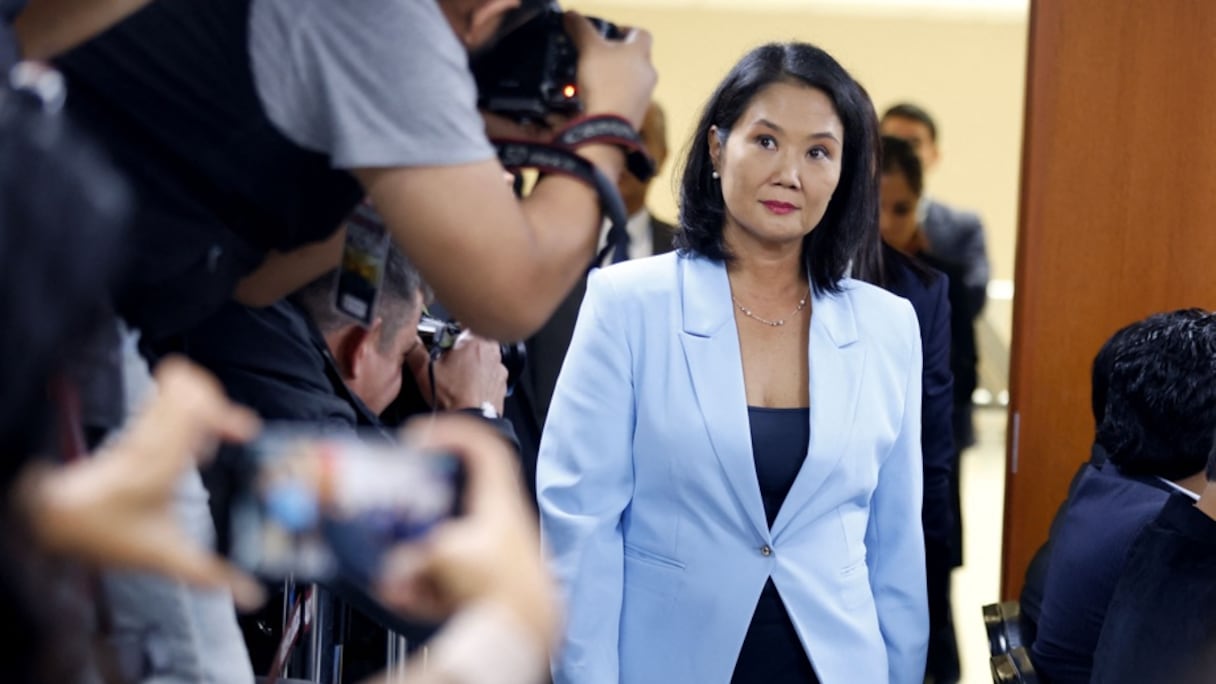
The position announced by Peru’s president-elect, Keiko Fujimori, marks a shift in the country’s foreign policy toward the Moroccan Sahara. By pledging support for Morocco’s territorial integrity, recognizing the kingdom’s sovereignty over its southern provinces, and explicitly endorsing the autonomy plan, Peru’s incoming administration is set to abandon decades of ambiguity and align itself with the diplomatic momentum that Morocco has steadily built around its proposal.
The announcement followed a meeting in Lima between Fujimori and Morocco’s ambassador to Peru, Amine Chaoudri, who delivered a congratulatory message from King Mohammed VI. According to Fujimori’s office, the future government will also support United Nations Security Council Resolution 2797, which recognizes Morocco’s autonomy initiative as the basis for a definitive solution to the regional dispute.
Four decades of diplomatic reversals
Peru’s position on the Sahara has undergone numerous reversals since 1984, when the government of Fernando Belaúnde Terry recognized the puppet “SADR.” In 1987, during Alan García’s first term in office, Lima established diplomatic relations with the separatist entity. Alberto Fujimori suspended those ties in 1996, a decision that remained in effect for 25 years.
Relations with the Polisario separatists resumed in September 2021 under Pedro Castillo, whose government restored diplomatic ties with the puppet entity. In August 2022, then-Foreign Minister Miguel Ángel Rodríguez Mackay announced that Peru was withdrawing its recognition and severing relations while reaffirming support for Morocco’s territorial integrity. The policy lasted only a month. Castillo overruled his foreign minister and reinstated diplomatic relations.
Dina Boluarte’s accession to the presidency following Pedro Castillo’s impeachment in December 2022 did not immediately bring about a change in policy. Her government initially maintained the position inherited from its predecessor before deciding, in September 2023, to suspend diplomatic relations once again. It did not, however, explicitly withdraw the recognition granted in 1984 or clearly support Morocco’s autonomy plan, leaving Lima’s position on the dispute ambiguous.
It is precisely this ambiguity that Keiko Fujimori’s announcement seeks to end. Thirty years after the suspension ordered by her father, the president-elect has gone a step further by supporting Morocco’s territorial integrity, sovereignty over the Sahara, and the autonomy initiative. If implemented after she takes office, the shift will put an end to four decades of diplomatic reversals and represent a major victory for Moroccan diplomacy in Latin America.
Latin America, a priority for Moroccan diplomacy
The shift announced by Keiko Fujimori cannot be understood without taking into account the work Morocco has carried out in Latin America over the years. Under the leadership of King Mohammed VI, the Kingdom has pursued a strategy combining political and parliamentary diplomacy with economic, cultural, and academic cooperation to strengthen its ties with a region where Algeria and the Polisario Front have maintained significant ideological support for decades.
Morocco’s efforts have gone beyond seeking favorable positions on the Moroccan Sahara. Rabat has worked to establish long-term partnerships with Latin American countries by presenting itself as a stable partner and a bridge linking Latin America, Africa, Europe, and the Arab world. Trade, agriculture, food security, fertilizers, renewable energy, education, and academic exchanges have all provided a practical foundation for political dialogue.
This strategy has gradually weakened the Polisario’s presence in Latin America and the Caribbean. Several countries that once supported the separatist entity have since severed diplomatic ties with it or distanced themselves from it. Colombia, Guatemala, Paraguay, the Dominican Republic, Haiti, Jamaica, El Salvador, Guyana, Ecuador, and Panama are among the countries that have, at different times, distanced themselves from the puppet entity.
El Salvador permanently withdrew its recognition in 2019 before strengthening relations with Rabat. Guyana did the same in 2020, while Ecuador and Panama suspended relations with the separatist entity in 2024. Those developments were accompanied by increasingly favorable positions toward the autonomy plan and a realistic political solution under the auspices of the United Nations.
At the same time, Moroccan diplomacy sought to maintain open channels of dialogue, including with Latin American governments that had traditionally been close to the Polisario. The presence of embassies, visits by political leaders and lawmakers, cooperation agreements, and dialogue with political parties across the political spectrum have helped ensure that the Sahara issue is no longer viewed exclusively through the prism of the ideological affinities inherited from the Cold War.
The decisive role of the Andean Parliament
The Andean Parliament has been one of the main drivers of this rapprochement. The regional organization brings together representatives from Peru, Colombia, Ecuador, Bolivia, and Chile. On July 2, 2018, Morocco was admitted as a permanent observer state, becoming the only Arab and African country to hold that status.
That same month, the Moroccan and Andean parliaments signed a memorandum of understanding to establish permanent channels for cooperation, exchanges of experience, official visits, and parliamentary coordination. Under the agreement, Morocco also obtained the status of the institution’s “advanced partner.”
Read also : Polisario Front Terrorist Designation Act gains two more backers in US House
Since then, the Moroccan Parliament has maintained a continuous presence within the Andean organization. This cooperation has made it possible to expand contacts with lawmakers from the five member countries, explain Morocco’s position on the Sahara directly, and present the development model implemented in the Southern provinces.
This momentum reached a major milestone on July 4, 2022, when the Andean Parliament held a session in Laayoune. Lawmakers were able to see firsthand the economic and social development of the Southern provinces, the quality of their educational and healthcare infrastructure, and the climate of stability prevailing there.
A few months later, this rapprochement resulted in an institutional position. On Oct. 27, 2022, during a meeting held in Bucaramanga, Colombia, a majority of the Andean Parliament adopted a resolution supporting the sovereignty, national unity, and territorial integrity of states. The resolution also endorsed Morocco’s autonomy plan as a “realistic, serious, and credible” solution to the regional dispute within the framework of U.N. resolutions.
In March 2023, 15 of the 25 members of the Andean Parliament’s General Assembly reaffirmed their support for Morocco’s territorial integrity and the autonomy initiative. The signatories also rejected attempts to introduce representatives of the separatist entity into the regional institution.
The declaration was particularly significant because it demonstrated that support for Morocco had become the majority position within the institution and transcended political and national differences among its members. The signatories included lawmakers from several member states, as well as representatives of the institution’s governing bodies and its foreign affairs committee.
Parliamentary diplomacy in support of the Moroccan Sahara
Parliamentary diplomacy continued to intensify in the years that followed. In April 2025, the Andean Parliament held part of its regular sessions in Morocco. Its members met in Rabat and Marrakech with the speakers of Morocco’s two parliamentary chambers, Rachid Talbi Alami and Mohamed Ould Errachid, Foreign Minister Nasser Bourita, and Khalihenna Ould Errachid, president of the Royal Advisory Council for Saharan Affairs.
During those meetings, then-Andean Parliament President Gustavo Pacheco reaffirmed Morocco’s status as an “advanced partner” and underscored its role as a strategic bridge between Africa, Europe, and Latin America.
The cooperation continued in August 2025, when a delegation from Morocco’s House of Councillors traveled to Lima and met with the new president of the Andean Parliament, Sara Condori. The meeting renewed both institutions’ commitment to a relationship based on respect for the sovereignty and territorial integrity of states.
Read also : Chile-Morocco parliamentary friendship group backs UN Security Council resolution 2797 on Moroccan Sahara
The Moroccan delegation also met with Peruvian political and business figures, as well as Andean representatives from Peru, Colombia, Chile, Ecuador, and Bolivia. This sustained engagement helped consolidate a network of contacts that included governments, parliaments, political parties, universities, and business leaders.
Morocco complemented these efforts by regularly inviting delegations to visit the Kingdom and its southern provinces. Firsthand visits to Laayoune and Dakhla, their elected institutions, and their major infrastructure projects helped counter the separatists’ narrative and demonstrate the development momentum led by the Kingdom.
A new chapter between Rabat and Lima
The shift on the Sahara could open a new chapter in relations between Morocco and Peru. In his congratulatory message to Keiko Fujimori, King Mohammed VI highlighted the ties of friendship, mutual respect, and shared values between the two countries while expressing his desire to elevate bilateral relations into a multidimensional partnership.
The closer relationship opens prospects for cooperation in sectors including trade, investment, agriculture, fertilizers, renewable energy, tourism, and cultural exchanges. Morocco also serves as a strategic gateway to Africa, while Peru occupies a leading position on Latin America’s Pacific coast and within the Andean Community.
After more than four decades of advances, setbacks, and contradictions, the direction announced by Peru’s incoming government represents one of the clearest policy shifts to date. For Moroccan diplomacy, it marks another victory in defending the kingdom’s territorial integrity. It also confirms the growing place of the autonomy initiative as the only serious, credible, and realistic basis for reaching a definitive settlement to the regional dispute over the Moroccan Sahara.
