The legislative noose continues to tighten around the Polisario Front in Washington.
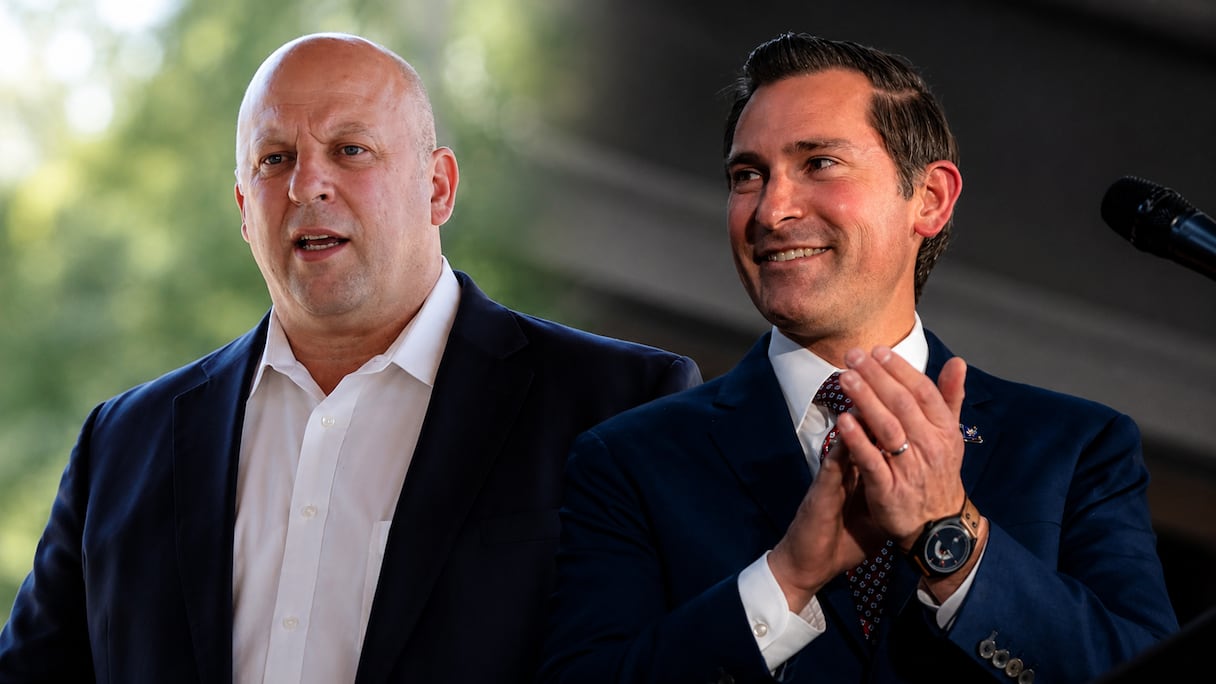
Introduced in the US House of Representatives by Republican Rep. Joe Wilson, the Polisario Front Terrorist Designation Act has reached another symbolic and political milestone. On July 9, 2026, Republican lawmakers Scott DesJarlais and Matt Van Epps joined the bill as co-sponsors, bringing the total number of House supporters to 16. Far from being a symbolic gesture, their endorsement reflects a growing consensus among US policymakers that the separatist movement represents a broader security threat.
The arrival of DesJarlais and Van Epps lends significant political and strategic weight to Wilson’s initiative.
A Tennessee congressman and physician by training, Scott DesJarlais is regarded in Washington as a leading figure within the conservative movement. Regularly recognized for his legislative effectiveness by influential organizations such as the Heritage Foundation and the American Conservative Union, his decision to back the bill sends a strong signal to lawmakers who advocate strict fiscal discipline and robust national security policies.
Matt Van Epps, who also represents Tennessee, brings extensive operational military experience. A graduate of the US Military Academy at West Point’s “9/11 class,” the former elite pilot and mission commander with the Army’s 160th Special Operations Aviation Regiment served in Iraq and Afghanistan. Now a lieutenant colonel in the National Guard and armed with extensive experience overseeing public administration in his home state, Van Epps has made national security a cornerstone of his congressional mandate. His support validates the legislation through the lens of military and geopolitical risk assessment.
The heart of the threat
The central purpose of the legislation is to compel the US administration to conduct a formal and binding review of the Polisario Front’s status.
At the center of lawmakers’ concerns are the increasingly well-documented links between the Algeria-backed militia based in Tindouf and the Islamic Republic of Iran.
The bill specifically points to drone transfers from the Islamic Revolutionary Guard Corps (IRGC) to the Polisario Front, as well as expanding intelligence and military cooperation. In Washington, the Tehran-Algiers-Tindouf connection is increasingly viewed as a major source of instability in North Africa and across the Sahel, a region already weakened by entrenched terrorist activity.
The effort is not confined to the House of Representatives.
In the Senate, companion legislation—the Polisario Front Terrorist Designation Act of 2026—introduced by Sens. Ted Cruz, Tom Cotton and Rick Scott, is also gaining momentum. On March 23, Sen. David McCormick became its fourth co-sponsor.
The Senate bill establishes a particularly stringent mechanism, requiring the secretary of state to initiate a formal terrorist designation once cooperation with Iran is confirmed. Such a designation would trigger severe financial sanctions, travel bans and the immediate freezing of assets.
Growing calls for urgent action
Pressure in Washington is coming not only from lawmakers. Think tanks and policy commentators are also urging swift action, pointing in particular to what they describe as the Polisario Front’s recent terrorist attack on civilians in Es-Smara.
In a forcefully argued opinion piece published by Newsmax, prominent American attorney George Landrith made an uncompromising case for the rapid passage of Cruz’s legislation. For the influential policy analyst, sanctioning the separatist militia is no longer merely a diplomatic option but “an absolute necessity.”
The conservative magazine American Thinker echoes that view.
In an analysis by Julio Rivera, the publication argues that Cruz’s Senate Bill S. 4063 is not “political theater” but a direct response to a real and long-overlooked danger in Washington.
“The growing cooperation between the Polisario Front and Iranian-backed terrorist networks operating across North Africa and beyond constitutes a danger that the Senate can no longer afford to ignore,” Rivera writes.
As support for the legislation continues to grow on Capitol Hill, the message emerging from Congress is unmistakable: the status quo surrounding the activities of the Polisario Front and its backers is no longer considered sustainable for the security of the United States and its allies.
