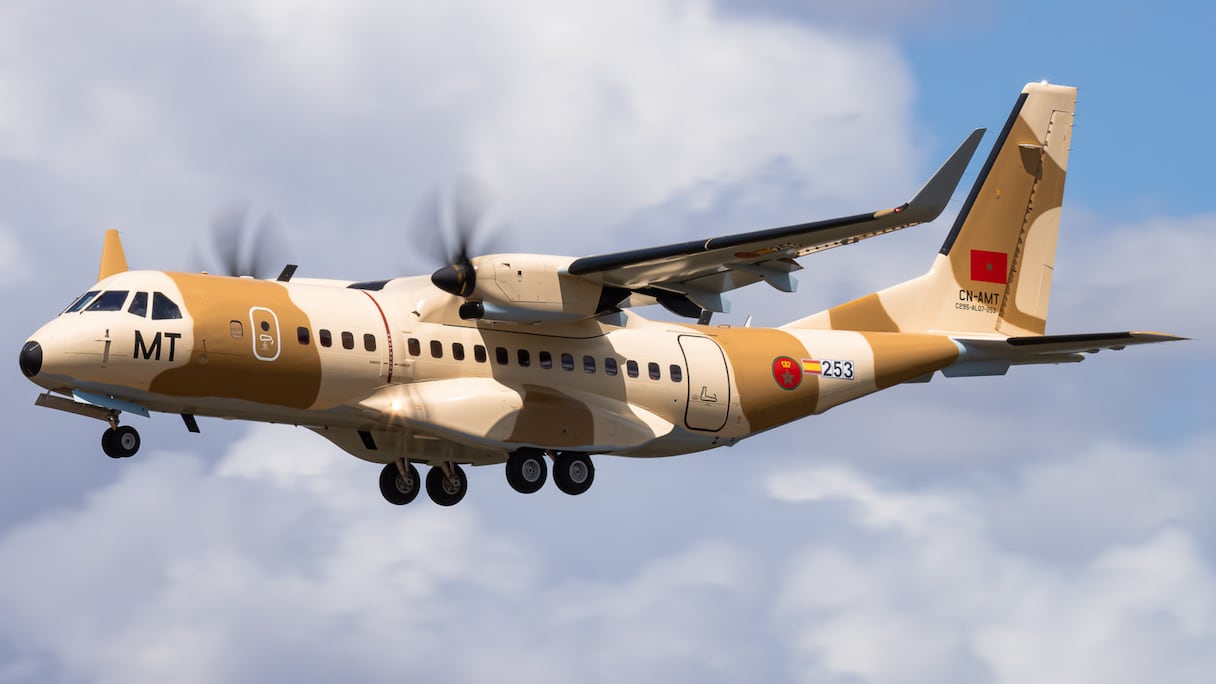
The Royal Moroccan Air Force’s first Airbus C-295W arrived at the Third Air Base in Kenitra on Tuesday, September 29, according to the FAR Maroc forum on Facebook.
The arrival comes four months after Spanish plane spotter Santi Blánquez shared a photo of the aircraft in Moroccan colors on Instagram, revealing its maiden flight. A second aircraft is expected, according to information reported by the FAR Maroc forum.
The C-295W is a twin-engine tactical military transport aircraft powered by turboprop engines and designed and manufactured by Airbus Defence and Space. It can carry up to 70 fully equipped troops or nine tons of cargo and operate from short, unpaved runways, making it well suited to challenging environments.
The W variant, short for “winglets,” features modified wingtips that improve aerodynamic performance and reduce fuel consumption. Developed from the CASA CN-235, the C-295W is its successor. The Royal Moroccan Air Force has operated the CN-235 for several decades.
In an earlier interview with Le360, Abdelhamid Harifi, a military analyst and administrator of the FAR Maroc forum, noted that “parts of the C-295 are manufactured in Morocco.” He also pointed out that the aircraft was derived from the CASA CN-235.
Read also : Moroccan F-16s and French Rafales join forces in five-day ORYX26 exercise
“We have an operational fleet of CASA aircraft that is aging. The C-295 is therefore a logical replacement in the long term, not an immediate one,” he said.
“Today, we have an aging transport fleet. The latest aircraft to enter service are the C-27J Spartans, which already have around 15 years of service,” Harifi said.
The C-130 Hercules fleet continues to accumulate significant flight hours, as do the CN-235s still in service. “The need to renew this fleet has become a priority for the Royal Moroccan Air Force,” he said.
For the C-130s, Morocco has signed a contract with US company L3Harris Technologies for a service-life extension program that includes technology transfer and is expected to run until around 2040.
Replacement orders are nevertheless being considered from 2030 onward. “We will have to start placing orders in small numbers, spread over time, to replace these aircraft without losing operational capacity,” the analyst said.
