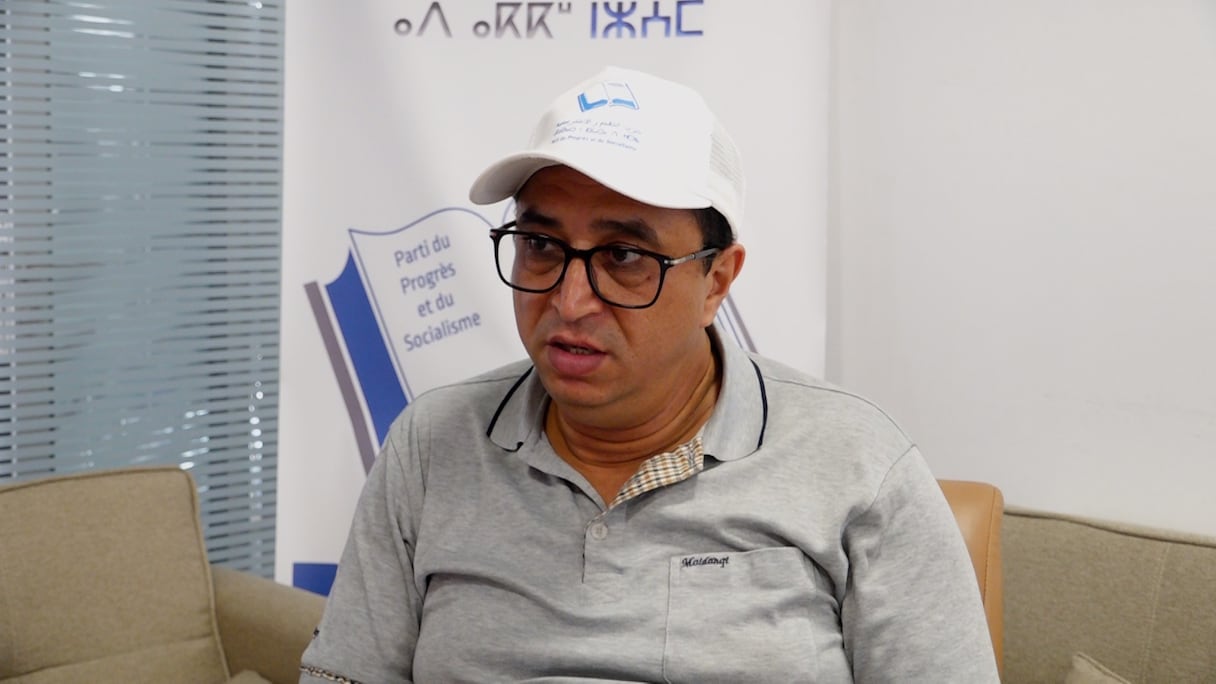
With legislative elections slated for September 23, Jamal Karimi Benchekroun is bracing for a tight contest in Rabat-Chellah, where three parliamentary seats are at stake. The former MP and member of the Progress and Socialism Party’s (PPS) political bureau is leading his party’s list in the constituency.
He faces a formidable lineup of political figures, including Adib Benbrahim, Secretary of State for Housing and the PAM candidate; incumbent USFP MP El Hassan Lachgar; Alaa Eddine Bahraoui of the RNI; and Abdelaziz Derouich of the Istiqlal Party. The PJD is fielding Mohamed Tahiri, while the Left Alliance is represented by Mohamed Aouni.
Speaking to Le360, Jamal Karimi Benchekroun acknowledged the “difficulty” of the electoral challenge. The Rabat-Chellah constituency is notably diverse, encompassing working-class neighborhoods like Mabella, Youssoufia, and Takaddoum, as well as a section of Souissi.
Beyond the immediate electoral battle, the PPS candidate prioritizes education. He highlighted the concerning results of the PISA 2025 survey, published on September 8 by the Organisation for Economic Co-operation and Development (OECD), which revealed a further decline in the performance of 15-year-old Moroccan students.
Morocco scored 358 points in science, 355 in mathematics, and 321 in reading, significantly trailing OECD averages. More alarmingly, 73.2% of the Moroccan students assessed fell below the minimum proficiency level across all three subjects simultaneously.
“A real reform is needed,” Jamal Karimi Benchekroun asserted, also drawing attention to school dropout rates and the number of young people not in employment, education, or training (NEET). “These figures directly raise questions about the responsibility of all stakeholders in the sector,” he added.
The candidate has also centered his campaign on local issues. In Rabat-Chellah, he noted, some residents are particularly worried about the potential impact of urban planning documents on their homes.
“We need to listen to residents because their concerns directly affect their daily lives. Some are living with fears that their homes could eventually be demolished because of provisions that may be included in the development plan,” he explained.
For Jamal Karimi Benchekroun, the September 23 vote transcends a mere electoral deadline. “This is not a passing stage. It is about choosing those who will represent citizens for the next five years,” he emphasized.
The PPS candidate also reiterated the core constitutional responsibilities of MPs: representing citizens, legislating, overseeing government action, and evaluating public policies. He stressed that elected representatives must also actively participate in fighting corruption and preventing the use of money for electoral purposes.
“An MP must be able to represent citizens with dignity, oversee government action, put forward proposals, and contribute to the evaluation of public policies. They must also contribute to the fight against corruption and stand up to those who exploit vulnerability and precariousness to buy votes,” he declared.
Following the interview, Jamal Karimi Benchekroun was scheduled to continue campaigning on the ground with PPS activists and young party members. The party is organizing an electoral meeting this Sunday at Bab El Had in Rabat, structured as a large halqa, to directly engage with voters.
