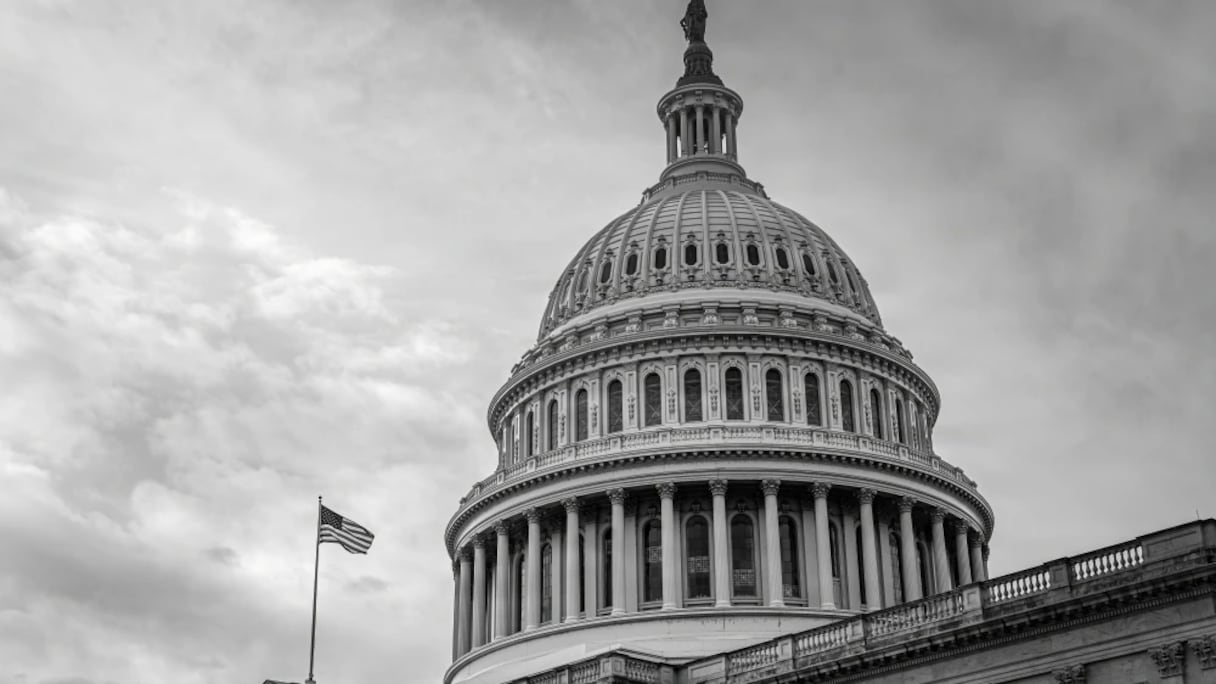
A new political and legislative front has opened on Capitol Hill against the Polisario militia. As the separatist group seeks to obstruct the diplomatic process under United Nations auspices, initiatives are multiplying in Washington to secure its formal designation as a Foreign Terrorist Organization (FTO).
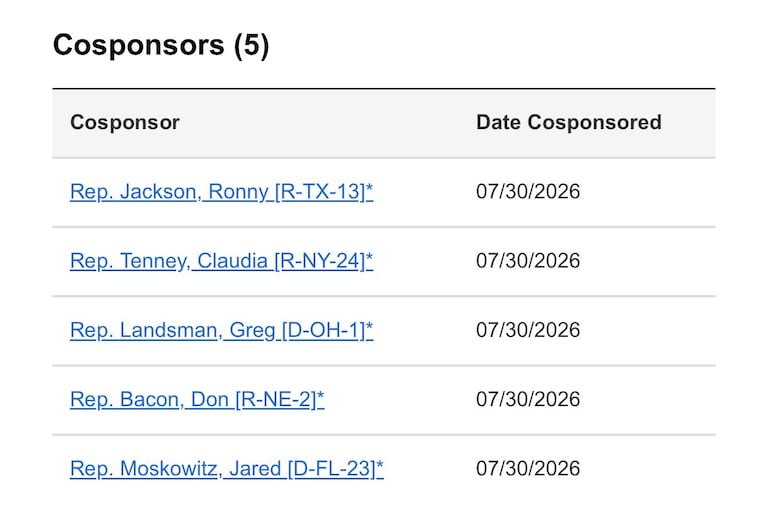
On July 30, Republican Representative Ronny Jackson of Texas and Democratic Representative Josh Gottheimer of New Jersey jointly introduced the Polisario Front Terrorist Designation Act. The bill urges the U.S. Secretary of State to formally designate the Polisario as a terrorist organization following a comprehensive assessment of its connections to the Iranian regime and its regional proxies. The legislation immediately attracted six supporting signatures, reflecting bipartisan backing from both Republicans and Democrats.
“For too long, Iran and its terrorist proxies, like Hezbollah, have used the Polisario Front to project instability across West Africa,” Representative Ronny Jackson said, stressing the need for the administration to investigate and dismantle these networks.
Representative Josh Gottheimer likewise underscored the seriousness of the issue.
“When a group receives drones and weapons from the Islamic Revolutionary Guard Corps (IRGC) and coordinates with Iranian-backed terrorists, we should call it exactly what it is: a terrorist organization. Standing up to Iran and its proxies isn’t a partisan issue.”
Consolidating the Momentum
The Jackson-Gottheimer initiative strengthens an already well-organized congressional campaign unfolding on two fronts.
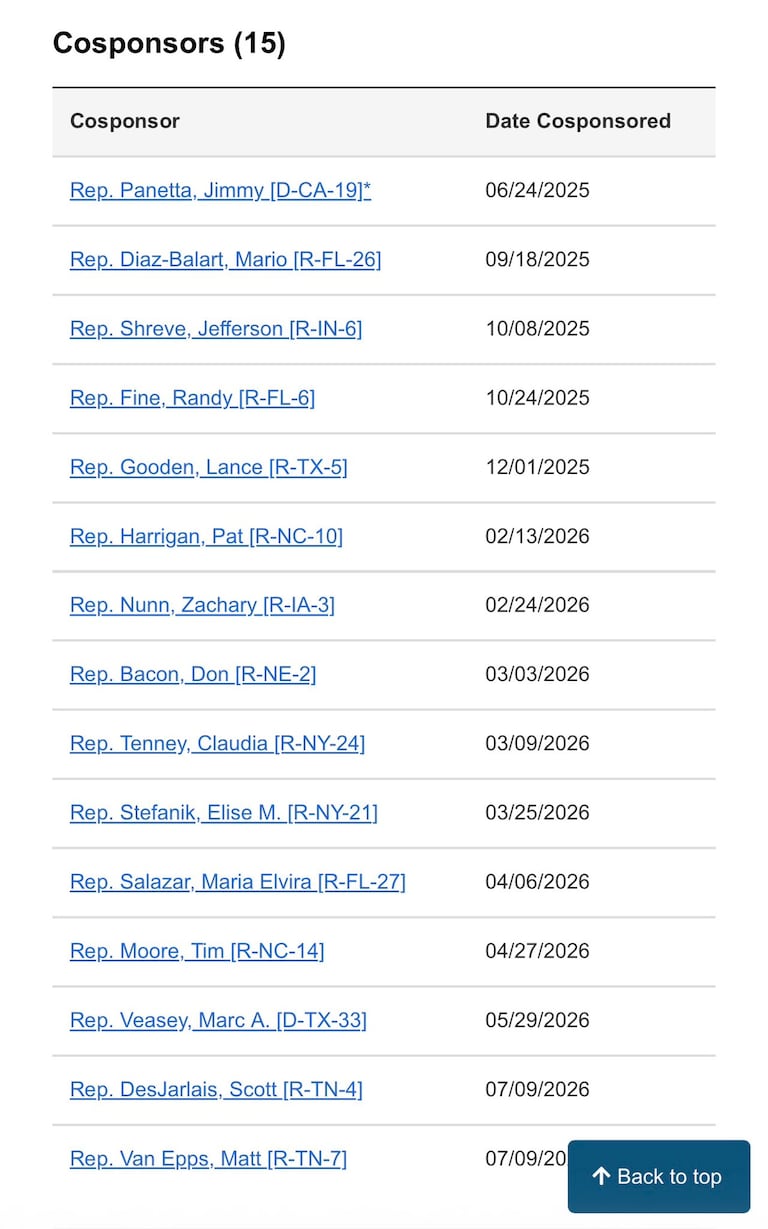
In the House, a parallel bill introduced by Republican Congressman Joe Wilson continues to gain momentum. The legislation now counts 16 co-sponsors, bolstered by the recent additions of influential conservative Scott DesJarlais and Matt Van Epps, a former Special Operations commander and West Point graduate. The bill explicitly targets Iranian drone transfers by the IRGC to the Polisario, as well as intelligence sharing and operational military cooperation across the Sahel-Sahara region.
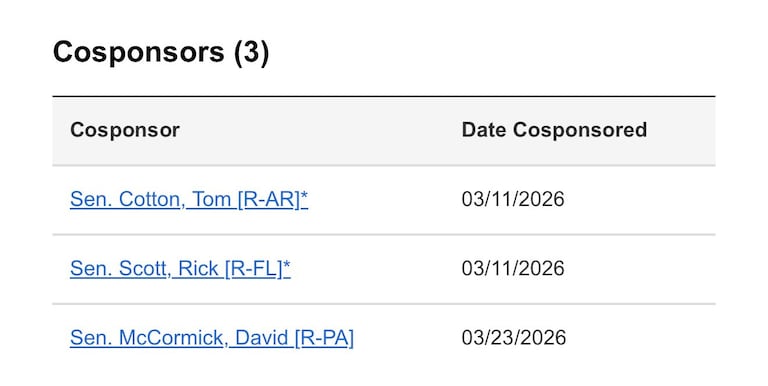
In the Senate, bill S.4063, introduced by Ted Cruz, Tom Cotton, and Rick Scott, is also gathering support, most recently with the endorsement of Senator David McCormick, its fourth high-profile co-sponsor. The Senate legislation establishes a binding mechanism: should cooperation between the Tindouf militia and Tehran be confirmed, the Secretary of State would be required to automatically impose sweeping financial sanctions, asset freezes, and travel bans.
The Capitol Hill offensive comes as the Tindouf militia adopts an increasingly obstructionist diplomatic posture. While the international community has endorsed United Nations Security Council Resolution 2797, which recognizes the autonomy initiative under Moroccan sovereignty as the only solution to the conflict, and while the United States has succeeded in bringing all four parties to the negotiating table—including Algeria—the Polisario is attempting to reverse course.
Read also : Sahara: from denial to the brink — how the Polisario’s refusal to negotiate is hastening its own demise
This deadlock stems from two principal factors.
The first is fear of political self-erasure. A negotiated settlement based on Morocco’s autonomy plan would mark the political end of the Polisario, along with its financial rents and its claim to representation.
The second is Algiers’ cynical double game. Unable to sustain a direct confrontation with Washington after ultimately yielding and participating in the negotiations, the Algerian regime is instrumentalizing its proxy in an attempt to paralyze the process and buy time.
By opting for a strategy of headlong escalation and rejecting the UN framework, the Polisario is becoming increasingly isolated. While Washington is already exploring alternative representative actors such as the Sahrawi Movement for Peace (MSP), whose leadership was recently received by U.S. Ambassador to the United Nations Mike Waltz, Congress now appears poised to deliver what could become the decisive legal blow.