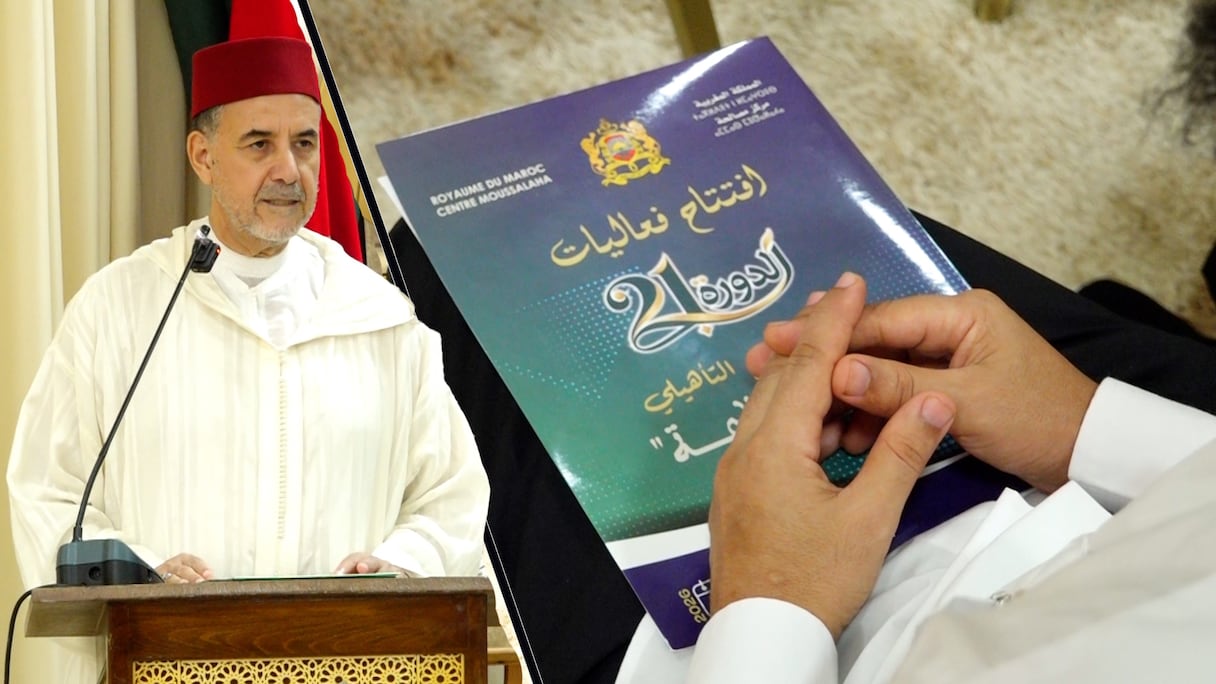
Since 2017, hundreds of inmates convicted in terrorism and extremism cases have taken part in the national reconciliation and deradicalization program Moussalaha, the Mohammadia League of Religious Scholars said Thursday.
The League, headed by Ahmed Abbadi, is one of the program’s main partners alongside the prison administration.
“This is the 21st session of the Moussalaha, or Reconciliation, program, and the ninth session held under the supervision of the Moussalaha Center,” Ahmed Abbadi said at the closing ceremony of the ninth session, held Thursday at Salé Local Prison.
The Moussalaha Center, he recalled, was established in November 2023 in accordance with High Royal Instructions under a partnership agreement between the General Delegation for Penitentiary Administration and Reintegration (DGAPR), the National Human Rights Council (CNDH), the Mohammadia League of Religious Scholars and the General Directorate of National Security (DGSN).
Overall, the various sessions have been attended by 456 male and female inmates. The session that concluded Thursday alone brought together 24 inmates, including 14 women.
Ahmed Abbadi announced that all women prosecuted for crimes related to extremism and terrorism “have been released.” The most recent release took place on the occasion of Eid Al-Mawlid Annabaoui Acharif, meaning that “Moroccan prisons are now free of women convicted under the anti-terrorism law.”
Read also : Nearly 1,700 inmates pass Morocco’s national high school exam
The official explained that the program is built around three pillars: reconciliation with oneself, reconciliation with religious texts, and reconciliation with society, its institutions and its laws.
According to him, the program includes “300 hours” of training and support, during which participants are provided with the necessary tools related to these three dimensions.
The secretary-general of the Mohammadia League of Religious Scholars also praised “this farsighted Royal vision under which the program and the center were launched,” stressing that the Moussalaha Center is gaining increasing recognition and attracting growing international interest.
He also welcomed the fact that the program “has recorded no cases of recidivism to date.”
With 456 beneficiaries since its launch in 2017, the Moussalaha program has established itself as one of Morocco’s main mechanisms for reconciliation and reintegration for inmates convicted of terrorism-related offenses. Through religious guidance, personal rebuilding and social reintegration, the program seeks to provide a structured path back into society.