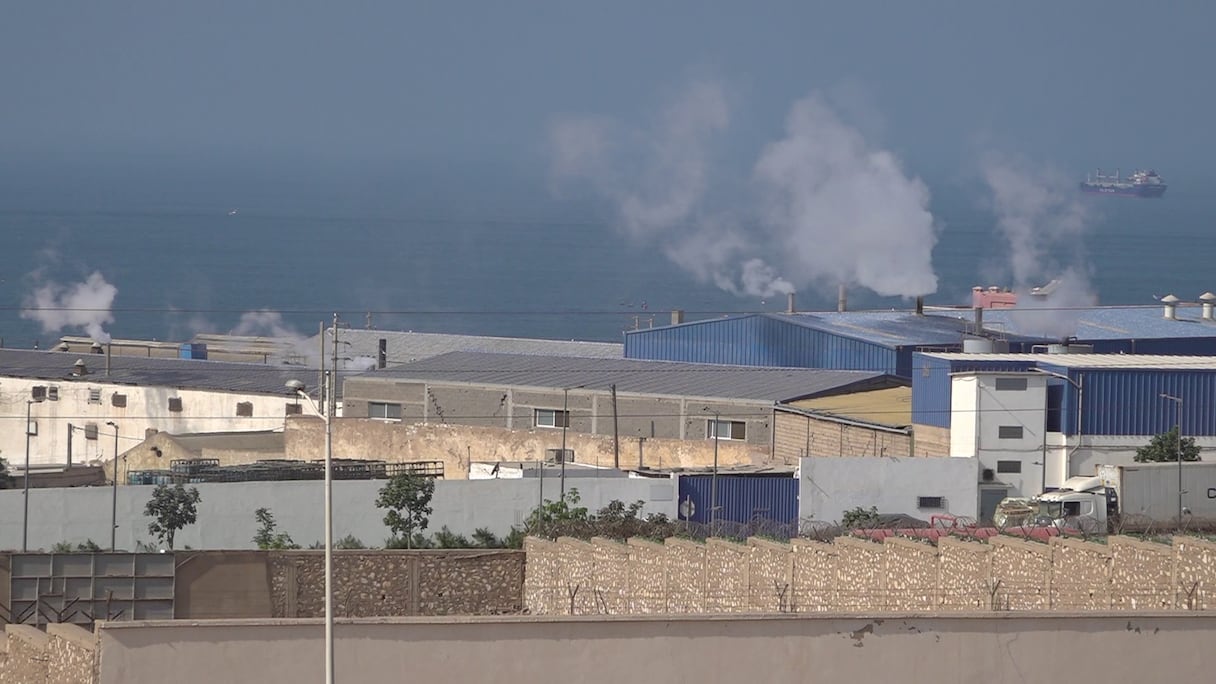
The odors from industrial facilities in Anza have intensified in recent weeks, making daily life increasingly difficult for residents. Amzazi, who is also governor of Agadir Ida-Outanane Prefecture, has introduced a series of emergency measures aimed at addressing the problem before it worsens.
Health and tourism concerns
According to community activist Amine Mbarek, Anza has become a popular destination for Moroccan and foreign tourists, particularly surfing enthusiasts. The neighborhood is now facing a serious environmental problem caused by emissions from local factories, especially those involved in fish processing and fishmeal production.
The odors have spread beyond Anza to other parts of Agadir, including the tourist district, Talborjt, Ihchach, Les Amicales, Lirac, Bourtal, El Batawar, Dakhla, Salam and Houda.
The situation is particularly concerning for people with chronic conditions such as asthma, allergies and respiratory problems.
Mbarek also denounced the discharge of industrial waste directly onto the beach through large pipes, warning that the practice threatens the area’s tourism industry.
Residents call for action
Several civil society groups have raised the alarm over the situation. A petition signed by dozens of residents, accompanied by a protest statement, has been sent to the relevant authorities.
The statement recalls that a prefectural decision issued in 2016 had already called for the factories to be relocated to the new industrial zone in Drargua.
Anza resident Ahmed Naamani said permanently closing the plants would not be the best solution, given the stable jobs they provide to many local residents. Instead, he called for strict enforcement of environmental requirements to protect public health while preserving tourism and economic activity.
Read also : Agadir parking fees set to return as opposition grows
Three emergency measures
Following repeated complaints, Wali Saaïd Amzazi convened an emergency meeting attended by the regional council president, technical and administrative departments, local authorities, representatives of Agadir’s municipal council and industrial operators in the area.
Three immediate measures were agreed upon.
First, a specialized committee has been dispatched to inspect Anza’s factories, identify environmental problems and determine what corrective action is needed.
Second, the industrial units must comply with environmental standards by installing and equipping pretreatment facilities for wastewater, gaseous emissions and odors. Plants that fail to comply face administrative penalties, potentially including the withdrawal of their operating permits and closure.
Third, all industrial units in Anza must relocate to the developed industrial zone in Drargua within a maximum of one year, in line with existing commitments. The designated sites are guaranteed to have the necessary treatment infrastructure.
