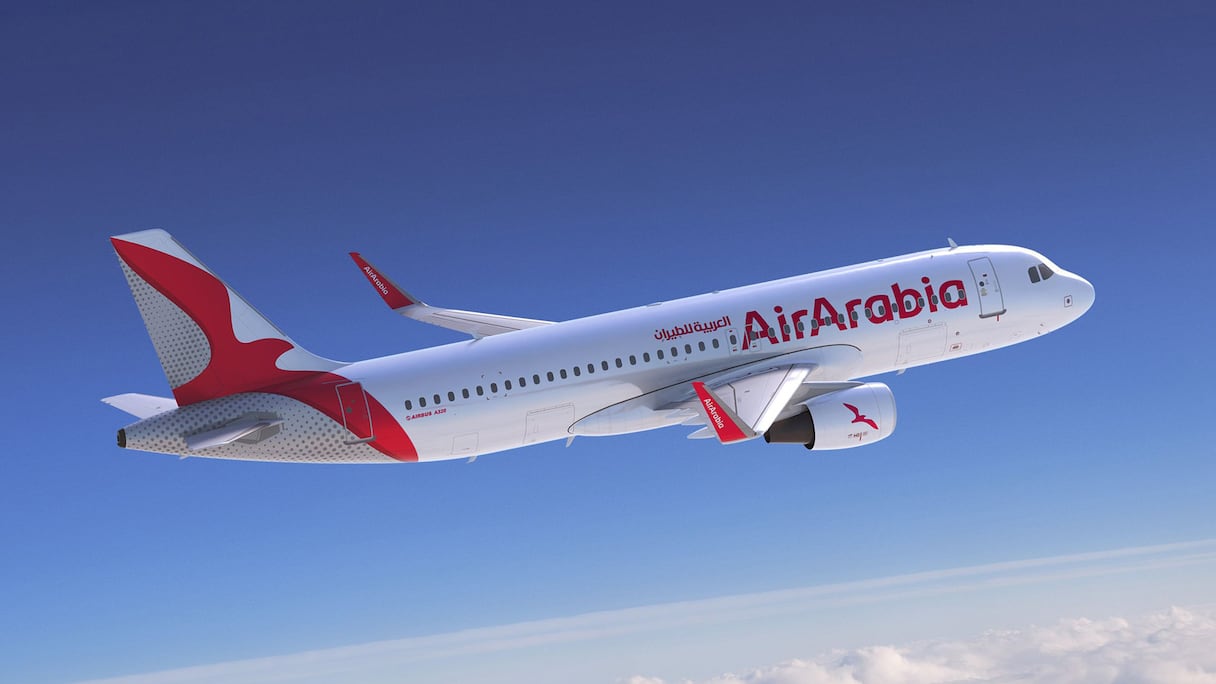
An Air Arabia Maroc Airbus A320 came within 12.5 meters of the surface of the Ionian Sea, just seconds after taking off from Catania Airport in Sicily. The incident, which occurred during the night of September 20, 2025, is detailed in the final report published on November 6, 2026, by Italy’s National Agency for Flight Safety (ANSV).
According to the investigation’s findings, the aircraft, registered as CN-NML, was operating flight MAC991 to Amman, Jordan, as part of a scheduled transfer for maintenance work. There were no passengers on board. The crew consisted of two pilots and four cabin crew members.
Flight data show that the Airbus reached a minimum height of 41 feet, or approximately 12.5 meters above the sea, about 30 seconds after leaving the runway. The aircraft eventually regained altitude and continued its journey to Amman without causing any injuries or sustaining damage.
The ANSV investigation identified several factors that contributed to the serious incident. The flight had been delayed on departure from Casablanca and the aircraft landed in Catania at 22:51, although the scheduled stopover was supposed to last only 53 minutes. The airport’s scheduled midnight closure added further operational pressure.
During the stopover, the captain requested a change to the flight plan. Palermo Airport had initially been designated as the alternate airport, although the aircraft was due to fly on to Jordan. Contact with the airline’s operations center to arrange the change took up a significant portion of the available time. Air traffic control also reminded the crew twice that operations needed to be accelerated before the airport closed.
However, most of the failures occurred during takeoff. The pilots noticed that some indications relating to speed parameters and guidance systems were missing. The anomaly was detected while the aircraft was still taxiing at around 60 knots, well below the V1 decision speed, calculated at 131 knots.
The captain nevertheless decided to continue with the takeoff, believing he could manage the situation. Investigators said that aborting the takeoff was still a viable option at that point.
The ANSV considers it likely that the reference speeds required for takeoff had not been correctly entered into the aircraft’s flight management system. However, the investigation found no evidence of a technical malfunction in the system.
Read also : Ismaël Saibari lashes out at Air Arabia, calling it ‘the worst airline in the world’
Plane dives toward the sea as warning alarms sound
After leaving the runway, the A320 began losing altitude instead of climbing normally. Recorded data show that the captain made several nose-down inputs on the control column.
The activation of the autopilot for approximately three seconds made the situation worse. The system followed a descent command that had already been initiated, resulting in a further loss of around 43 meters in altitude.
The ground proximity warning systems then issued several alerts, including “Sink Rate” and “Pull Up,” warning of the risk of impact. The captain eventually applied maximum engine thrust and initiated a recovery maneuver. Despite this response, the aircraft continued to lose altitude for several seconds before reaching its lowest point, 12.5 meters above the sea.
To explain the captain’s actions, investigators raised the possibility of a somatogravic illusion, a form of spatial disorientation that can occur during strong acceleration, particularly when visual references are absent.
In this case, the takeoff took place at night over dark waters, with no significant moonlight. Under these conditions, the aircraft’s acceleration may have been interpreted by the pilot as an excessively steep climb, prompting him to push the control column forward to correct what he perceived.
The ANSV noted that the captain did not report experiencing spatial disorientation. Investigators nevertheless believe the phenomenon may have been subtle enough for him not to recognize it.
In its conclusions, the Italian authority attributed the incident to a temporary loss of situational awareness. Contributing factors included the pressure felt by the crew before the airport’s closure, the likely absence of reference speeds in the flight management system, failure to follow certain procedures and a possible lack of assertiveness from the first officer in challenging the captain’s decisions.
Following the incident, Air Arabia Maroc decided to terminate the employment contracts of both pilots, citing gross negligence, according to information recorded in the ANSV report.
The airline also introduced corrective safety measures. The Italian authority said the carrier accelerated the rollout of an upgraded flight management system software across its A320 fleet and incorporated new scenarios into simulator training sessions. These include preparing crews to handle takeoffs when reference speeds have not been correctly entered.
The ANSV, for its part, issued a recommendation to the European Union Aviation Safety Agency (EASA), inviting it to examine whether a software modification should be introduced across the entire A320 family to explicitly alert crews when these parameters are missing before takeoff.
The Italian agency finally stressed that its investigation was intended to help prevent future accidents and incidents, not to establish individual responsibility or determine whether any wrongdoing had occurred.
