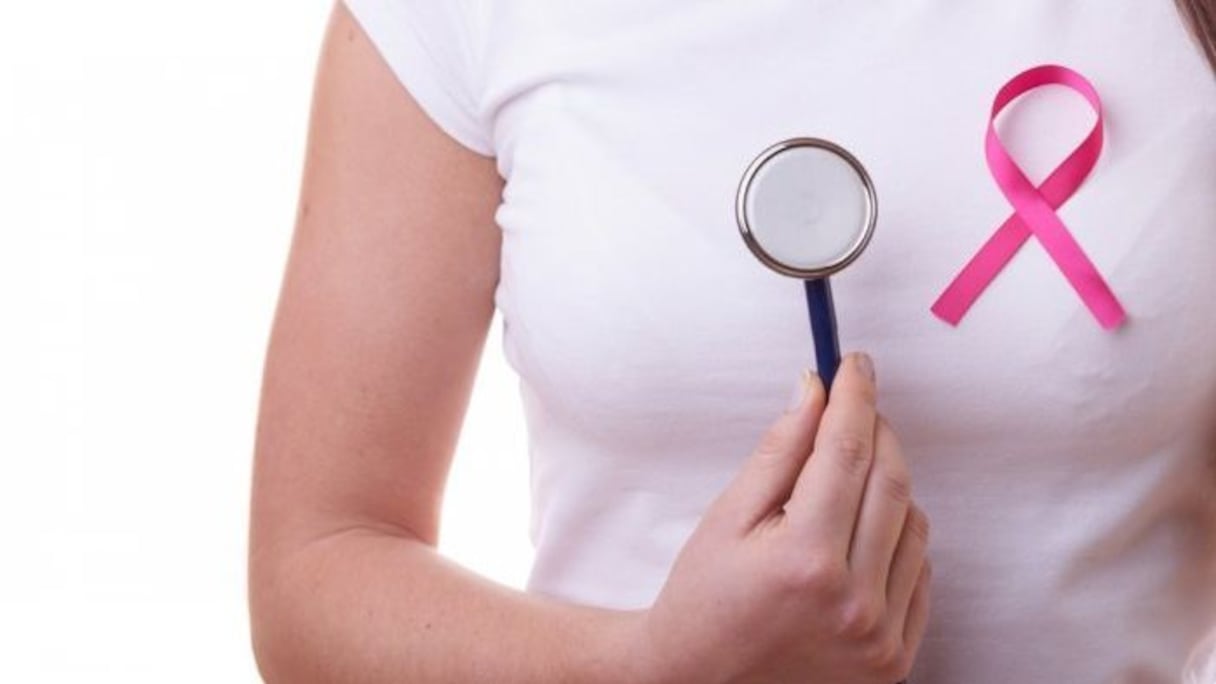
Despite advances in biology and medical research, myths about breast cancer remain widespread. Women diagnosed with the disease may still hear claims about its causes, prevention and treatment that have no scientific basis. When taken as fact, such misinformation can lead to harmful decisions, discourage patients from seeking appropriate care or prompt them to turn to unproven remedies.
Not every myth has the same origin. Some stem from misunderstandings about how the body works, others from preliminary research interpreted as proof, and some from fears that have circulated for years without strong scientific support.
Separating these claims from medical evidence is therefore essential. Understanding what science actually says can help women make informed decisions about their health and avoid misconceptions that may put their well-being at risk.
Here are seven common breast cancer myths and what the available medical evidence says about them.
Read also : Morocco launches national breast and cervical cancer awareness campaign
- Deodorants and antiperspirants cause breast cancer
The concern usually centers on ingredients in underarm products, including aluminum compounds used in antiperspirants and parabens, which serve as preservatives in some cosmetics. Because these products are applied close to the breasts, some people worry that their ingredients can enter breast tissue and trigger cancer.
The theory has persisted partly because some of these substances have been studied for possible hormonal effects. Estrogen, for example, can influence the growth of certain breast cancer cells. But finding that a substance may interact with biological processes in laboratory conditions does not establish that ordinary use of a consumer product causes cancer in humans.
The US National Cancer Institute says there is no scientific evidence linking deodorants or antiperspirants to the development of breast cancer. A study published in 2002 that compared 813 women with breast cancer and 793 women without the disease found no increased risk associated with deodorant or antiperspirant use. A smaller study published in 2006 also found no association.
Some studies have reported possible links, but their limitations mean they cannot establish that these products cause breast cancer. The American Cancer Society likewise concludes that the available evidence does not establish a connection.
Overall, scientists have investigated the concern, but the proposed link has not been demonstrated. Women do not need to stop using deodorants or antiperspirants specifically to prevent breast cancer on the basis of current evidence.
- Wearing a bra, especially an underwire bra, causes breast cancer
One version of this claim suggests that underwire bras or tight-fitting bras restrict the movement of lymph fluid, causing toxins to accumulate in breast tissue. The theory has circulated online for years, sometimes accompanied by advice to avoid bras altogether.
The lymphatic system does help remove excess fluid and supports immune function, but there is no reliable evidence that wearing a bra obstructs this process in a way that causes breast cancer. The theory also does not account for the fact that breast cancer develops through changes in cells involving multiple biological and genetic processes.
Research specifically examining bra use has not established a link with breast cancer risk. A study published in 2014 involving 1,513 women found no association between wearing a bra and developing the disease. Available evidence does not show that underwire bras, the number of hours a woman wears a bra or sleeping in one increases her risk.
That does not mean a poorly fitting bra cannot cause discomfort, pressure or irritation. Those are separate issues and are not evidence of cancer.
There is also no evidence that going without a bra reduces breast cancer risk. Women can make their own choices about what to wear based on comfort, support and personal preference rather than fear of the disease.
- Breast cancer only affects older women
Age is one of the most important risk factors for breast cancer. The likelihood of developing the disease generally increases as women get older, which helps explain why screening recommendations often focus on specific age groups.
But increased risk with age does not mean younger women are immune. Breast cancer can occur in women in their 20s, 30s and 40s, although it is less common in these age groups than among older women. Some younger patients also have inherited genetic changes, such as variants in the BRCA1 or BRCA2 genes, that can substantially increase their risk.
Other factors can influence a woman’s risk, including reproductive history, previous exposure to certain treatments, breast density and family history. Some women develop breast cancer without any known inherited predisposition or obvious risk factor.
This is why age alone should not be used to dismiss a new breast symptom. A lump, a change in breast shape or size, skin dimpling, nipple inversion or unusual nipple discharge warrants medical assessment, even in a younger woman. Many breast changes have benign causes, but it is not possible to determine the cause reliably from age or symptoms alone.
Screening and diagnostic assessment are also different. Screening tests are offered to people without symptoms according to applicable recommendations, while a woman who notices a new or unusual change may need diagnostic evaluation regardless of whether she is in the usual screening age group.
The message is that younger age does not rule out breast cancer, and a concerning change should not be ignored simply because the person is young.
- Breast cancer is always a death sentence
A breast cancer diagnosis can bring uncertainty and fear, and the disease remains a serious health concern. But it is not accurate to assume that every diagnosis will lead to death. Breast cancer includes different diseases with different biological characteristics, patterns of growth and responses to treatment.
One of the most important factors affecting prognosis is the stage at diagnosis. Cancer that remains confined to the breast generally has a different outlook from cancer that has spread to nearby lymph nodes or distant organs. The cancer’s subtype, grade, hormone receptor status, HER2 status and response to treatment also influence the outlook.
Treatment options have expanded to include surgery, radiotherapy, hormone therapy, chemotherapy, targeted therapies and, for some patients, immunotherapy. Which treatments are appropriate depends on the individual diagnosis. Not every patient needs every treatment, and treatment plans are tailored to the cancer’s characteristics and the person’s circumstances.
US data illustrate the difference that stage can make. The American Cancer Society reports a five-year relative survival rate of more than 99% for women in the United States whose breast cancer is diagnosed at a localized stage. The figure is lower for cancer that has spread to distant parts of the body.
The opposite misconception should be avoided, too: not every breast cancer is curable, and early diagnosis cannot guarantee a particular outcome. The evidence supports a more accurate message. Breast cancer is not invariably fatal, and diagnosis, cancer subtype and access to appropriate treatment all matter.
- Sugar feeds breast cancer, so patients should cut it out completely
People diagnosed with cancer are sometimes told to stop eating sugar because cancer cells use glucose for energy. The reasoning sounds straightforward: if a tumor consumes sugar, eliminating sugar from the diet should deprive it of fuel.
Read also : Morocco launches national campaign to promote breastfeeding
But the biology is a lot more complicated. All cells in the body, including healthy cells, use glucose. Cancer cells can consume glucose at higher rates than some normal cells, but that does not mean that eating sugary foods selectively feeds a tumor or that removing sugar from the diet will starve it.
The body also maintains blood glucose through its own metabolic processes, even when a person stops eating foods containing sugar. Simply eliminating sweets, bread or other carbohydrate-containing foods therefore does not switch off the supply of glucose to cancer cells.
The National Cancer Institute says there is no evidence that eating sugar makes cancer worse or that stopping sugar causes a tumor to shrink or disappear. This is an important distinction for patients who may feel pressured to follow severe dietary restrictions after a diagnosis.
That does not mean dietary habits are irrelevant to cancer prevention or general health. A diet high in added sugar can contribute to excess calorie intake and weight gain. Excess body weight, especially after menopause, is an established risk factor for breast cancer. But this is not the same as claiming that sugar directly causes an existing breast tumor to grow.
- A special diet or supplement can prevent or cure breast cancer
Claims about cancer-fighting foods, alkaline diets, juice cleanses, herbal remedies and high-dose vitamins are common online. Some promise to prevent cancer, while others suggest that patients can shrink tumors or avoid conventional treatment by changing what they eat.
Healthy eating can support overall health, but no single food or dietary pattern has been proven to prevent every case of breast cancer. Risk depends on a range of factors, including age, inherited genetics, hormonal exposure and lifestyle. Even people who follow healthy habits can develop the disease.
The evidence is even more important when a diet or supplement is promoted as a treatment. The National Cancer Institute says there is no proof that a specific diet, food, vitamin, mineral, herb or dietary supplement can slow cancer, cure it or prevent it from returning. Such claims should not be confused with research into specific medicines or treatments that have been tested in clinical trials.
Supplements can also carry risks. Some herbal products and high-dose vitamins can interact with cancer medicines or alter how the body processes them. Products sold as natural are not automatically safe, and the amount or composition of an ingredient may vary between products.
This does not mean that every complementary approach is useless. Some practices may help people manage stress or certain treatment-related symptoms when used alongside standard medical care. The key distinction is between support for well-being and a treatment that has been shown to control cancer.
Patients who want to use supplements, herbs or a special diet should tell their healthcare team before starting. They should not delay or replace recommended treatment with an unproven remedy. A healthy diet can be part of care, but it cannot be presented as a guaranteed way to prevent or cure breast cancer.
- Surgery or a biopsy makes breast cancer spread
The fear that a biopsy or operation can spread cancer may lead some patients to hesitate when a doctor recommends testing or treatment. This concern can be distressing when a lump has been found and the diagnosis is still uncertain.
A biopsy involves taking a small sample of tissue so it can be examined under a microscope. For many suspicious breast changes, it is the only way to establish a definitive diagnosis. Imaging tests such as mammograms, ultrasound and MRI can help identify abnormalities, but they cannot always determine whether a change is cancerous.
It is technically possible for cancer cells to be displaced during a biopsy, a phenomenon known as tumor seeding. However, the American Cancer Society says this is extremely rare. A 2024 review of research on breast needle biopsies found no significant effect on the chances of breast cancer recurring, spreading to other parts of the body or overall survival.
Surgery is also a central part of treatment for many patients. Depending on the cancer, it may involve removing the tumor while preserving much of the breast, or removing the breast itself. Doctors choose the approach according to the disease and the patient’s circumstances. Surgical teams follow established procedures to reduce risks during operations.
The benefits of obtaining an accurate diagnosis and appropriate treatment generally outweigh the very small risk of tumor seeding associated with biopsy. Anyone worried about a recommended procedure should ask the treating doctor to explain its purpose, potential risks and alternatives. Refusing or delaying an essential diagnostic test because of an unsupported fear can postpone care.
Read also : Can a selfie help predict cancer survival? New AI tool raises hope and questions
Breast cancer myths show how misinformation can affect the way women understand the disease and make decisions about their health. Advice from friends, relatives or social media should not replace guidance from qualified medical professionals, especially when it concerns diagnosis or treatment. Access to reliable information and greater awareness can help women make informed decisions and navigate their treatment with a clearer understanding of the disease.
